The evacuation problem before helicopters
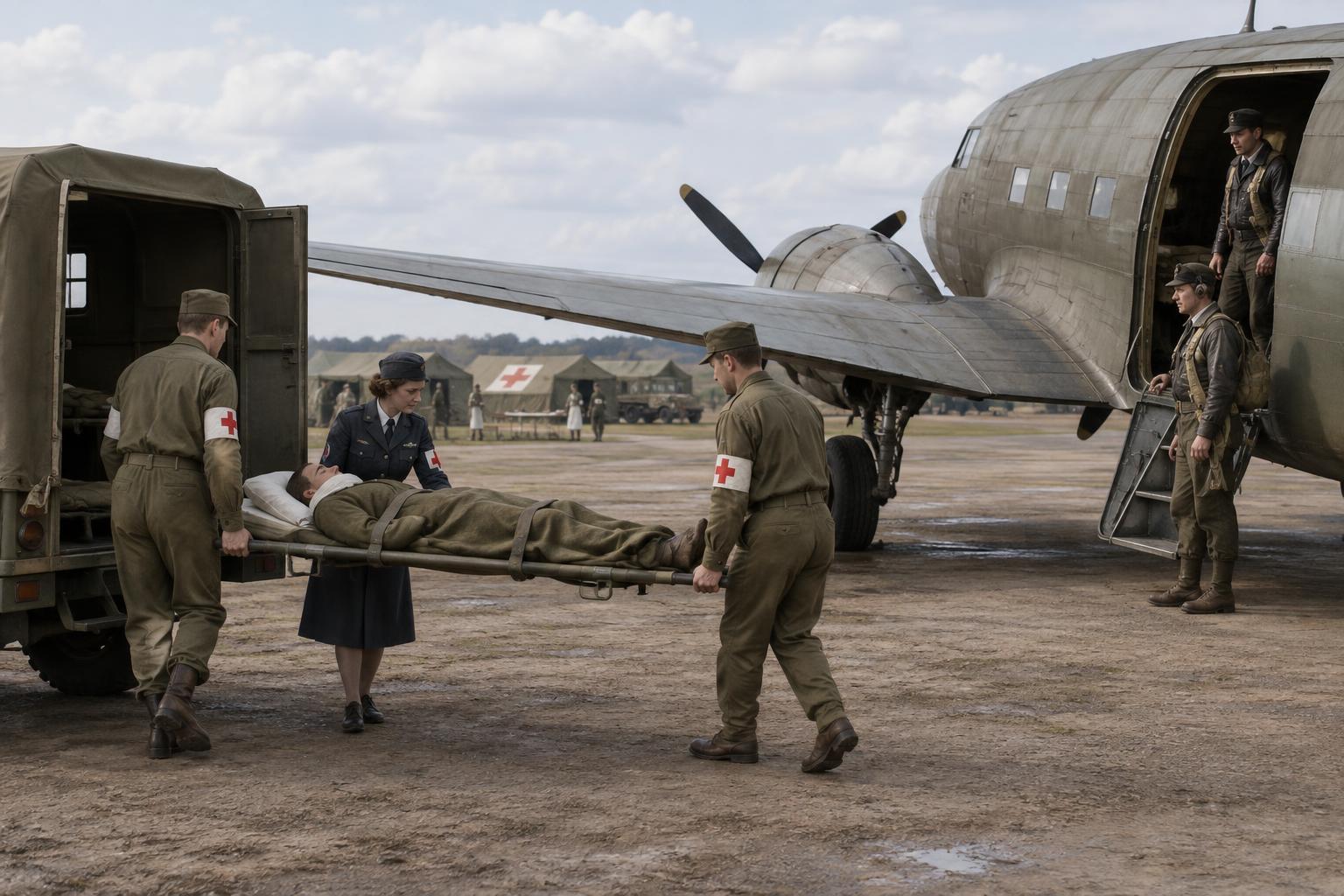
Moving wounded personnel away from a battlefield has always depended on more than speed. People first have to be reached, stabilized as circumstances permit and transferred through a chain of transport and treatment. During the Second World War, ambulances and fixed-wing aircraft carried many casualties, while helicopters saw limited use. Fixed-wing aircraft could move patients efficiently over longer distances, but they needed suitable places to take off and land. Trucks and jeeps could reach smaller sites, provided roads and terrain allowed them through.
The Korean War made the gaps between those options especially apparent. Fighting took place across hills, valleys and areas where road travel could be slow or difficult. A casualty might be relatively close to a medical unit in a straight line yet far away by vehicle. That gap created a practical role for an aircraft able to land in a small clearing and travel without following a road.
A short link in a larger medical chain
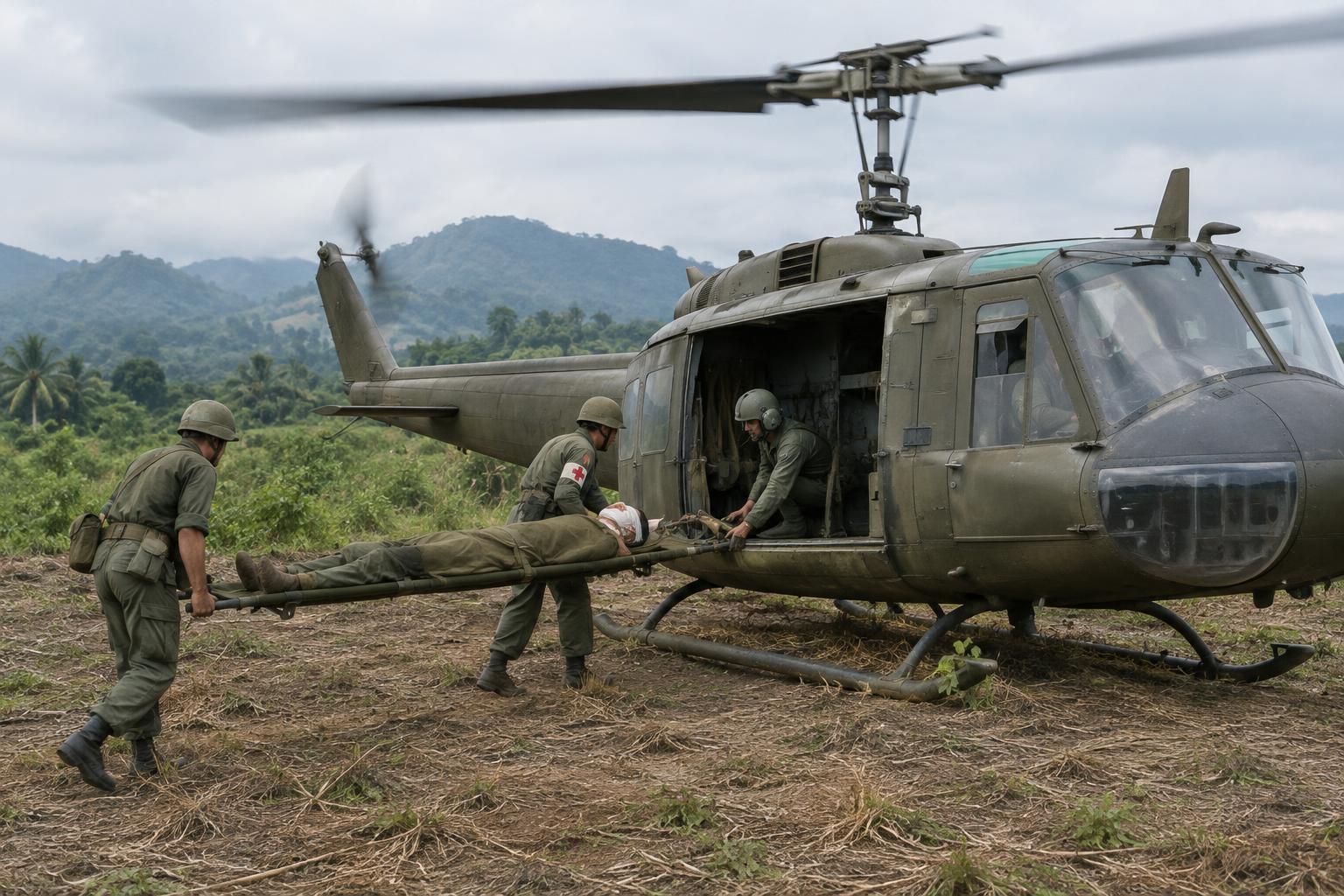
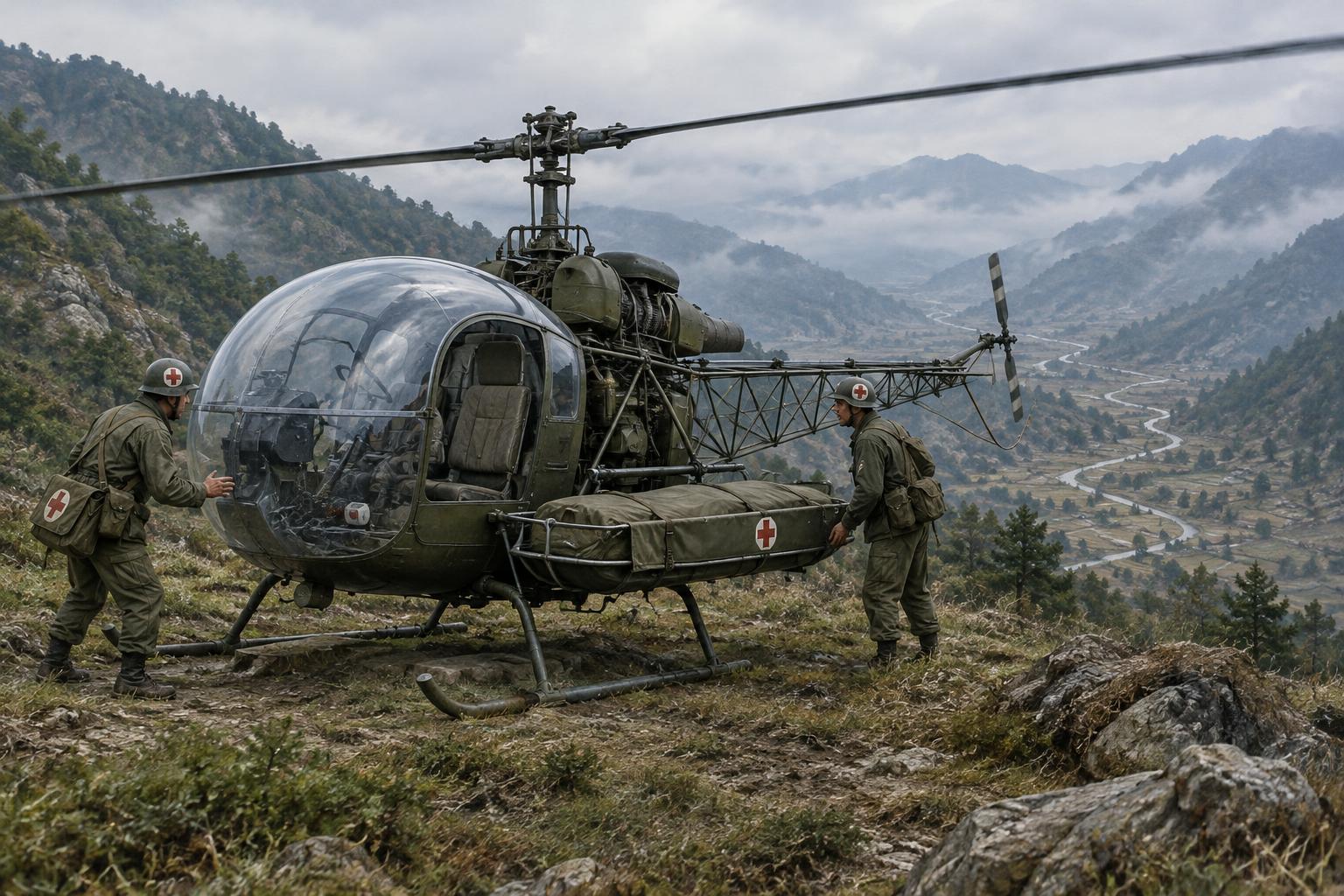
Helicopters were useful because they could connect a forward pickup point with a medical facility or another point in the evacuation network. U.S. Army helicopter crews used light aircraft, notably the H-13 Sioux, to carry wounded personnel from areas closer to the fighting toward mobile army surgical hospitals, often called MASH units. These flights became one of the war’s most recognizable images, but the aircraft were only one part of the system. Ground personnel still had to prepare casualties, identify pickup sites and coordinate where patients would go next.
The aim was not to turn a small helicopter into a flying hospital. Early evacuation helicopters had little room for equipment or attendants. On some flights, patients were carried on external litter mounts rather than inside the cabin. That arrangement could shorten the journey over difficult ground, but it also exposed patients to wind, noise and weather. The value of the flight depended on what could be done before takeoff and after landing, as well as on the flight itself.
What the aircraft made possible—and what they could not
Vertical takeoff and landing gave helicopters access to places that a fixed-wing aircraft could not use. A crew did not need a runway near every casualty. If a suitable landing area was available, the helicopter could bridge the hardest part of a route and hand the patient over to a medical team. In rough terrain, that flexibility could matter more than an aircraft’s top speed.
The limitations were substantial. Light helicopters could carry only a small number of patients, and their performance depended on load, weather, terrain and the condition of the landing site. Visibility, enemy activity and mechanical readiness could also prevent a flight. A helicopter could not replace stretcher bearers, ground vehicles, surgical teams or larger aircraft used farther along the transport chain. Its distinctive contribution was to offer another way across a difficult first leg.
Coordination became part of the lesson
An evacuation flight required decisions from people who were not all in the same place. A unit requesting pickup needed to communicate a usable location and the patient’s transport needs. The flight crew needed to assess whether it could reach and land at the site. Receiving personnel needed to be ready for the handoff. When any part of that sequence was unclear, the aircraft’s ability to fly directly to a location was less useful.
The Korean War helped make helicopter casualty evacuation a repeatable operational task rather than an occasional improvisation. Crews and ground teams gained experience with requests, pickup points, loading and transfers to medical care. Procedures differed by service and circumstance, and they continued to change after the war. The lasting lesson was not a single technique: aircraft capability worked best when paired with reliable communication and an organized destination for the patient.
Why it remains a turning point
Helicopters had existed before the Korean War, and casualty evacuation did not begin there. The turning point was the sustained demonstration of a specific role: moving wounded people across terrain that complicated ground transport and delivering them into an established medical system. The war made both the promise and the limits of that role easier to see.
Later aircraft offered different capacity, range and cabin arrangements, but the basic questions remained familiar. Can a crew reach the pickup point safely? Is the landing area suitable? Where should the patient be transferred? The Korean War showed that answering those questions together—not simply putting a helicopter in the air—was what made rotary-wing evacuation useful.