When a signal had to be seen
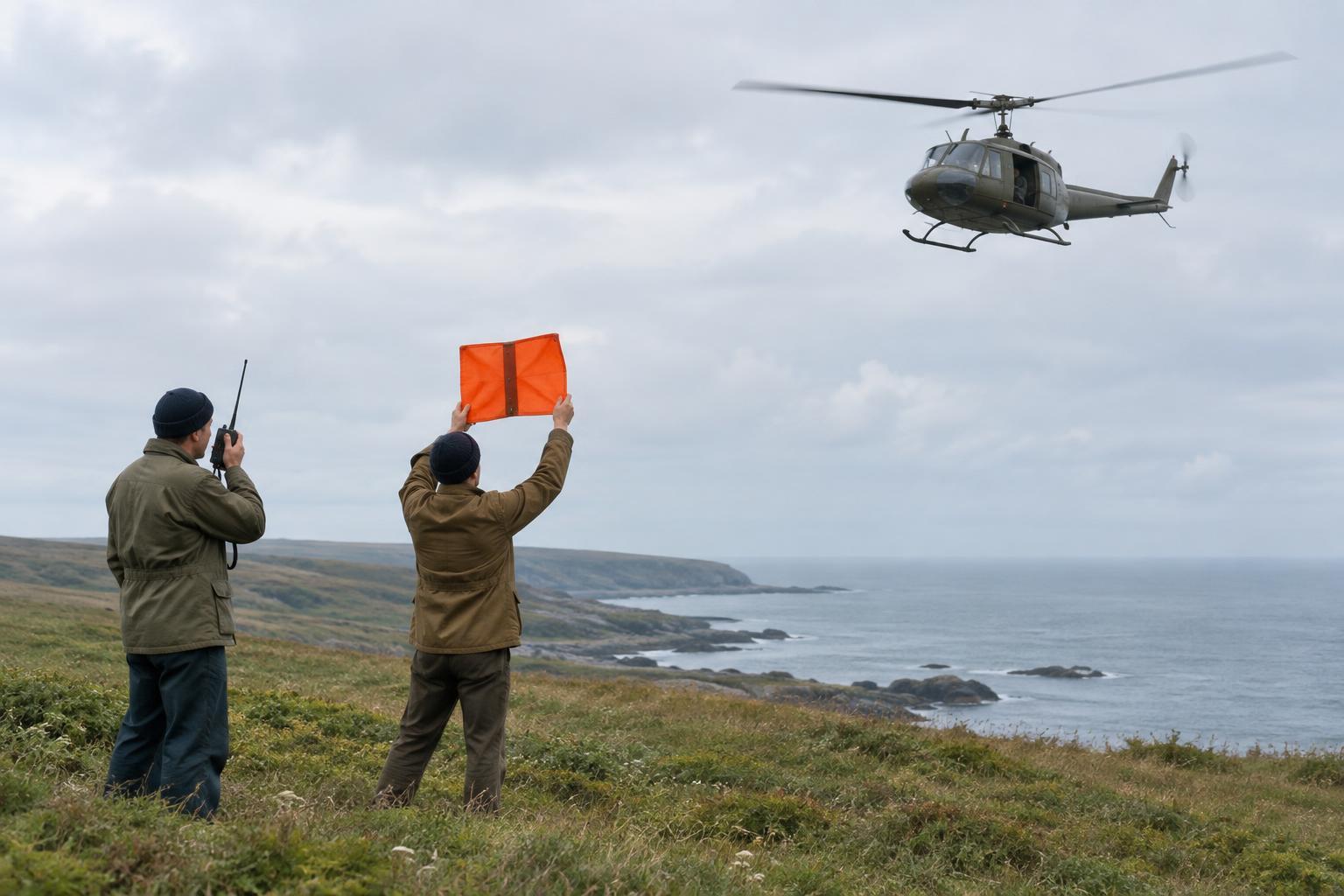
An aircraft searching for people on the ground faces a communication problem unlike an ordinary flight between airports. The people who need help may not have a radio, and the aircraft may be unable to land near them. For much of rescue aviation’s history, a visible signal could be the only way to establish contact. Ground parties might use contrasting fabric, smoke, lights or deliberate movements to attract attention. An aircraft could acknowledge a sighting by changing its flight path or making another visible gesture.
These methods were useful but limited. A signal might show where people were without explaining how many needed assistance or where an aircraft could safely approach. Terrain, weather, daylight and the aircraft’s speed could also make a message hard to see or interpret. Visual communication therefore worked best when participants already understood what a signal was meant to convey. It remained important even as radios became more capable, because a person awaiting rescue might still have no transmitting equipment.
Radio made conversation possible, but not automatic
Radio allowed an aircraft and a ground station to exchange details rather than rely only on what could be seen. A crew could report a location, describe obstacles or pass along an observation to people organizing a search. Ground personnel could provide updated information or clarify which area needed attention. This changed communication from a series of isolated signals into an ongoing exchange, at least when both sides had compatible equipment and a usable connection.
The availability of radio did not mean that everyone involved could speak directly to everyone else. Aircraft, search teams and other responders might use different equipment or channels. Mountains and distance could interfere with contact, while noise inside an aircraft could make a message difficult to hear. When a direct conversation was impossible, information sometimes had to pass through an intermediate station or another aircraft. Each additional handoff created a reason to keep messages concise and to confirm critical details rather than assume they had arrived intact.
Coordination became a communication task
As rescue missions involved more specialized participants, communication became about coordinating roles as well as locating people. An aircraft crew might need to distinguish an observation from an instruction, or a possible landing area from a confirmed one. People on the ground needed to know whether an aircraft was searching, preparing to approach or leaving to refuel. Shared terminology and clear acknowledgments helped reduce the chance that different teams would act on different understandings of the same situation.
This development was not a simple progression from one device to another. Better radios could carry more information, but they could not decide which details mattered most. Crews and coordinators still needed to identify who was speaking, repeat information that might have been misheard and establish a fallback if contact failed. In that sense, procedures evolved alongside equipment: both helped turn a collection of individual reports into a usable picture of a rescue scene.
What the history reveals
Modern communication options can include portable radios, relayed messages and electronic position information, depending on the aircraft and operation. Yet the older challenges remain recognizable. Someone must notice a signal, understand its meaning and pass it to the people who need it. A location report is more useful when its reference point is clear; an instruction is safer to act on when its recipient has acknowledged it. The enduring lesson of air-to-ground communication is that a link between two devices is only part of a link between two teams.
This history also makes a useful subject for a small educational project. A simple illustrated timeline could compare what a visual signal, a radio report and a relayed message allow participants to say. Readers interested in building that kind of project can browse Practice Projects · Hello World Workshop for project ideas, Programming Basics · Hello World Workshop for introductory programming topics and Developer Tools · Hello World Workshop for developer-tool topics. Those resources are optional paths for making a learning aid, not evidence for the aviation history described here.