A transport request includes more than passengers
The number of people traveling is an important starting point for an air transport plan, but it does not describe everything that must move. A transfer may also involve a stretcher, support equipment, supplies, crew bags, documents and personal belongings. Each item occupies space and may need to be accessible at a particular stage of the journey.
This is why an early equipment list can be useful even before every detail is settled. It gives coordinators a way to distinguish items that must travel with the person from items that can follow separately. It also makes questions about size, handling and loading easier to resolve before a vehicle arrives.
Fit and loading are separate questions
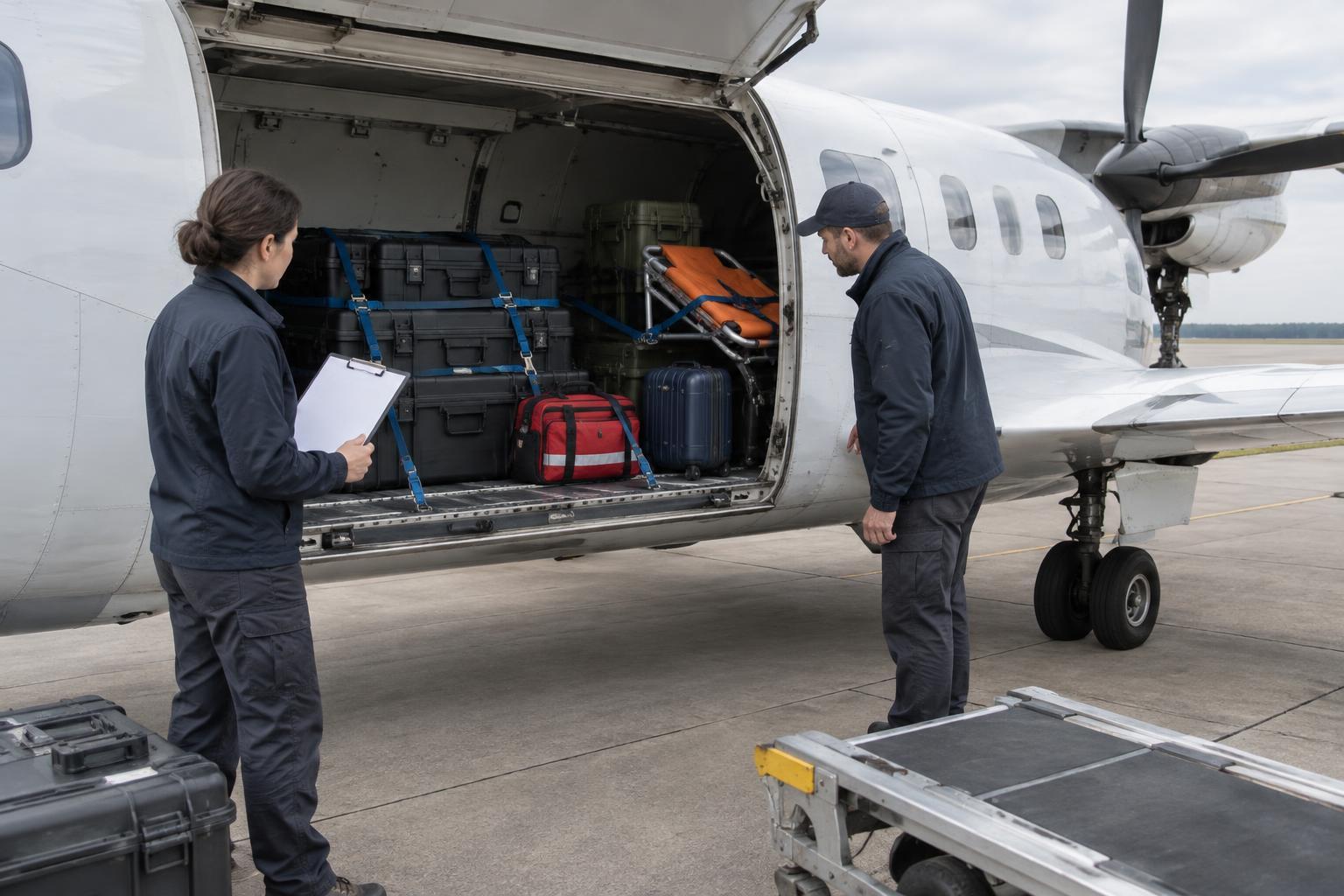
An item may fit within an aircraft cabin but still be difficult to bring through its door. Stretchers, cases and wheeled equipment have dimensions that matter during loading, not just after they are in place. Door openings, cabin layout and the route from the vehicle to the aircraft can all affect whether a proposed arrangement is workable.
Weight matters too. Aircraft have operating limits, and the way a load is distributed is part of flight planning. A count of bags alone cannot show whether the total load is suitable. Aircraft operators assess the relevant limits for the aircraft and flight; coordinators can help by giving them an accurate picture of the people, equipment and belongings expected to travel.
Secure placement is another consideration. Items that cannot be stowed appropriately may not be able to travel in the cabin, even if there appears to be room. Identifying bulky or unusually shaped items early leaves more time to consider an alternative rather than making that discovery during loading.
Every vehicle change needs an equipment plan
Air transport often connects with ground vehicles at one or both ends. An item accommodated on the aircraft must also be able to move through the rest of the itinerary. The same question applies in reverse: equipment arriving in a ground vehicle cannot automatically be assumed to fit the aircraft.
A practical transfer plan identifies what moves with the traveler, what stays with a vehicle or team, and what must be handed to another team. Clear ownership of each item helps prevent delays at changeover points. It is especially useful when similar-looking cases or supplies belong to different organizations.
The plan should also consider when equipment is needed. An item packed deep in a baggage area may be available at the destination but unavailable during a transfer. Separating items needed during travel from those needed only after arrival can make loading decisions clearer without treating every bag as equally urgent.
Personal belongings deserve a separate decision
Personal belongings can be easy to overlook while attention is on the main transport arrangements. Yet a suitcase, mobility aid or other personal item may affect available space or require special handling. Asking what is expected to travel, and with whom, helps avoid assumptions about what the aircraft or connecting vehicle can carry.
When space is limited, not every belonging may be able to accompany the traveler. A separate plan for remaining items can clarify who is responsible for them and how they will reach their destination. Important documents and items needed immediately on arrival should be identified before bags are separated.
An equipment and baggage plan does not need to be complicated to be useful. A shared list of items, approximate sizes, intended locations and handoff responsibilities can reveal gaps while there is still time to address them. The goal is not simply to fill available space; it is to make sure each necessary item can move through the complete journey safely and predictably.