A loose item can change the cabin
An aircraft cabin may appear steady during routine flight, but its contents still respond to movement. Acceleration, deceleration, turns and turbulence can shift an unsecured case, bottle or tool. An item that slides only a short distance can block a walkway or end up somewhere difficult to reach. More abrupt movement can send it into a person, a window or installed equipment.
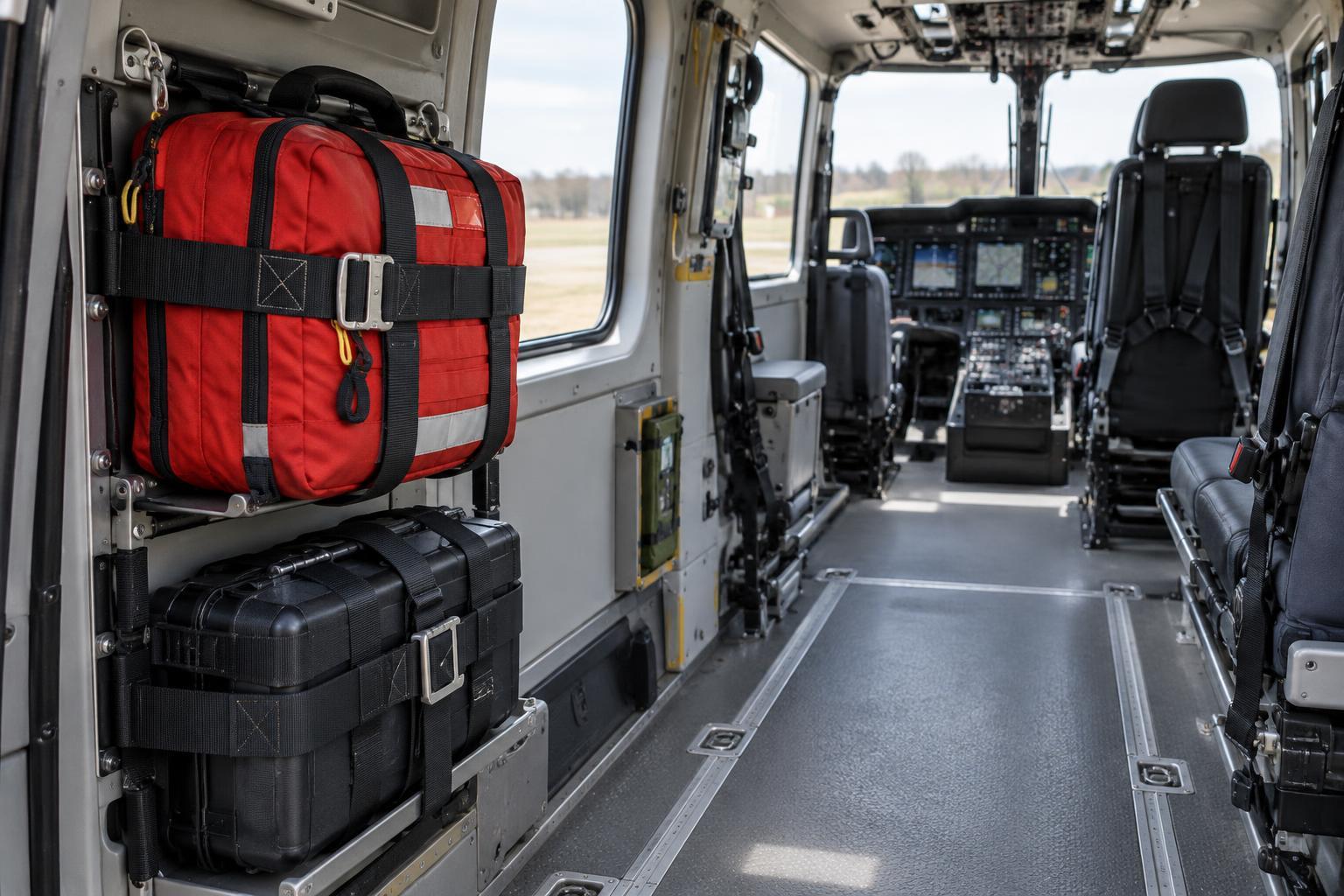
Rescue aircraft often carry a varied mix of gear in limited space. Some items are needed quickly; others must remain available but out of the way. That combination makes stowage more than a matter of tidiness. Equipment restraints help maintain the cabin arrangement that the crew expects, so a routine change in aircraft movement does not turn a familiar workspace into an obstacle course.
What a restraint is meant to do
A restraint limits where an item can move. Depending on the aircraft and equipment, it may be a fitted bracket, a secured compartment, a strap, a latch or another approved attachment. Its purpose is not simply to keep an item from falling onto the floor. It must also hold the item in the position intended for it, without interfering with nearby equipment or access routes.
Placement matters as much as the restraint itself. A heavy item mounted where it belongs is easier to account for than one left temporarily on an empty seat or beside a doorway. Likewise, a strap that crosses an area people need to use may create a different hazard. The useful question is not just “Is this attached?” but “Will this remain where it belongs while the aircraft moves, and can the crew still work around it?”
Protecting people, controls and access
The most obvious concern is impact. Even a relatively small loose object can hurt someone if it moves suddenly. A larger piece of equipment may be difficult to stop by hand, particularly when occupants are seated or working in a confined space. Restraints reduce the chance that crew members or passengers must catch, dodge or climb over gear during flight.
Loose items can also affect the aircraft and the work taking place inside it. They may obstruct a door, cover a label, snag a cable or prevent someone from reaching equipment. In some cabin layouts, an item that travels beyond its assigned area could interfere with controls or other installed systems. Keeping equipment in known locations helps crews find what they need without searching among displaced bags and supplies.
Why one fastening method does not fit everything
Equipment differs in size, shape, weight and intended use. A fitted mount can make sense for an item that routinely stays in one position, while a secured compartment may suit smaller supplies. A strap may hold an awkward load, but only if the arrangement is appropriate for that item and attachment point. An improvised fastening can look secure while allowing an item to slip free or shift within the restraint.
Aircraft arrangements also have limits. Restraints and attachment points are part of a broader equipment and loading plan, rather than interchangeable conveniences. The people responsible for an aircraft use its applicable procedures and approved configurations to determine what belongs where and how it is secured. For a general observer, the key principle is straightforward: a restraint should match both the item and the place it occupies.
Secure stowage is an ongoing habit
A cabin can be orderly at departure and still change during a mission. Someone may remove a bag, use a tool or open a compartment, then need to put everything back. Checking that latches are closed and used items have returned to their assigned places helps prevent a temporary workspace from becoming an unsecured one. Clear coordination matters, too: when several people share a cabin, they need a common understanding of where equipment is kept and whether it is ready for movement.
Equipment restraints do quiet work. They rarely draw attention when everything stays in place, but they support safer movement, more reliable access and a less distracting cabin. In rescue aviation, where space is limited and tasks can compete for attention, that predictability is valuable. The goal is not to tie down every object at random; it is to make sure each item has a suitable place and stays there until someone needs it.