A small space with several jobs
An aircraft cabin may need to hold a patient, attendants, medical equipment, personal gear, and supplies while still allowing people to move and work. The available space varies widely between helicopters and fixed-wing aircraft, and even between aircraft of the same general type. A layout that looks roomy when empty can feel very different once a stretcher, seated crew members, and secured equipment are in place.
Cabin design is therefore less about fitting the greatest possible number of items inside and more about making essential tasks practical. Designers and operators consider where a patient can be positioned, which parts of the patient remain accessible, how people enter and exit, and whether frequently used items can be reached without disrupting other work. Every choice competes for limited space.
Patient access begins with stretcher position
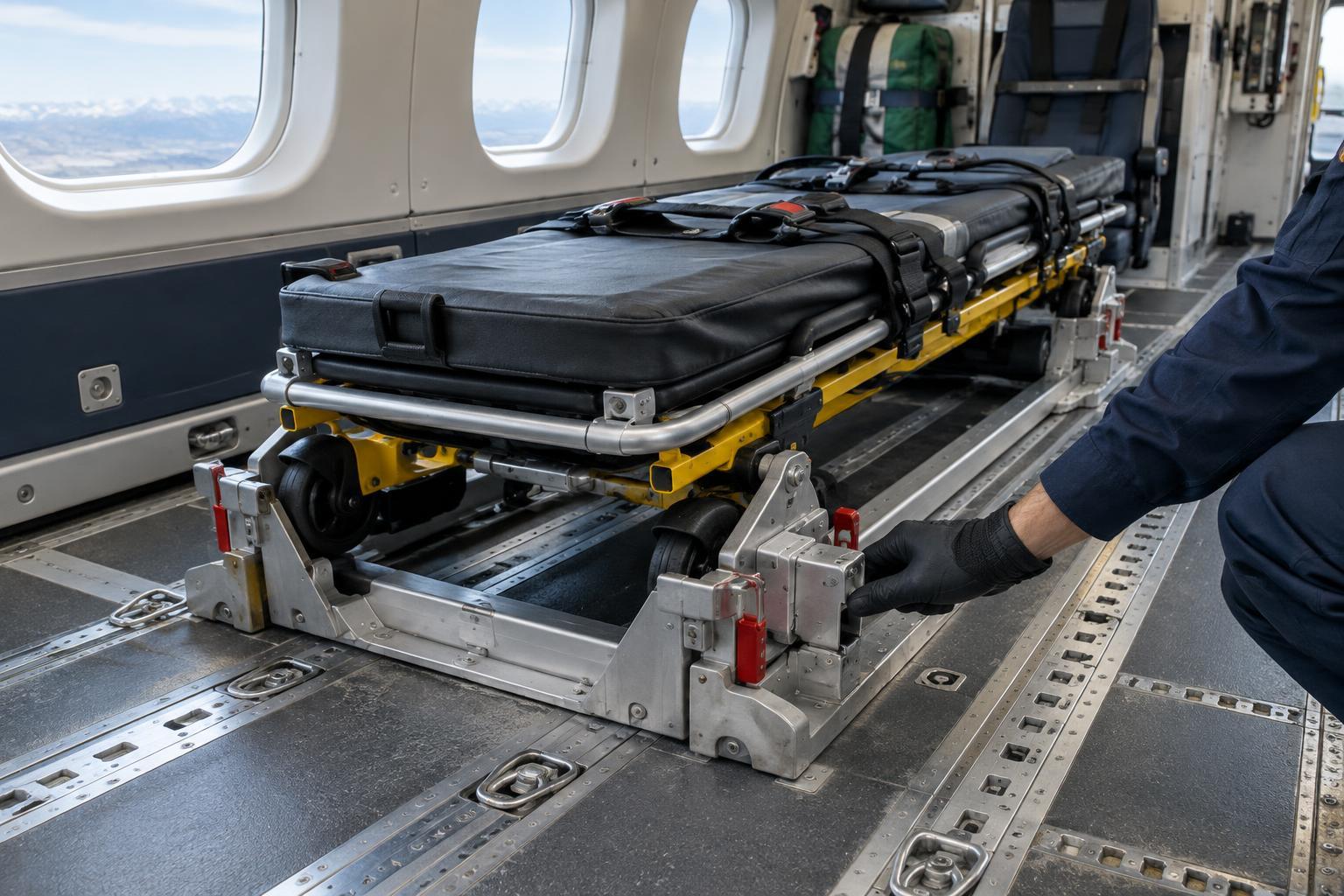
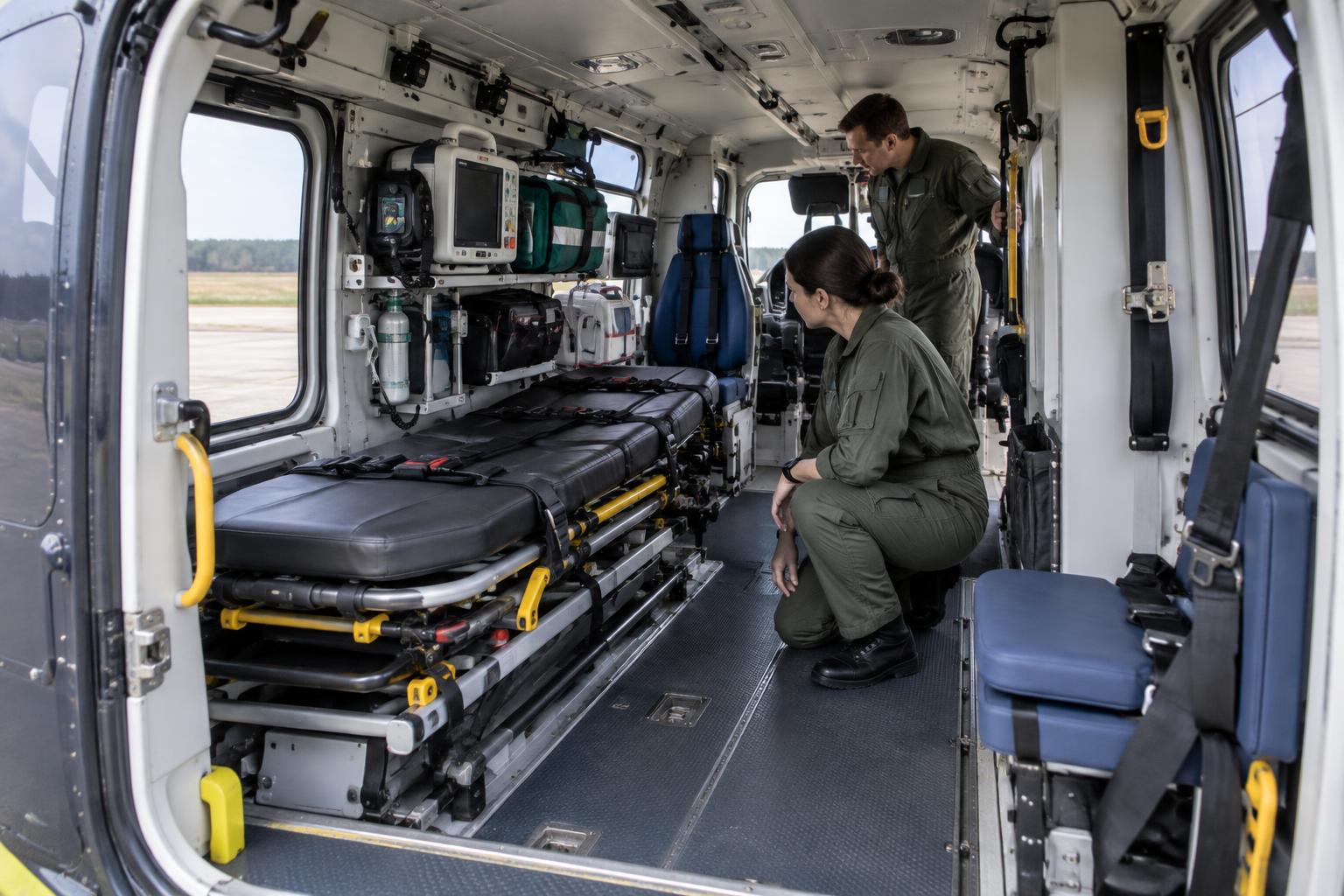
The position and orientation of a stretcher influence who can reach the patient and from where. A crew member seated beside the stretcher may have a useful view and access to one side, while tasks at the head or opposite side may be harder. Moving the stretcher closer to a wall can open a walkway but reduce access from that direction. Placing it nearer the center may improve reach while narrowing the route through the cabin.
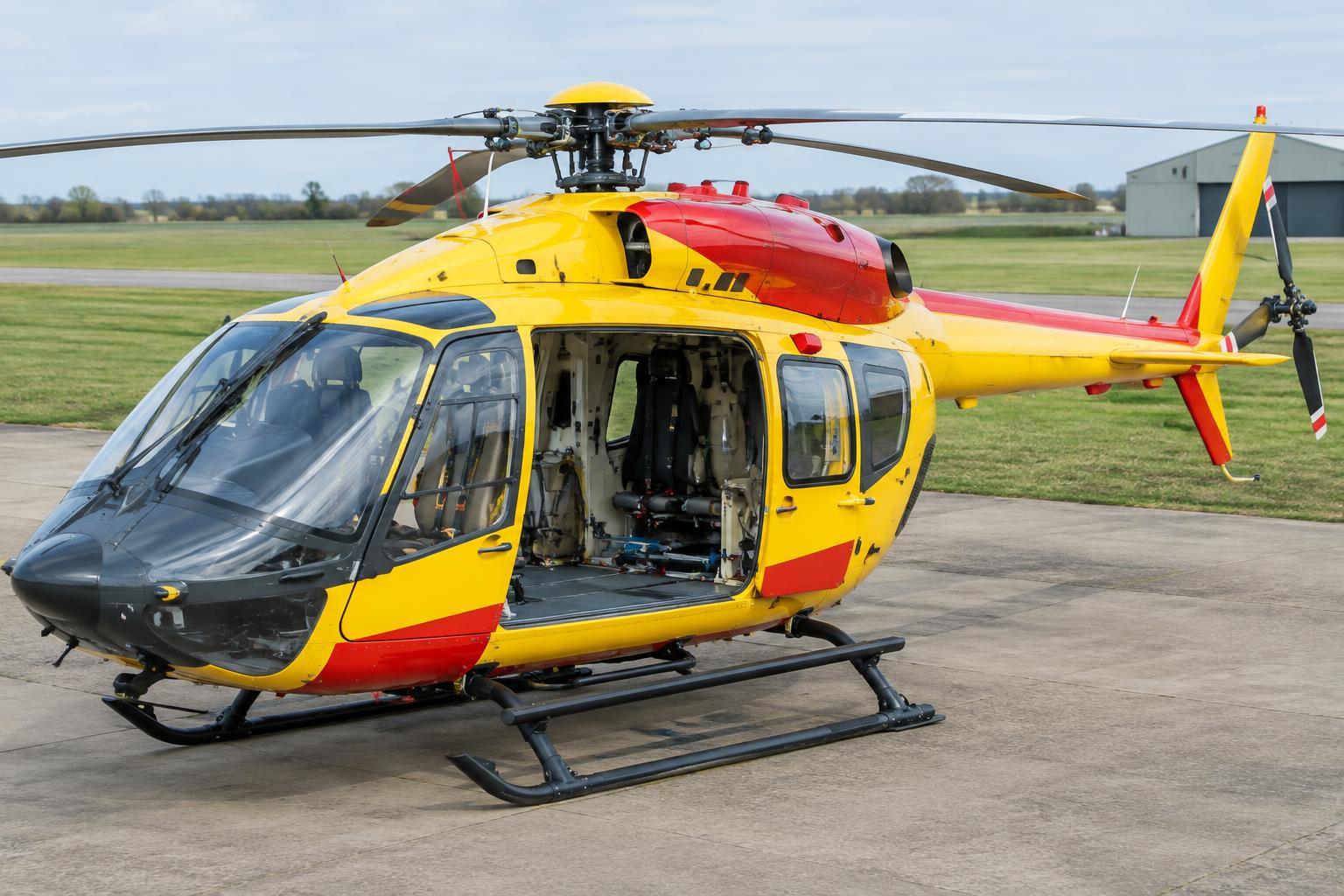
Access also matters during loading and unloading. Door dimensions, stretcher height, and the space needed to turn or guide a patient all affect how smoothly that movement can occur. A workable cabin layout accounts for the entire path, not just the final position of the stretcher. The same principle applies to an attendant: a seat is useful only if its location allows the person to perform their assigned tasks while properly secured.
Equipment must be secure and usable
Equipment placement involves two distinct questions: can an item be restrained appropriately, and can the crew use it from their working positions? A monitor placed where its display is visible but its controls are difficult to reach may create unnecessary movement. Supplies stored out of the way can keep the cabin clear, but they are less convenient if retrieving them requires someone to cross the cabin or disturb another crew member.
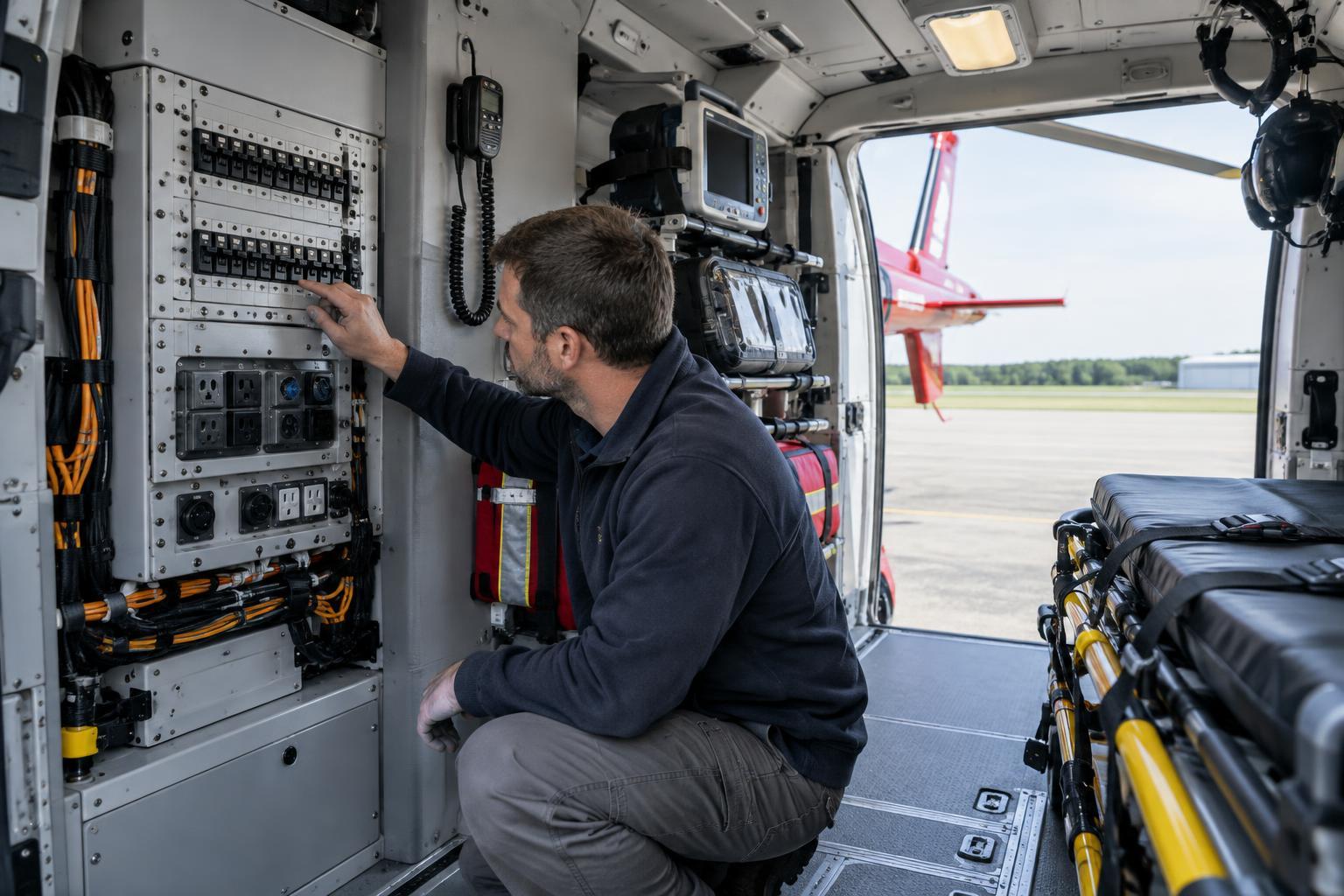
Mounts, cabinets, and designated storage areas help give items predictable locations. Cables and tubing also need sensible routes so they do not obstruct a doorway, catch on clothing, or become confused with nearby connections. Good organization is not simply neatness; it can make it easier for crew members to find, check, and put away what they need. Placement must also be considered alongside the aircraft’s approved configuration and weight-and-balance limits, rather than treated as a matter of convenience alone.
Movement, visibility, and communication
Cabin layout shapes how crew members share a tight workspace. If two people must reach across each other to access equipment, a routine task can become awkward. If a storage compartment opens into a narrow passage, using it may temporarily block movement. Thoughtful layouts leave space for common tasks and reduce avoidable interference between seated positions, the patient area, and the route to an exit.
Visibility matters too. Lighting and the location of displays can affect how readily a crew member can see the patient and equipment without changing position. Aircraft noise and headsets can already make communication demanding; a layout that gives each person a clear sense of where colleagues and supplies are located supports more predictable teamwork. No arrangement removes the need for clear verbal coordination, but a familiar, consistent arrangement can reduce uncertainty.
Layout is a series of trade-offs
There is no single ideal cabin arrangement for every aircraft or transport role. More storage may mean less open floor space. Wider access on one side of a stretcher may limit seating or equipment on the other. A position that works well for one task may be less convenient during loading, inspection, or cleaning. Differences in aircraft doors, cabin shapes, and approved installations further limit which arrangements are possible.
The most useful way to understand a rescue aircraft cabin is as a working system rather than a collection of separate seats and devices. Patient position, crew access, equipment restraints, storage, and movement routes affect one another. When those elements are considered together, the layout can better support the people who must work within it throughout a transport.