One decision, several kinds of information
A go/no-go decision asks whether a proposed flight can be undertaken under the conditions at hand. In rescue aviation, the request may involve a patient, a remote location or a narrow window for transport. Those circumstances make clear communication important, but they do not remove the need to assess the flight. A departure that cannot be conducted safely may create another emergency rather than solve the first one.
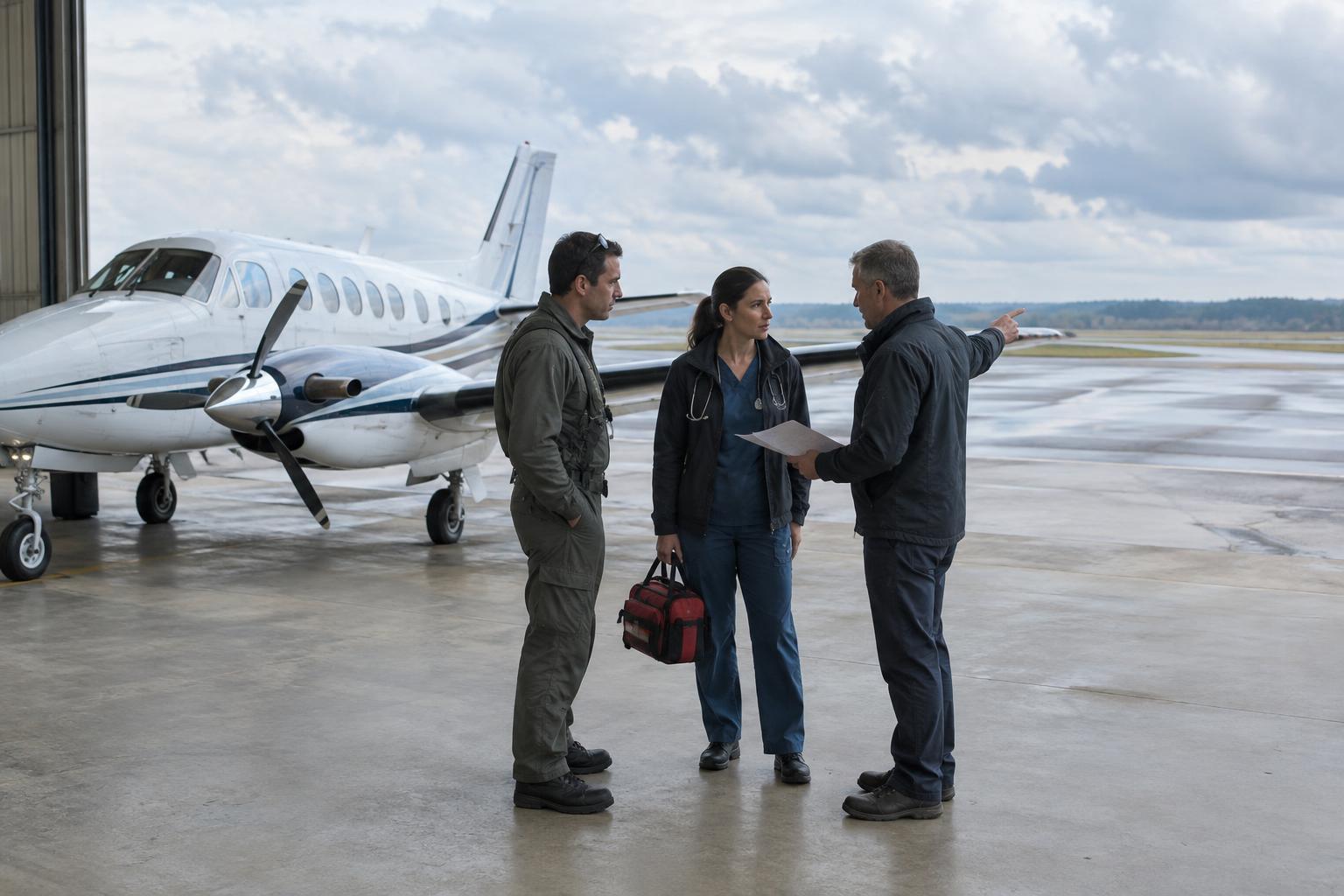
No single person has every relevant detail. The pilot evaluates whether the aircraft and planned operation are suitable. Operations personnel may gather weather, routing and resource information. Medical crew assess transport needs and whether the available cabin and equipment can support them. People at the sending or receiving location can describe access, hazards and timing. The exact titles and responsibilities vary by organization, aircraft and type of operation.
The pilot’s responsibility for the flight
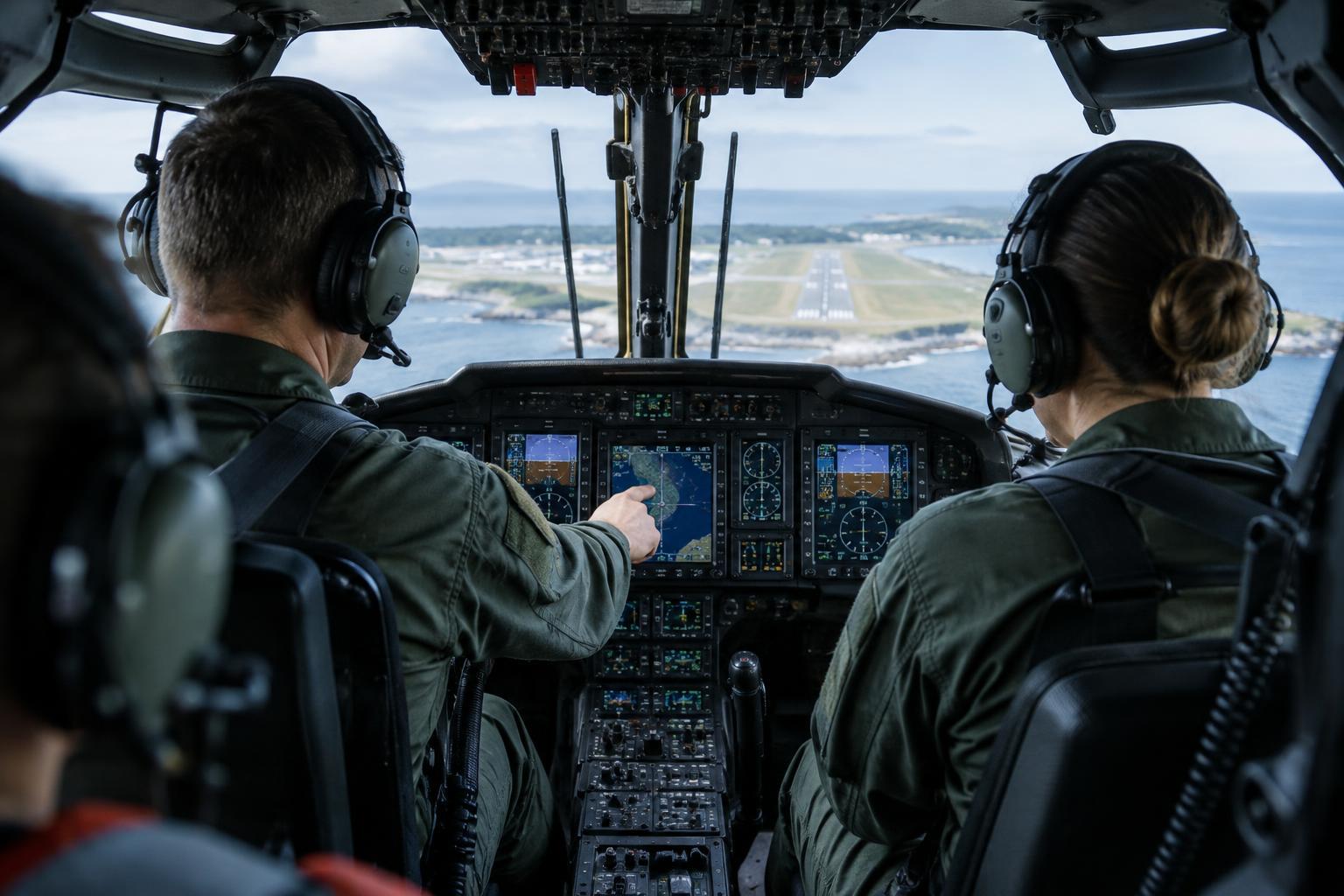
The pilot in command is responsible for decisions about operating the aircraft, including whether to depart, continue, divert or land. That assessment draws on factors such as weather, visibility, fuel, aircraft condition, landing-site suitability and crew readiness. A condition that is acceptable for one aircraft or mission may not be acceptable for another, so a simple statement that the weather is “good” rarely tells the whole story.
The pilot also needs an accurate description of the requested mission. A destination, patient weight or expected landing area that changes after an initial discussion may change what is feasible. The pilot should be able to ask for clarification without treating the request’s urgency as pressure to say yes. A no-go decision is an operational outcome, not a judgment about the importance of the patient or the efforts of the requesting team.
Operations staff connect the pieces
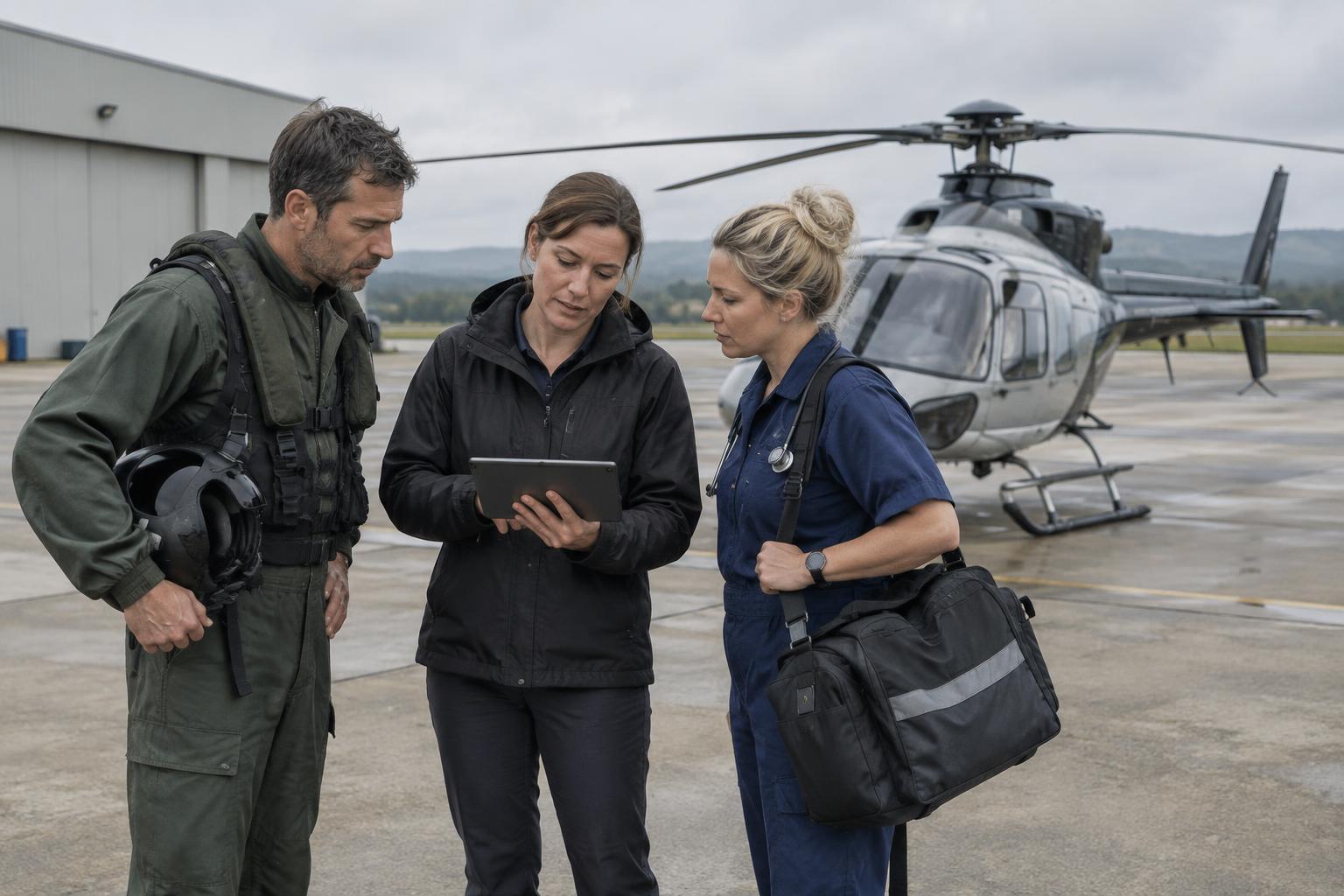
A dispatcher, flight coordinator or operations specialist may be the first person to receive a request. Depending on the organization, that person may confirm locations, identify an available aircraft and crew, pass along reported conditions, and keep participants informed as the plan develops. This coordination helps ensure that the pilot and medical crew are considering the same mission rather than separate versions of it.
Operations staff can also help identify alternatives when a requested flight is not possible, such as another aircraft, a different meeting point or ground transport for part of the journey. Their contribution is not a substitute for the pilot’s flight assessment or the medical crew’s assessment of care needs. Clear records of what was requested, what changed and who received the updates can reduce misunderstandings during a time-sensitive handoff.
Medical crew and requesting teams define the transport need
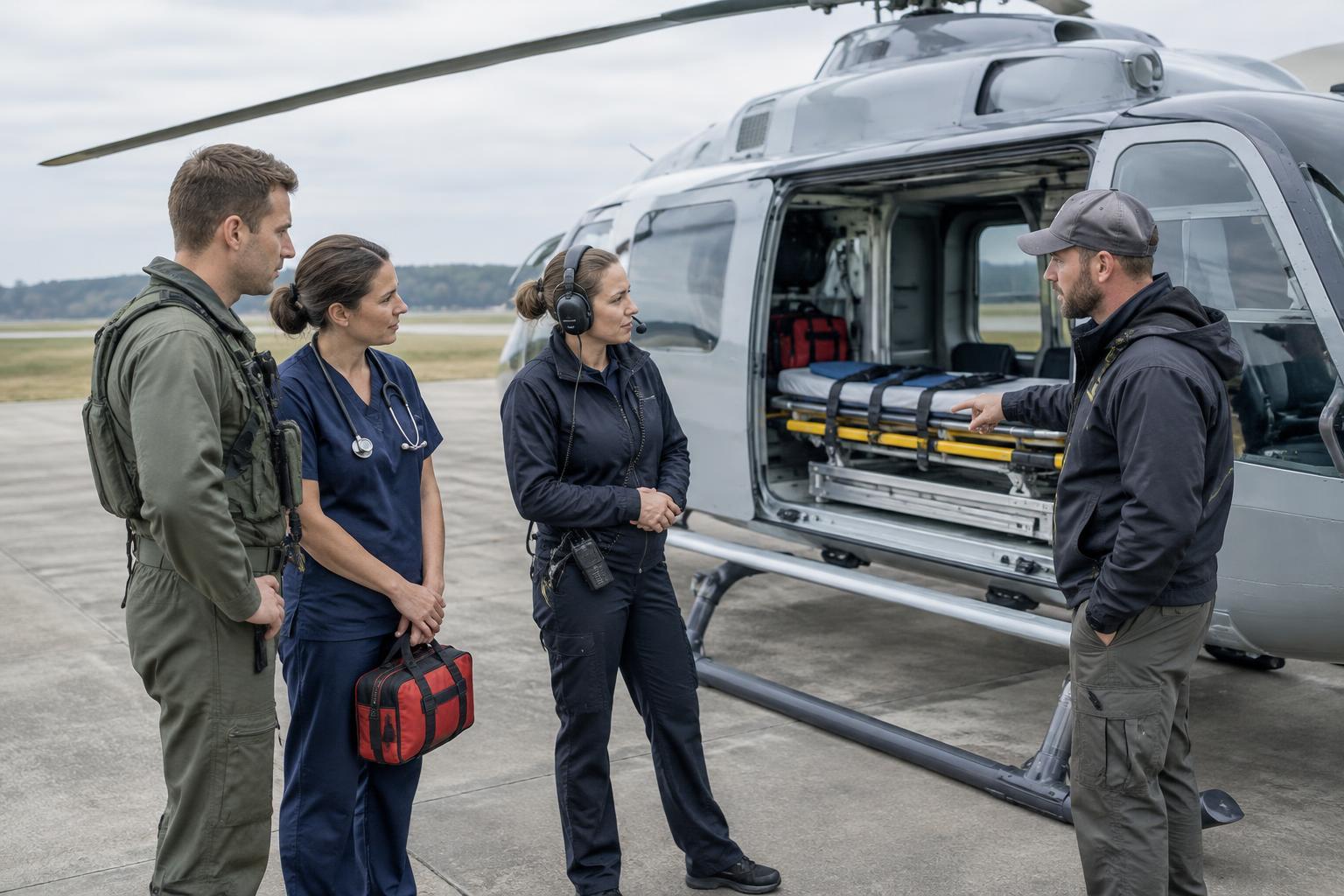
Medical crew bring a different perspective: whether the patient can be transported with the personnel, space, equipment and supplies available for the proposed trip. They may need to clarify the patient’s mobility, required equipment and any practical constraints on loading or care in flight. Those details can affect aircraft selection and timing. Their role is to communicate transport requirements and concerns, not to override an unsafe flight assessment.
The requesting team can provide information that the flight crew cannot observe from a distance. For example, they may describe a landing area, obstacles, access for a stretcher or the condition of a pickup location. Such reports are useful, but they may be incomplete or change quickly. Participants should distinguish confirmed details from estimates and pass along corrections promptly, especially when a change could affect the aircraft or loading plan.
Making room for a safe answer
Good coordination does not require everyone to make the same decision. It requires each participant to state what they know, what they do not know and what concerns them. A concise exchange might establish the requested route, transport requirements, aircraft availability and any unresolved conditions before a commitment is communicated. If the plan changes, the relevant people need an opportunity to reassess it.
A go may come with conditions, such as a revised pickup point or a pause for updated information. A no-go may lead to a different transport plan. Either way, the strongest team process leaves space to raise concerns without embarrassment and treats new information as a reason to reconsider, not as an inconvenience. In rescue aviation, coordination is valuable precisely because the mission matters: it helps the team match the need for transport with a flight that can be responsibly undertaken.