Two important questions, not one
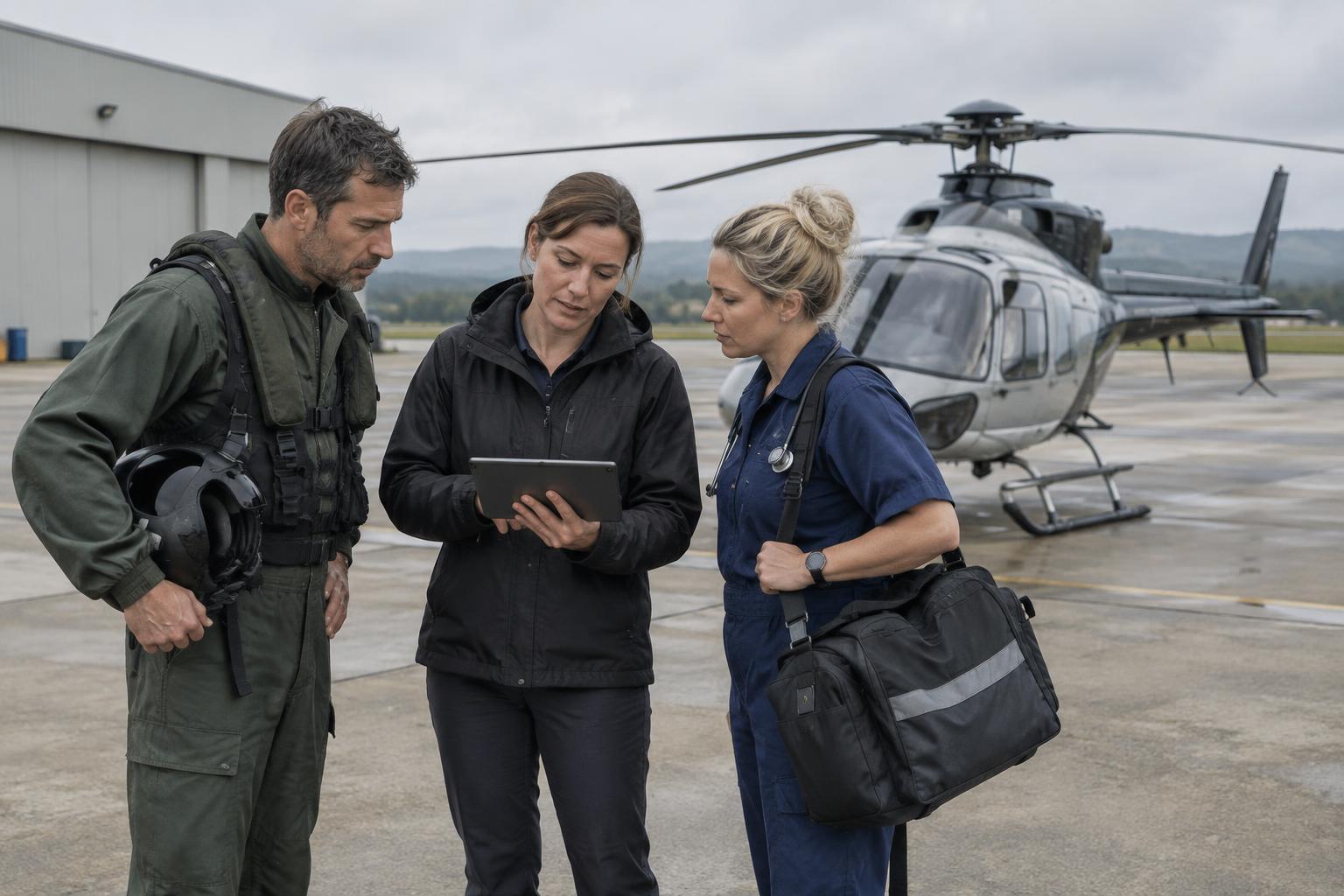
An urgent request for air transport may begin with a straightforward concern: a patient needs to reach another level of care as soon as practical. The aviation question is different: can a particular flight be carried out safely under the conditions at hand? Teams have to consider both questions without treating either one as an inconvenience.
The clinical team can explain why time matters, what care is needed during transport and whether a delay could change the plan. The flight crew evaluates the proposed operation, including factors such as weather, aircraft status, route, landing site and crew readiness. Those assessments inform one decision, but they are not interchangeable. A compelling clinical need does not make an unsafe flight safe; an aviation limitation does not make the patient's need disappear.
This distinction gives the team a productive starting point. Rather than asking whether safety or urgency should win, they can ask what options meet the patient's needs within the limits of a safe operation.
Make the essential information easy to share
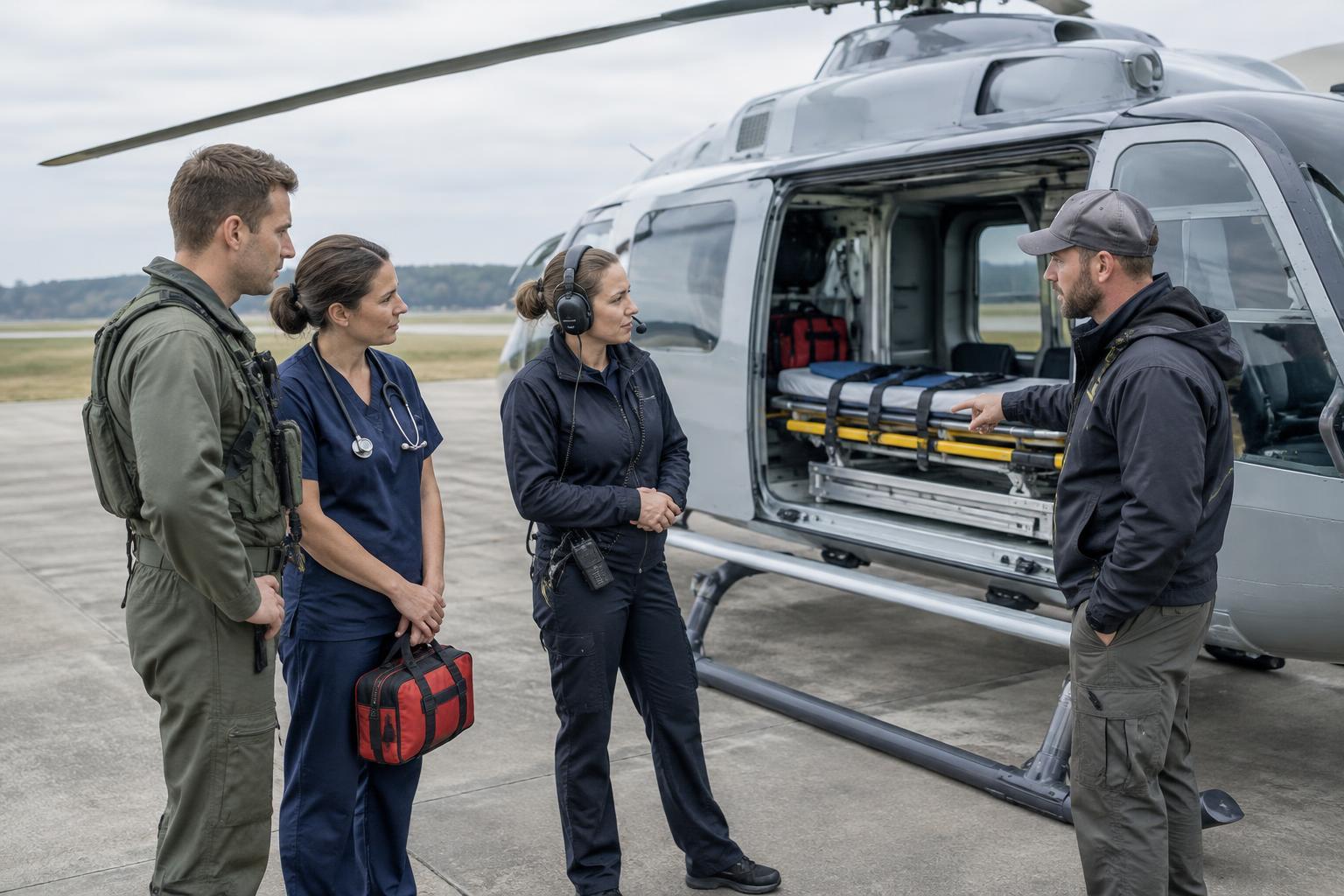
Under time pressure, a long conversation can be less useful than a concise one that identifies what is known, what is uncertain and what may change. Clinical personnel can describe the transport priority in plain language, along with any timing or equipment needs that affect planning. Dispatch or coordination staff can relay pickup and destination details and flag gaps that still need confirmation. The flight crew can state which aviation factors are settled and which require further assessment.
Clear communication also separates a request from a decision. “The patient needs prompt transport” communicates urgency. It should not be heard as “this aircraft must depart now.” Likewise, “we cannot use that landing site” is more useful when paired with the reason and a question about another feasible location. Specific statements help colleagues adjust the plan without guessing what someone else meant.
A short confirmation of the agreed plan can prevent confusion as details pass between people. Who is arranging the landing site? Which destination is being considered? When will the team reassess a changing condition? Answering these questions keeps coordination moving while allowing each role to retain its responsibility.
Leave room for a safe no
A team needs to be able to report a safety concern without having to argue against the importance of the patient. Weather, visibility, terrain, aircraft capability and human performance can all affect whether a proposed flight is appropriate. Conditions may also differ along a route, so a promising pickup location does not by itself settle the entire trip.
When a flight crew declines or pauses an operation, the clearest explanation is usually a concise description of the operational limit and what, if anything, could change the assessment. That does not require sharing every technical detail in a busy exchange. It does require avoiding vague assurances or leaving others to assume that a departure is merely delayed.
Clinical colleagues may disagree about how much time is available. They can make that concern explicit while respecting the aviation decision. The next question then becomes practical: Is another route, aircraft, landing site or mode of transport feasible? An alternative may have its own constraints and may not be faster, but considering it promptly is more useful than repeatedly pressing for an option that is not available.
Coordinate through changes, then learn afterward
An initial plan is a working plan, not a guarantee. A landing site may become unavailable, the patient's needs may change, or conditions along the route may need reassessment. Teams coordinate better when they identify who will communicate a change, who needs to hear it and which decisions must be revisited. A shared update is especially valuable when several groups are involved, because each may otherwise be working from a different version of the plan.
After a difficult transport decision, a brief review can focus on the coordination rather than on finding someone to blame. Did the right people receive the essential information early enough? Were uncertainties stated clearly? Did the team explore alternatives when the original plan became impractical? These questions can reveal ways to make the next discussion calmer and more efficient.
Clinical urgency and aviation safety are not competing slogans. One describes why a transport is sought; the other sets limits on how it can be attempted. Teams serve both aims best when they communicate those realities plainly, make decisions within their respective roles and continue working together when the first option cannot proceed.