Expect the process to reflect the role
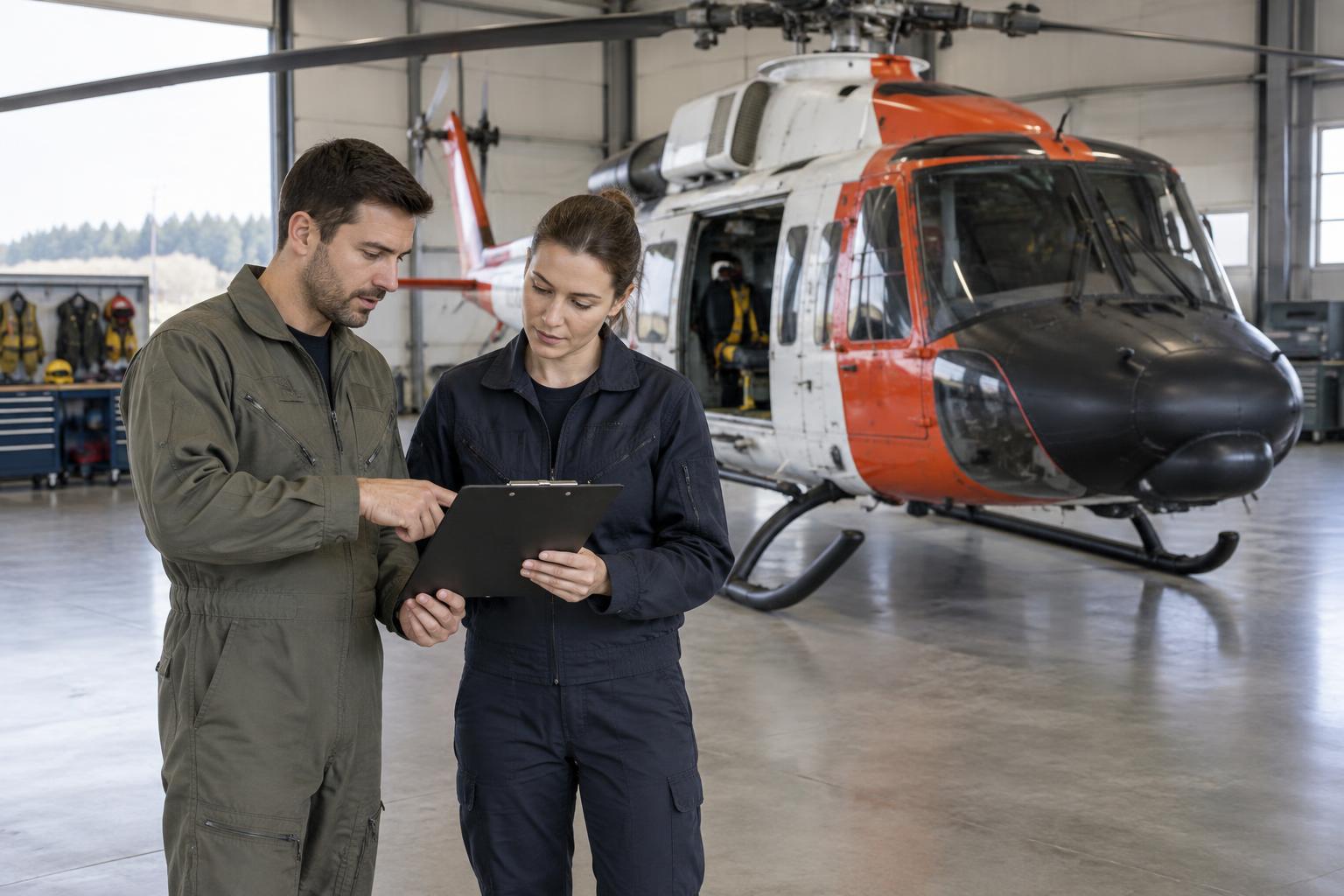
Rescue aviation brings together pilots, maintenance personnel, dispatchers, communications specialists, medical crew members and support staff. Their hiring processes can look quite different. A pilot may be asked about aircraft handling and decision-making, while a dispatcher may be assessed on information gathering and prioritization. A maintenance applicant may discuss troubleshooting and documentation. The job posting is the best starting point for understanding which qualifications and duties an employer will examine.
Many processes begin with an application review or screening conversation, followed by one or more interviews. Some employers also use practical exercises, simulations, written questions or reference checks. The order and format vary, so ask the recruiter what stages are planned, whether an assessment is timed and what materials you should bring. Clarifying the format is sensible preparation, not an attempt to obtain the answers.
Interviews often focus on judgment as well as experience
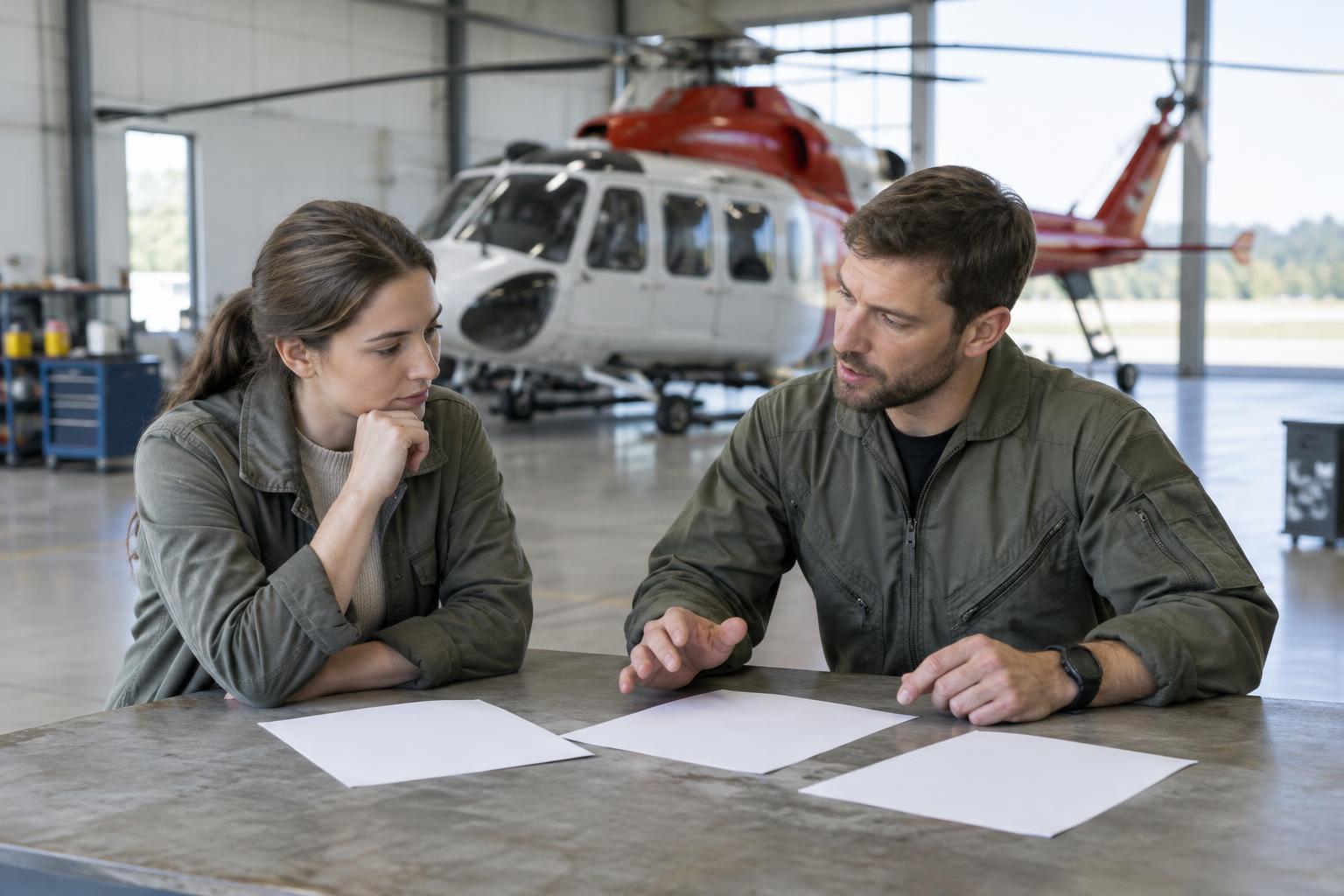
Interviewers may ask for examples of situations in which you noticed a risk, worked with someone under pressure or changed course when new information arrived. They are usually looking for more than a successful outcome. Be ready to explain what you knew at the time, what you did, whom you consulted and what you learned. If a situation did not go well, describe it honestly and show how you responded afterward.
Questions about teamwork can be especially relevant because an aviation mission depends on people with different responsibilities sharing a clear picture of the situation. An interviewer might ask how you would raise a concern with a more experienced colleague or handle conflicting priorities. A useful response makes your reasoning visible: identify the uncertainty, communicate it clearly and explain how you would work within your role and the organization’s procedures.
Assessments may test how you work through a problem
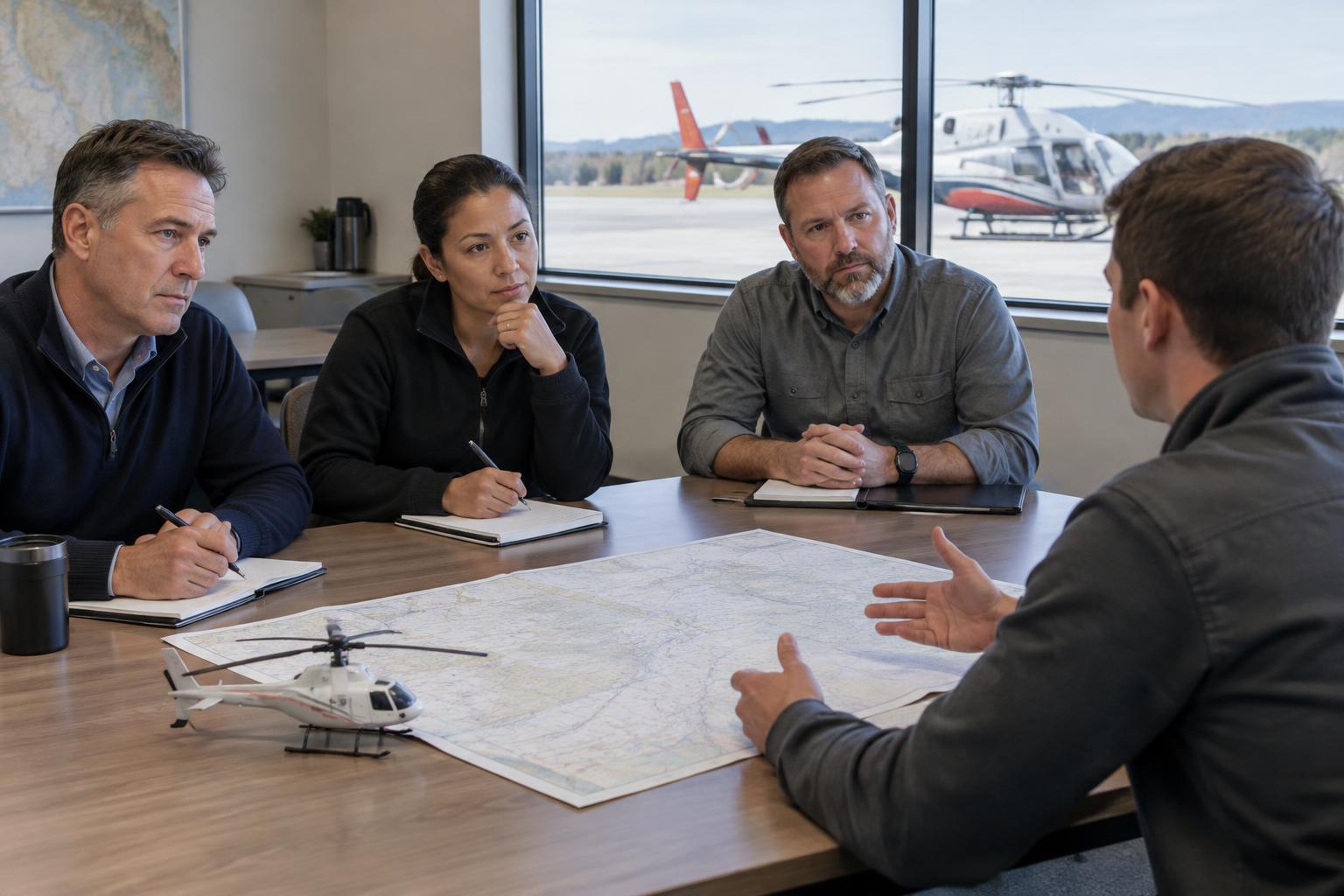
A scenario exercise might present incomplete weather information, a changing transport request, an equipment discrepancy or several incoming messages. The aim is not necessarily to produce an instant, flawless answer. Assessors may be interested in whether you recognize missing information, avoid unsupported assumptions, set priorities and know when to pause or escalate a decision. For clinical or technical positions, exercises may also examine skills specific to the role.
If you receive a scenario, state what you know and what you still need to verify. Explain which actions belong to you and which require another team member or an authorized decision-maker. In a group exercise, listen and make room for relevant expertise rather than trying to dominate. A clear explanation of a cautious choice can be more informative than a confident answer that overlooks an important constraint.
Prepare evidence, not a rehearsed persona
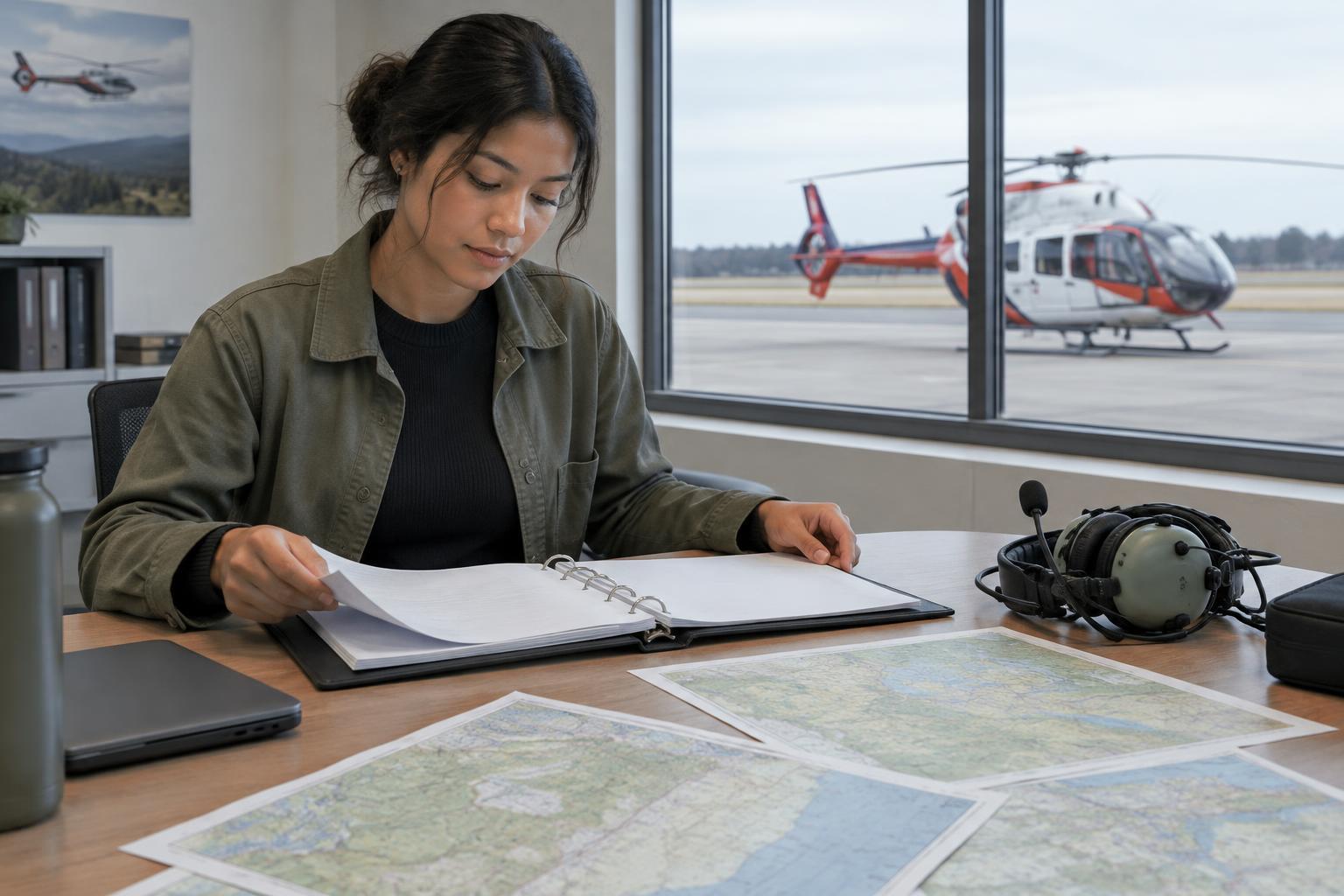
Before an interview, revisit the job description and identify examples that demonstrate its core requirements. Choose a few experiences you can explain in concrete terms: a difficult handoff, a technical fault you helped resolve, a time you managed competing tasks or a moment when you spoke up about safety. Your examples do not all have to come from rescue aviation. Relevant experience from other aviation, healthcare, logistics or customer-facing settings can show transferable habits if you explain the connection.
Review the credentials and experience you have listed, and be prepared to discuss their scope accurately. If you have not used a particular aircraft, system or workflow, say so rather than stretching a related experience into a claim of proficiency. You can then describe how you learned comparable systems and how you would approach training. For any scheduled practical assessment, follow the employer’s preparation guidance and ask whether specific documents, clothing or equipment are needed.
Use the interview to assess the workplace, too
Applicants can learn a great deal by asking how new hires are trained, how duties are divided and how teams communicate when plans change. You might ask what an ordinary shift involves, how feedback is given after a difficult mission or what support is available when a crew member has a safety concern. The answers can help you understand the role beyond its most visible moments.
After an assessment, reflect on the questions that were difficult and the information you needed but did not have. That review is useful whether or not you receive an offer. Hiring processes differ, but a consistent approach travels well: describe your experience truthfully, explain your reasoning, respect role boundaries and show that you can communicate when the situation is uncertain.