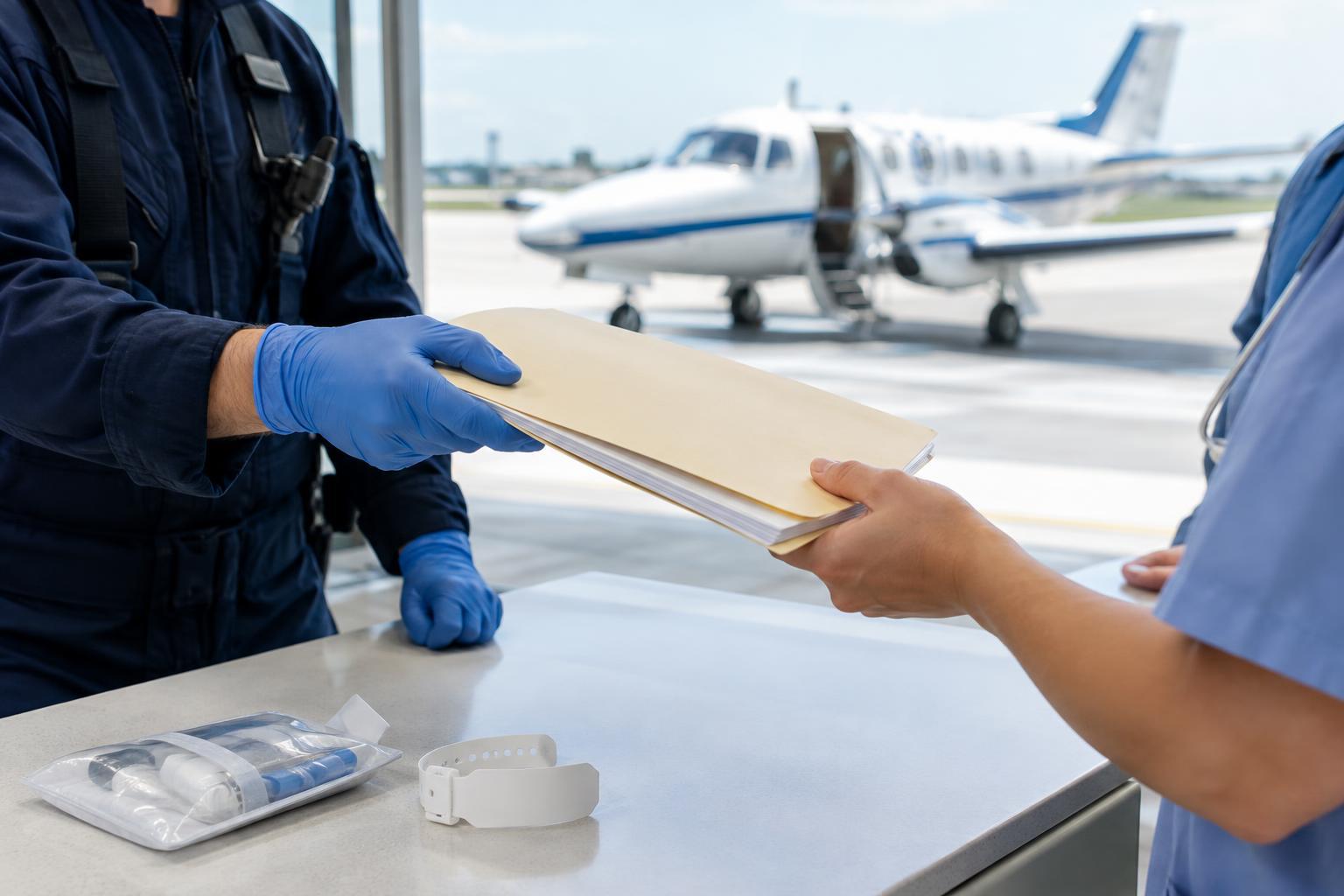
Why the paperwork matters
During an air transfer, the patient, the transport crew and the receiving facility may arrive with different parts of the same story. Records help connect them. They explain why the transfer was arranged, what care has already been provided and what the receiving team should know when responsibility changes hands. A clear verbal report remains important, but written or electronic information gives the next team something to check after the handoff.
There is no single document packet that fits every transfer. The useful records depend on the patient’s condition, the facilities involved and applicable local requirements. The goal is not to carry every page of a chart. It is to make essential information available, legible and matched to the right patient, while protecting sensitive details from unnecessary disclosure.
The clinical picture: what has happened and what is needed
A concise transfer summary usually provides the starting point. It can identify the patient, the sending and receiving facilities, the reason for transfer, the working diagnosis or main concern, and the care provided before departure. Recent observations, changes in condition and unresolved questions may be especially useful to a team taking over in a time-limited setting. Where available and relevant, copies of test results, imaging reports or information for accessing images can add detail without requiring the transport crew to reconstruct the entire case.
Medication information deserves particular attention. A useful record distinguishes regularly used medicines from treatments given during the current episode, including doses and times when those details matter to continuing care. Known allergies and the nature of any documented reactions should be easy to find. If a patient has an infusion, oxygen supply or other ongoing support, the handoff should make clear what is in use and what equipment or supplies will need to remain available through the next stage of the journey.
A record is most helpful when it has been checked against the latest available information. For example, a printed summary prepared early in the transfer process may not reflect a treatment given just before departure. A brief update, recorded or clearly passed to the receiving team, helps prevent an older document from being mistaken for the final account.
Transfer, identity and authorization records
Administrative documents serve a different purpose from clinical notes. Depending on the transfer, they may include the receiving facility’s acceptance details, contact information, patient identification, and forms related to consent or decision-making authority. Staff should use the procedures that apply to their organization and jurisdiction rather than assuming that a particular form is required everywhere.
Identity checks are especially important when information moves separately from the patient. Each document or electronic file should be identifiable as belonging to the intended patient. If an original document must stay with a facility, an appropriate copy or secure electronic handoff may be more practical. The team arranging the transfer should know which records are going with the patient, which have been sent ahead and whom to contact if something cannot be found.
Some transfers involve personal belongings, mobility aids or items supplied by the sending facility. A separate inventory or receipt can help distinguish those items from medical records and equipment used in transport. Keeping these lists separate makes both the clinical handoff and the accounting of possessions easier to follow.
How information moves alongside the aircraft
Aviation adds a coordination challenge: the people who prepare a packet may not be the same people who deliver the patient. Records might travel as paper, through an approved electronic system, or both. What matters operationally is that the transport crew knows where to find essential information and that the receiving team can access it when the patient arrives. Sending documents ahead can help, but it does not replace confirming that they reached the intended recipient.
Before departure, a simple check can catch avoidable gaps: Are patient identifiers consistent? Is the transfer summary current? Are relevant results and medication details included? Is the receiving contact clear? These checks are not a substitute for local protocols or clinical judgment. They are a way to reduce the chance that a missing page becomes a last-minute communication problem.
Privacy also shapes the method of transfer. Patient information should be shared through approved channels with people who need it for the transfer or continuing care. A packet left unattended or a file sent to an unverified destination can create problems even if its contents are otherwise complete.
Closing the loop at the receiving facility
The handoff is complete only when information reaches the people assuming care. A useful arrival report connects the patient’s current condition with the accompanying records and draws attention to changes that occurred in transit. The receiving team can then clarify discrepancies, such as a medication listed on an earlier summary that was stopped before departure.
Transport teams may also create their own record of observations, care and significant events during the journey. That record forms a bridge between the sending facility’s account and the receiving facility’s next steps. For readers interested in rescue aviation logistics, the central lesson is straightforward: documents do not merely travel with a patient. They need a planned route, a clear owner at each handoff and a way to confirm that the right information arrived.