Look beyond whether the flight went smoothly
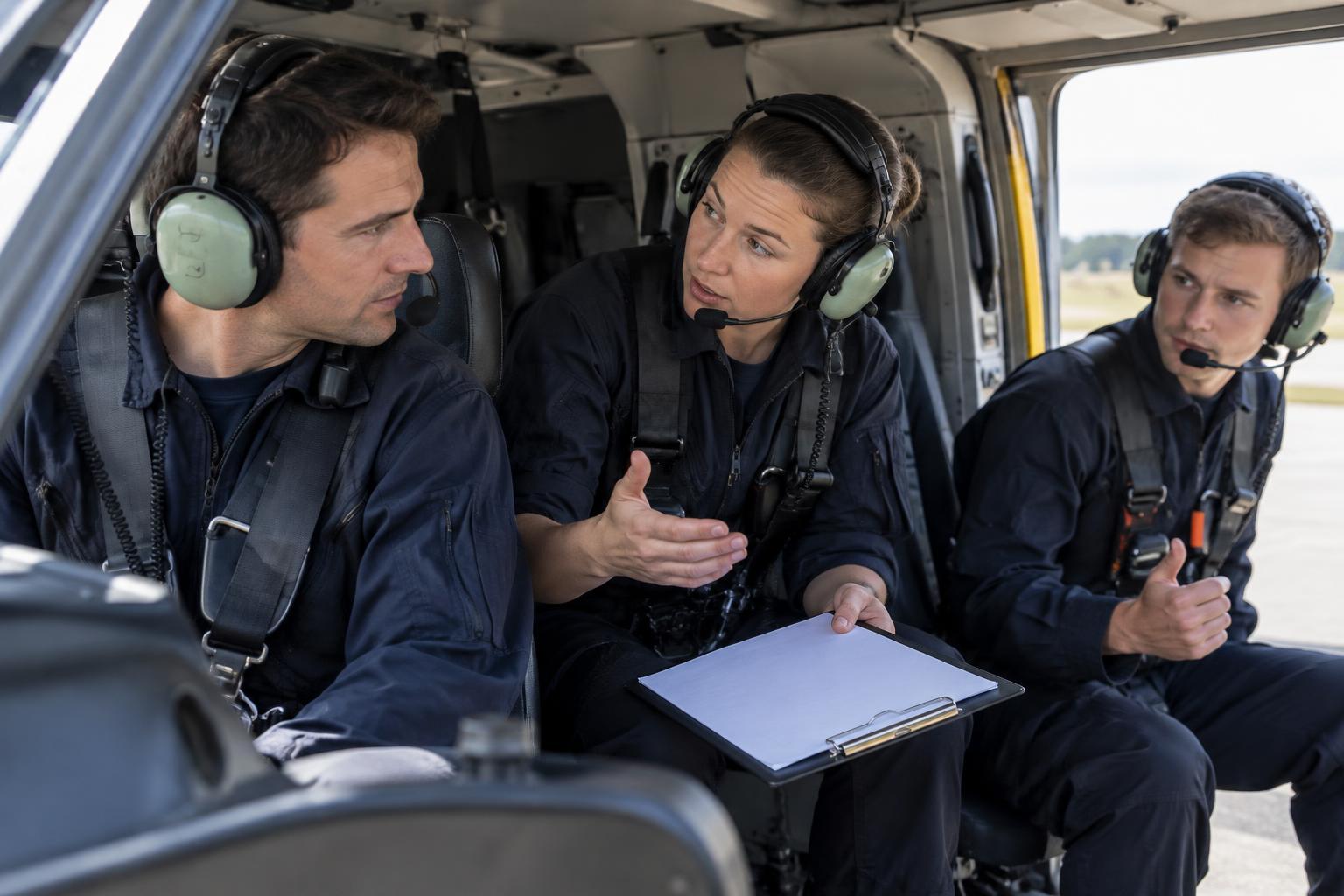
A flight can end without an obvious problem even when crew members had different understandings of the plan. Conversely, a difficult flight may show strong coordination: people noticed a change, spoke up and adjusted together. A useful postflight debrief examines how the team worked, rather than judging communication solely by the outcome. The question is not just “What happened?” but “What did each person understand as it happened?”
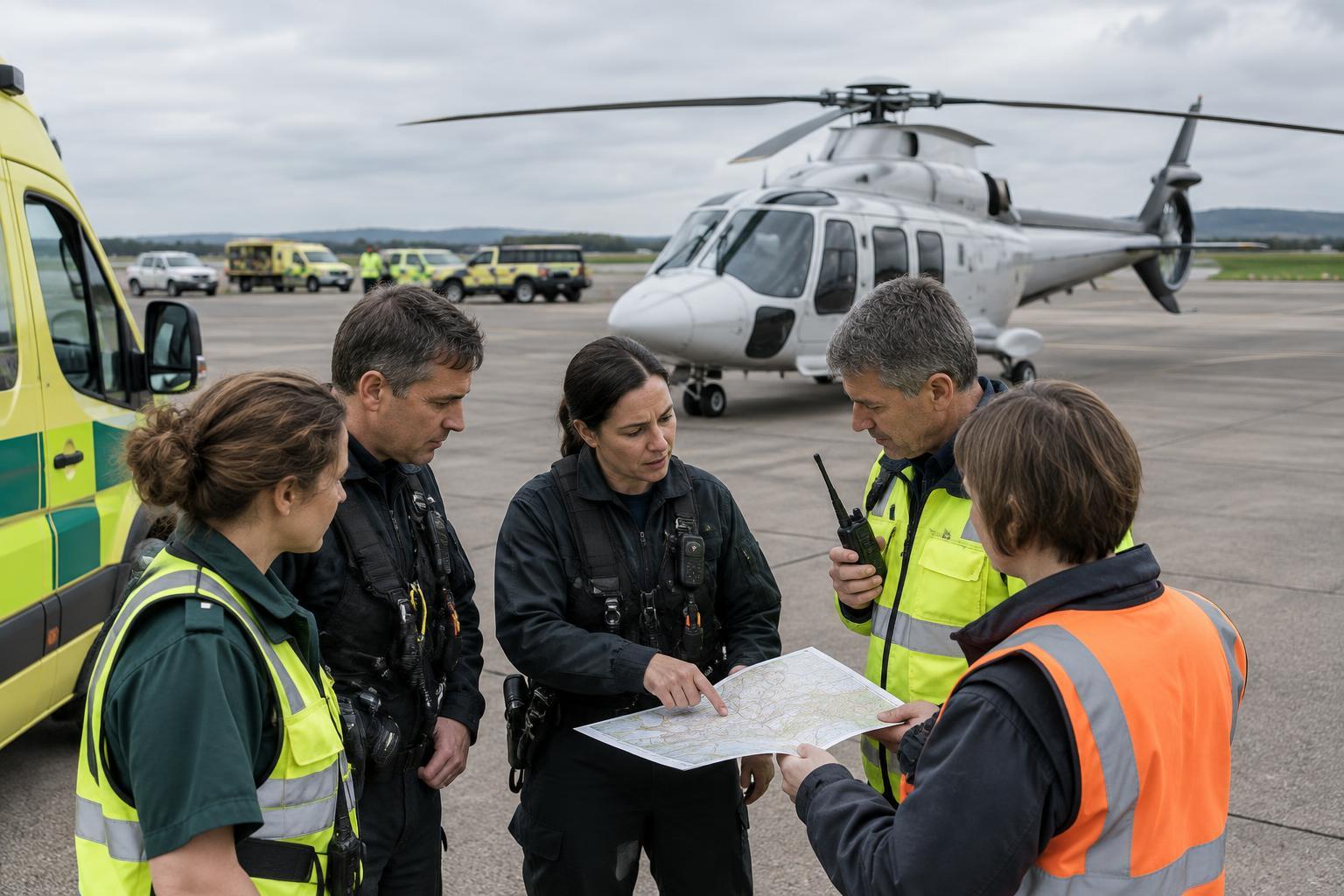
That distinction matters in rescue aviation, where aircraft crews may coordinate with dispatchers, ground responders and receiving facilities. Each participant sees a different part of the situation. A debrief gives the people who were present a chance to compare those perspectives while the sequence is still familiar. It can reveal a helpful practice to repeat, as well as an ambiguity that deserves attention.
Trace how information moved
One productive way to review a flight is to follow a few important pieces of information from their source to the people who needed them. Did a change in destination reach everyone affected? Was a weather concern described in terms the team could use? When a new time estimate was shared, did recipients know whether it was firm or provisional? These questions focus on the path of a message, not on assigning fault to the person who sent it.
Handoffs are especially revealing. A message may be accurate yet arrive too late to shape a decision, or it may reach one crew member without reaching another. Debriefs can identify where an acknowledgment or a brief restatement helped confirm shared understanding. They can also show when a familiar phrase carried different meanings for different people. Not every difference requires a new procedure; sometimes the immediate lesson is simply to define a term more clearly.
Notice workload and unspoken assumptions
Communication does not happen in isolation from the work. During a busy phase of a flight or a complex transfer, someone may hear a message but be unable to act on it immediately. A debrief can explore whether the timing, channel and level of detail fit the moment. If an update was missed, it is more useful to understand the surrounding workload than to assume the listener was not paying attention.
Teams can also examine assumptions that never became explicit. Perhaps several people expected the same person to make a call, or one participant believed a plan had been settled while another thought it was still under discussion. Asking what people expected at a particular point can expose these gaps without turning the conversation into a search for a culprit. It also makes visible the small clarifications that prevented confusion.
Make room for every perspective
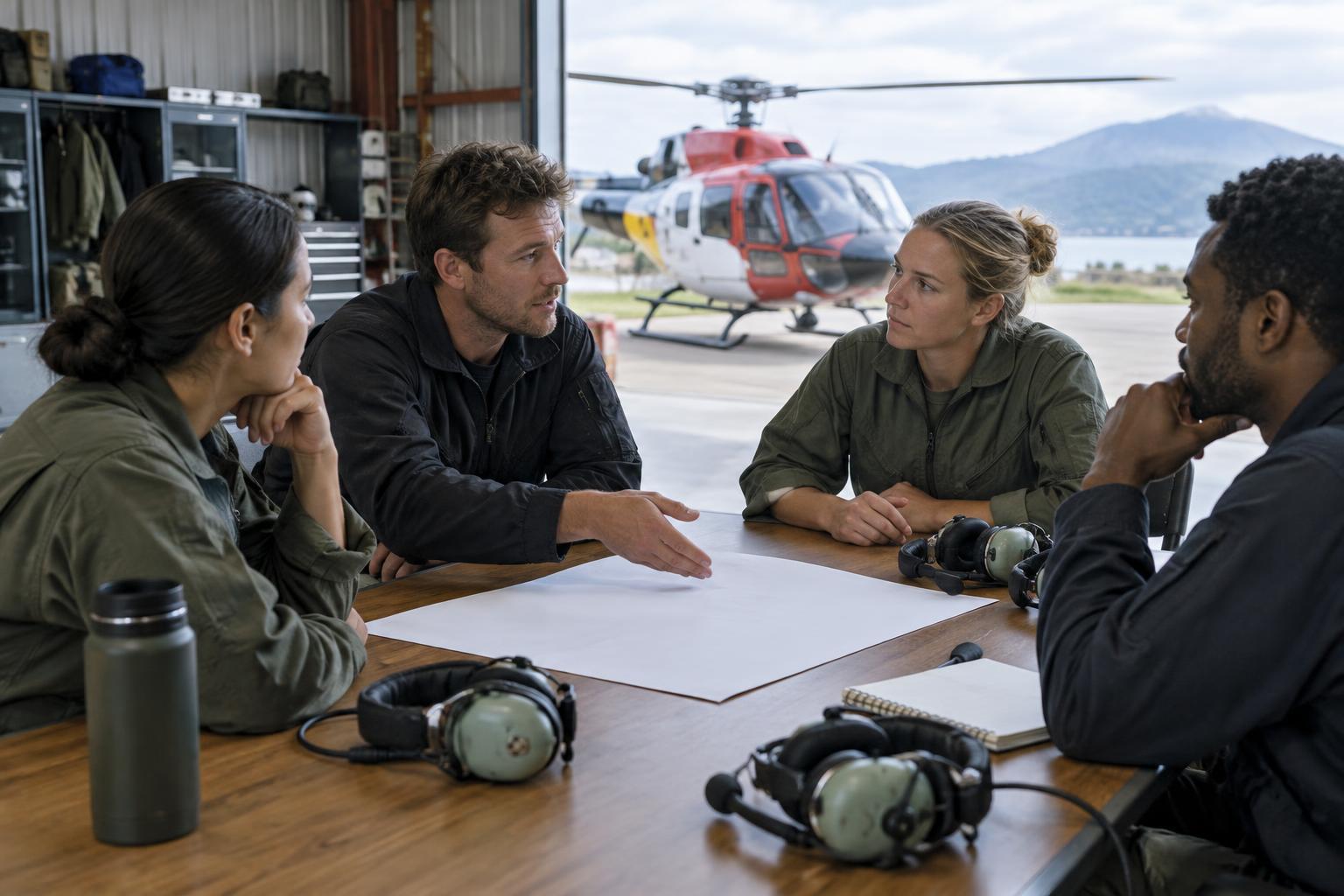
A debrief is more informative when participants can describe uncertainty without being interrupted or dismissed. A short timeline can help: establish the main events, then invite people to explain what they knew, what they needed and what they did next. Questions such as “What made that update clear?” or “Where did the plan become uncertain?” are often more useful than questions that imply a correct answer was obvious at the time.
Different roles may notice different communication strengths and gaps. A pilot may recall how a request fit the flight workload; another crew member may recall how the same request affected preparations; a dispatcher may have had information that was not visible on board. None of those accounts is necessarily the whole picture. Comparing them can reveal where a shared plan existed and where the team only appeared to have one. Debriefs should also respect applicable confidentiality practices when discussing transport details.
Turn observations into manageable improvements
A useful debrief ends with more than a list of things that felt difficult. The team can name a communication practice that worked, identify a specific point of friction and decide whether either calls for follow-up. A narrow observation, such as “the revised arrival estimate was not repeated during the handoff,” is easier to examine than a broad conclusion that “communication was poor.” Some issues may be resolved through a clearer briefing habit; others may need review by the appropriate organizational team.
Not every debrief will uncover a major lesson, and it should not have to. Repeated small observations can help a team understand how its communication holds up across routine and demanding flights. The value lies in making work visible: who had information, how it was shared, what remained uncertain and how people responded. That is how a postflight conversation can support better shared understanding on the next assignment.