Misconception: Autopilot flies the whole mission
The word “autopilot” can suggest a machine that takes over every flying task. In most aircraft, it is better understood as a system that helps control selected parts of a flight. Depending on its design and settings, it may hold an altitude, maintain a heading, or follow guidance supplied by a navigation system. Those are useful jobs, but they do not amount to managing an entire mission.
A pilot still decides which functions to use and checks whether the aircraft is doing what was intended. The crew must also consider weather, air traffic instructions, aircraft performance and changing plans. In rescue aviation, a transport request may add time pressure or coordination with people on the ground. Autopilot does not resolve those operational questions; it performs the control tasks it has been equipped and directed to perform.
Misconception: Every autopilot has the same features
Autopilot capability varies considerably. A relatively simple system may help keep the wings level or hold a selected heading. A more capable one may follow a programmed route or assist during parts of an instrument approach. The available functions depend on the aircraft, its installed equipment and the way those systems are configured. A feature seen in one cockpit should not be assumed to exist in another.
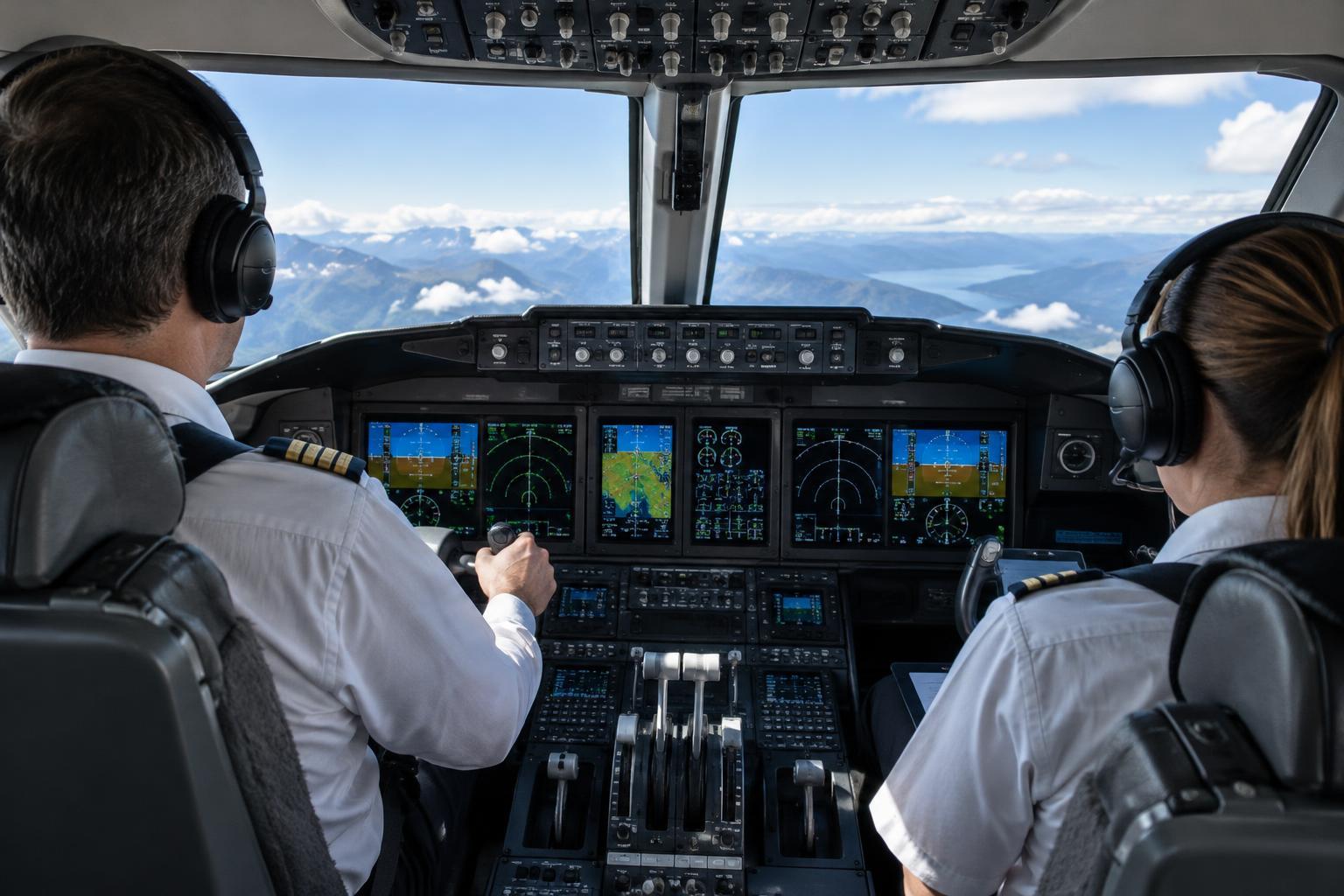
The labels on a control panel can also make a function sound broader than it is. Selecting a navigation mode, for example, does not by itself guarantee that the intended route has been entered correctly or that the aircraft will follow it under every condition. Crews need to understand what a selected mode will do next, not just what it is called. That distinction matters when comparing aircraft or discussing their suitability for different types of transport.
Misconception: Autopilot sees and avoids every hazard
Autopilot does not work like an all-seeing observer. It responds to information and commands from connected instruments and systems. Other equipment may provide alerts or guidance about certain hazards, but the presence of autopilot alone does not mean an aircraft can detect and avoid terrain, traffic, icing or poor weather. Even where systems are linked, their coverage and limitations differ.
This is one reason monitoring remains an active crew task. Pilots compare the aircraft’s behavior with instruments, clearances and the conditions outside when visibility permits. If an indication is unexpected, they need to identify the problem and respond appropriately. Automation may reduce repetitive control work, leaving more attention for that wider picture, but it does not remove the need to maintain it.
Misconception: Engaging autopilot removes pilot workload
Autopilot can make a demanding flight more manageable by handling steady control tasks. It can be particularly helpful when a crew is also navigating, communicating and coordinating an arrival. Yet using it creates another responsibility: selecting the right mode, confirming that it engaged, and watching for mode changes or unexpected aircraft behavior. A mistaken setting may produce a smooth, precise response in the wrong direction.
Crew communication helps keep automation understandable. When pilots share what they expect the aircraft to do, a change in altitude or route is less likely to go unnoticed. On flights involving emergency transport, cockpit coordination is part of a larger chain that may include dispatchers, medical teams and receiving facilities. Those groups have different roles; the autopilot assists with aircraft control rather than replacing the communication between them.
Misconception: A capable autopilot makes a flight automatically safer
A well-used autopilot can be a valuable aid, but safety depends on more than the number of automated functions aboard. System condition, pilot training, clear procedures and sound decisions all matter. Crews also need to be prepared to fly without a particular function if it is unavailable or unsuitable for the situation. The right choice may be to use automation, change its mode or disconnect it.
A practical way to understand autopilot is as a capable assistant with a defined job description. Ask what task it is controlling, what information it is using and who is checking the result. Those questions cut through the familiar myths: autopilot is neither a substitute pilot nor a useless convenience. Its value comes from matching its capabilities to the task while people remain responsible for the flight.