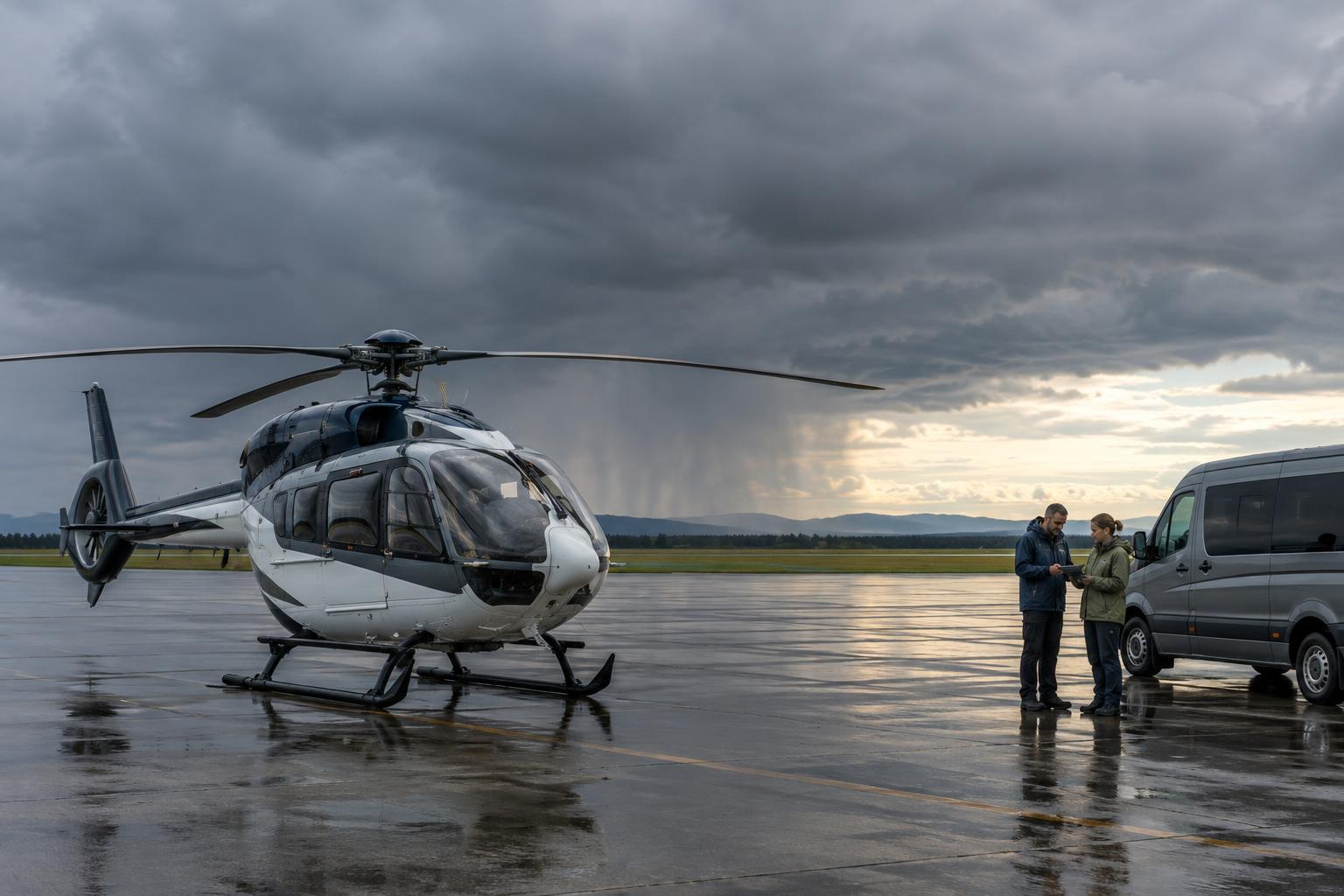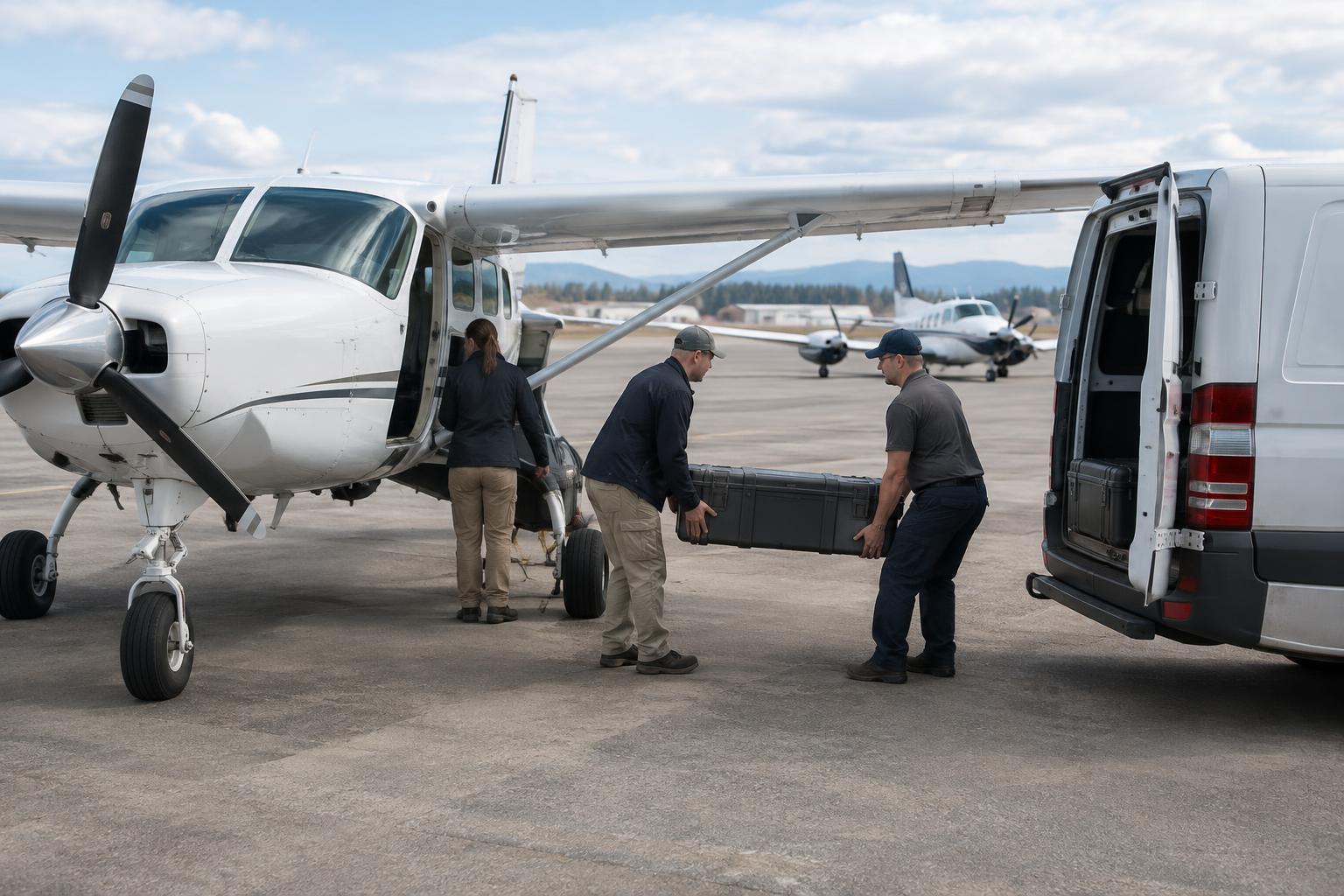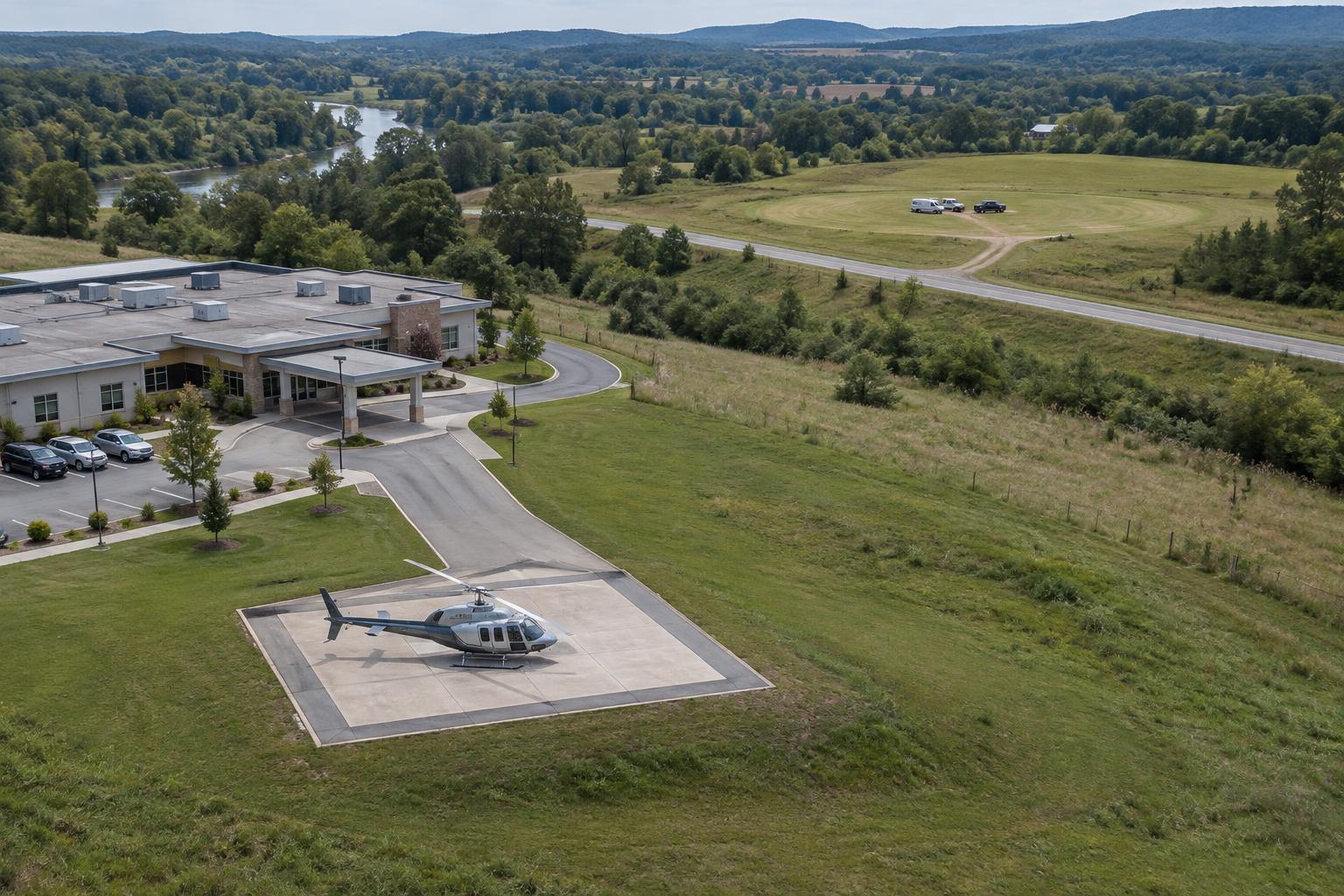
An airport-to-airport flight is only one part of the journey
Fixed-wing aircraft travel between airports, but a patient’s journey usually begins and ends somewhere else. A ground ambulance may bring the patient from a care facility to the departure airport, while another takes them from the arrival airport to the receiving facility. These trips are often called ground legs. Together with the flight, they form one connected transport rather than three unrelated bookings.
This distinction matters when comparing routes. An airport that looks convenient on a map may be a long drive from the hospital, have limited suitable ground access, or be unavailable when the transport is planned. Planners consider the whole door-to-door journey, including time spent moving between vehicles. A shorter flight does not necessarily mean a shorter overall trip.
Coordinating the two ground legs
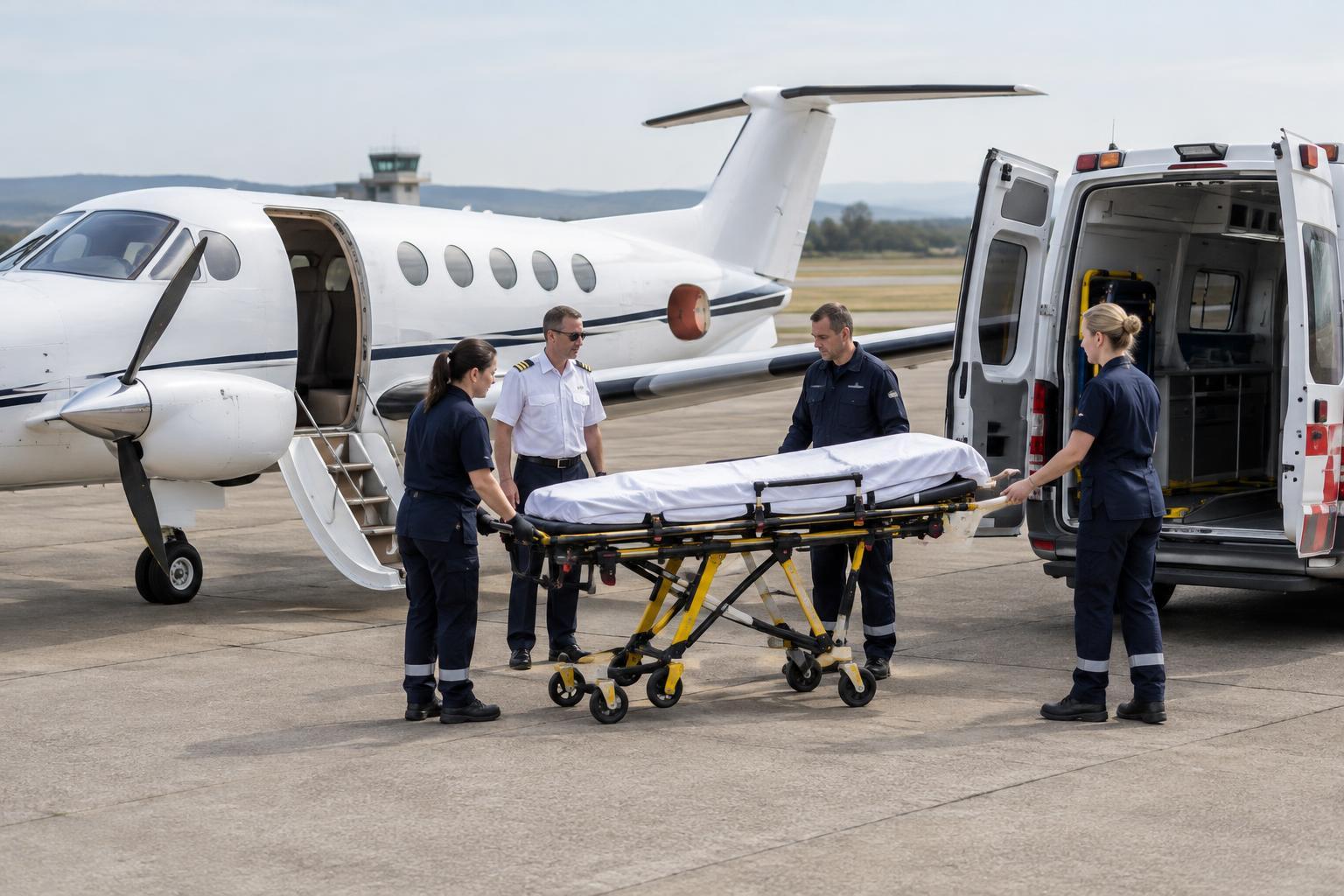
The departure and arrival ambulance crews need usable meeting details: which airport area to enter, where to park, who to contact and when to expect the aircraft or patient. Airports vary in how vehicles reach an aircraft. Some transfers can take place near a parked plane; others require movement through a designated building or access point. Local airport rules and arrangements determine what is possible.
Timing is a shared challenge. A ground ambulance arriving too early may wait while the aircraft is prepared; one arriving late may delay the departure. On the destination side, the aircraft may land before the ambulance can reach the agreed meeting point. Transport coordinators therefore work with estimated times while allowing for changes caused by weather, airport activity, road conditions or a shift in the patient’s readiness to travel. Clear updates are more useful than treating an initial schedule as fixed.
Planning the transfer between vehicles
Moving a patient between an ambulance and an aircraft is a distinct part of the journey. The vehicles may use different stretchers, restraints, loading heights and equipment mounts. Planners need to understand what can be moved with the patient, what must be transferred to aircraft-compatible equipment and whether the planned loading area has enough room for crews to work. The aircraft crew and ground crews follow their own equipment and safety procedures during these moves.
Equipment continuity also affects logistics. Oxygen supplies, batteries and other portable devices may need to support the patient through the ground trip, the exchange between vehicles and the flight. The people responsible for each leg should know which equipment travels onward and which belongs to a particular crew. Identifying those boundaries beforehand helps prevent delays at the airport and avoids confusion when vehicles depart.
Handoffs link the crews as well as the vehicles
A transport changes hands more than once. The sending facility communicates with the departure crew; the ground and flight crews exchange information at the aircraft; and the process continues in reverse on arrival. A useful handoff identifies the patient, the planned destination, relevant transport needs, accompanying belongings and any changes since the previous team’s update. The clinical detail and responsibilities depend on the teams involved and their established protocols.
There is an operational handoff, too. Crews confirm where the next vehicle is waiting, who is traveling with the patient and whether the receiving facility expects an updated arrival time. A single clear point of contact for schedule changes can reduce crossed messages, particularly when several organizations are involved. Good coordination does not mean every participant needs every detail; it means each team receives the information needed for its part of the journey.
Building a plan that can change
Fixed-wing transports depend on several links being available in the right sequence: a ready patient, appropriate crews and vehicles, usable airports and a receiving destination. A delay in one link can affect the others. If an arrival airport changes, for example, the destination ambulance route and meeting instructions may need to change as well. If a facility needs more preparation time, departure arrangements may have to be revised.
For that reason, ground connections are not an afterthought to the flight. They are part of route selection and contingency planning from the beginning. The aim is a coordinated door-to-door movement in which each team knows the next step, understands whom to update and can adapt when the original timing no longer fits.