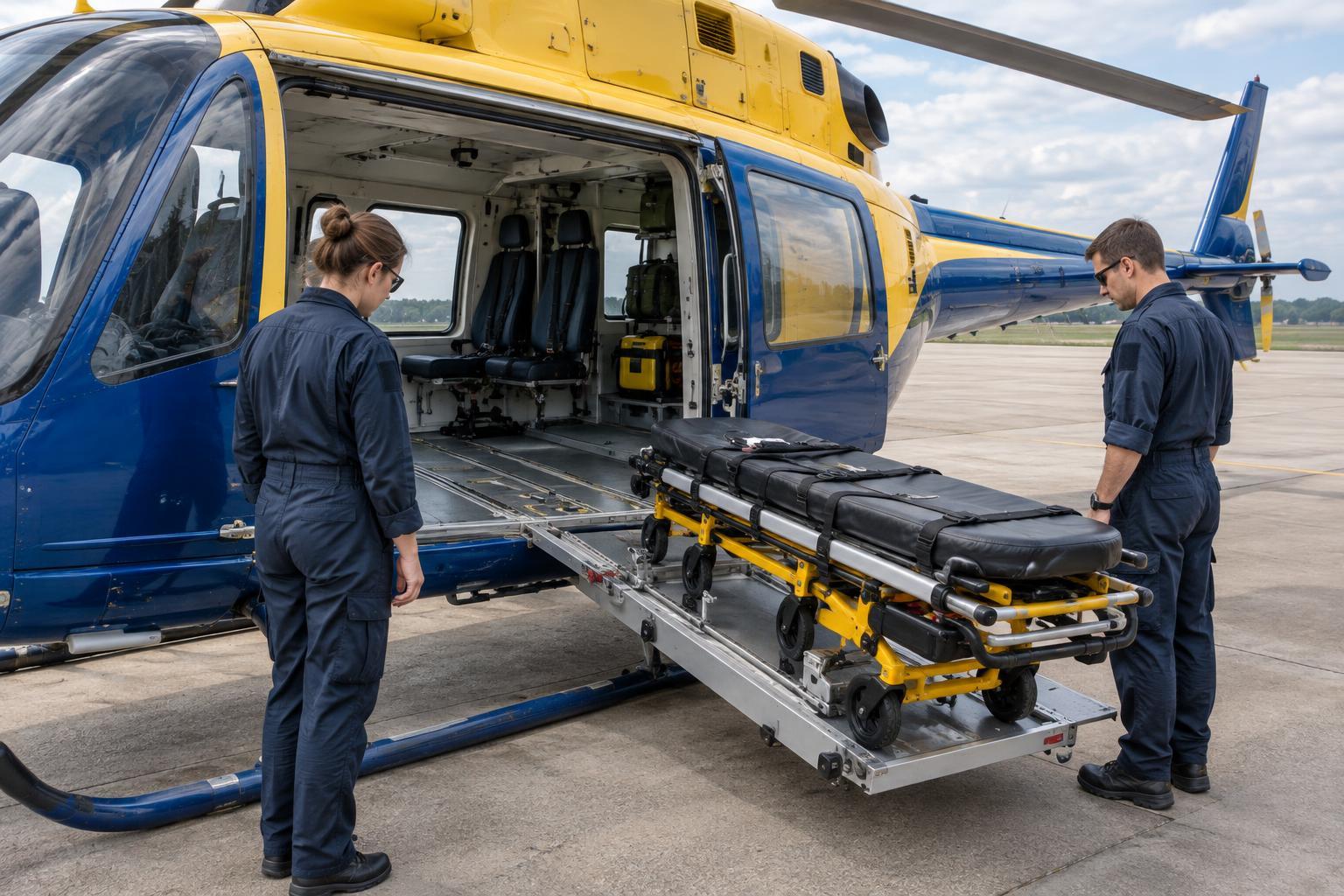
Two ways to equip a small cabin
Medical equipment in a rescue aircraft generally falls into two groups. Portable items can be carried into or out of the aircraft, while installed equipment is integrated with the cabin through dedicated mounts, wiring, plumbing or other aircraft-specific connections. The distinction is not simply whether a device can be picked up. A portable device still needs a secure place in flight, and a removable device may use an aircraft-approved mounting system.
Both approaches serve a purpose. Portable equipment gives crews flexibility across aircraft, ground vehicles and facilities. Installed equipment can make repeated tasks easier by providing a consistent location, a dedicated power connection or a cabin layout designed around the device. Most transport cabins use a combination rather than relying on one approach alone.
What portability offers—and what it requires
Portable monitors, pumps and other compact devices can accompany a patient through different stages of a journey. That continuity may reduce the need to swap equipment during a transfer. It can also help an organization adapt when aircraft have different cabin configurations or when a device must be removed for servicing.
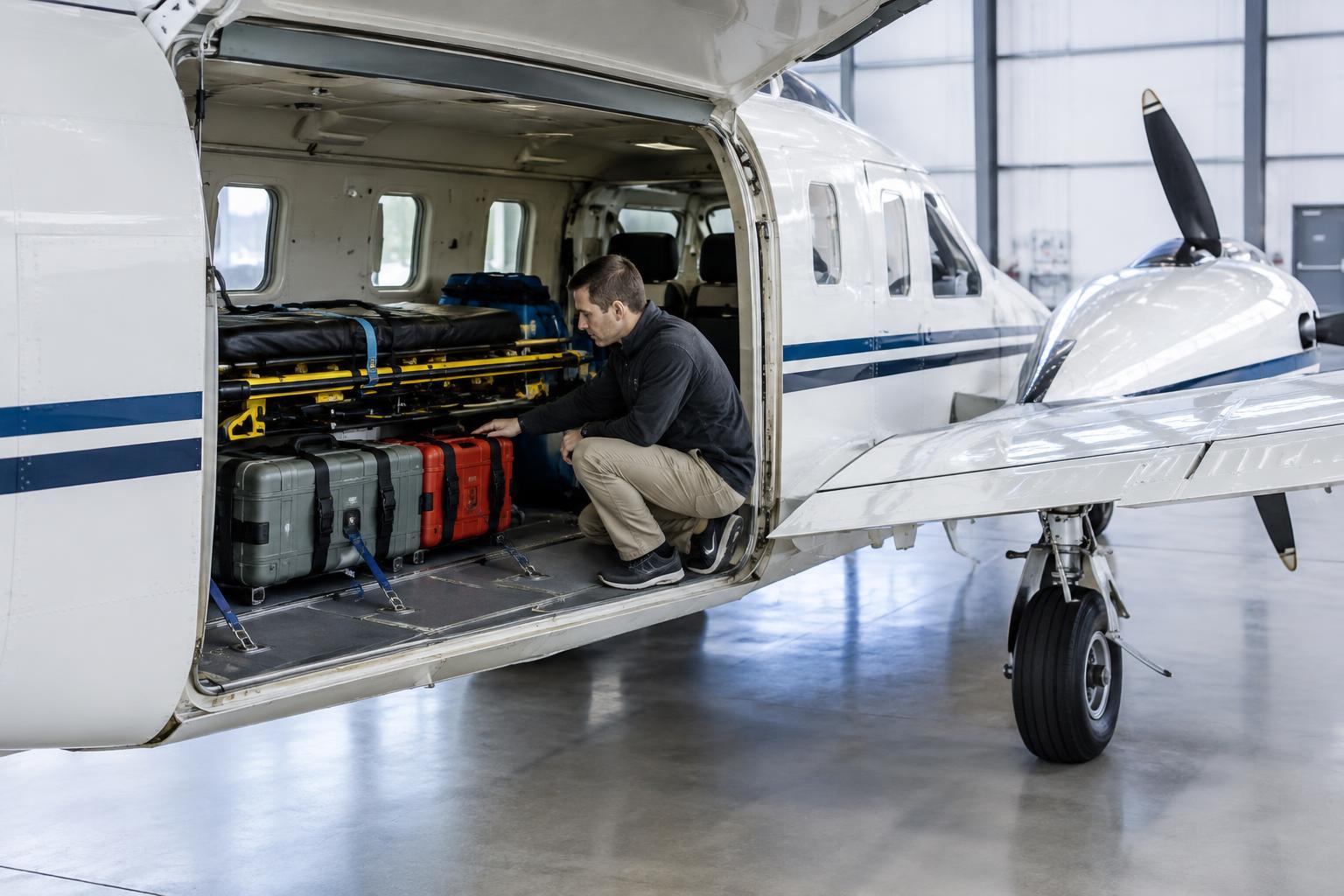
Portability does not mean loose storage. In flight, an unsecured object can move during turbulence, maneuvering or a hard landing. Crews therefore need appropriate restraints or approved mounts that keep equipment in place without blocking access to the patient, exits or essential aircraft controls. Cables, tubing and handles also need thoughtful routing so they do not create snags when people move through a narrow cabin.
Battery life is another practical consideration. A device that works independently of aircraft power may remain useful during a transfer, but its available operating time depends on its battery condition and use. Charging arrangements and spare batteries are part of equipment planning, not substitutes for checking that a device is ready before a mission.
Why some equipment is installed
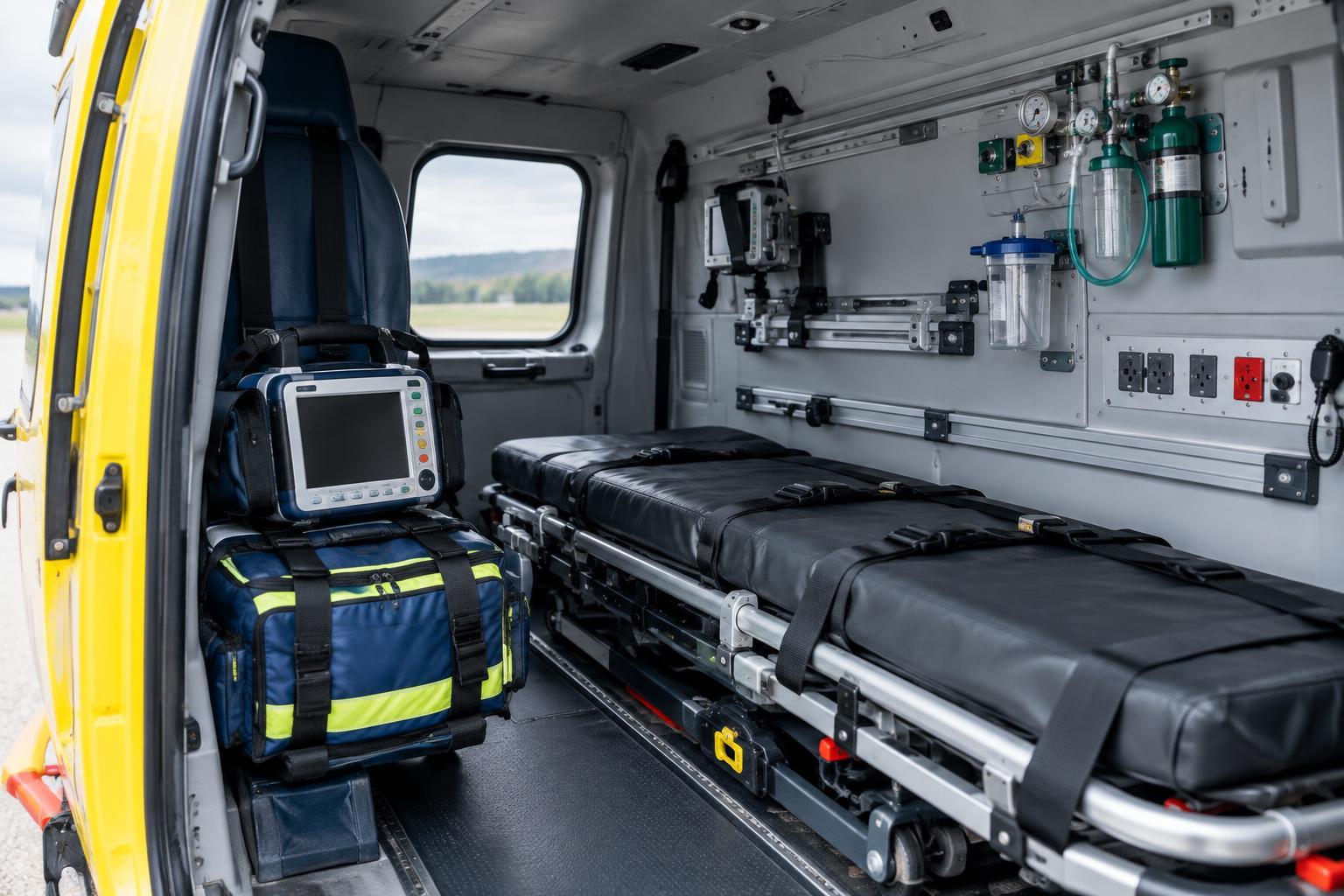
Installed equipment can make efficient use of limited cabin space. Built-in storage, dedicated brackets and accessible connection points give frequently used items predictable locations. Some aircraft are configured with electrical outlets or oxygen systems intended for onboard medical equipment. When those features are part of the aircraft, their placement can help crews work without repeatedly rearranging the cabin.
Integration comes with constraints. Adding a mount, power connection or other fixed component may affect weight, balance, electrical capacity, access and aircraft maintenance. Changes to an aircraft must be evaluated and approved through the applicable aviation processes; a device suitable for a hospital or vehicle is not automatically suitable for installation in an aircraft. Once fitted, installed components also need inspection and upkeep as part of the aircraft’s operating environment.
A fixed location is useful only if it supports the people working around it. A well-positioned device should be visible and reachable from the crew’s assigned positions while leaving room for restraints and movement. Designers must consider how equipment will be accessed during routine care as well as how the cabin will be entered and exited.
The shared challenges: power, space and communication
Portable and installed equipment place demands on the same small cabin. Every item adds weight and occupies space, whether it sits in a cabinet or clips to a stretcher. Crews need to know what is aboard, where it is secured and whether it can be reached without disturbing other equipment. A tidy layout can matter as much as the size of any individual device.
Power planning crosses the portable–installed divide. An aircraft outlet may support a compatible device, but compatibility depends on the aircraft and the equipment configuration. Battery-powered items still need charging, and connections should not interfere with safe cabin movement. Likewise, a built-in supply system may reduce the number of separate containers aboard without eliminating the need to monitor available supply.
Noise and limited space can make coordination difficult. Consistent equipment locations and familiar checks help team members communicate clearly about what is ready, what is connected and what needs attention. These habits support the clinical crew and the flight crew without treating cabin equipment as separate from the aircraft around it.
Choosing a balanced configuration
There is no universal list of devices that should be portable or installed. Aircraft size, mission profile, maintenance arrangements and the needs of the people carried all influence the choice. A device used across several settings may benefit from portability; an item used on nearly every flight may justify a dedicated location. In either case, the goal is reliable access without compromising safe stowage or aircraft operation.
The most useful way to compare the two is to look beyond the label. Ask where the item will sit, how it will be secured, what powers it, how it will be maintained and whether crew members can use it within the available space. Portable equipment provides adaptability; installed equipment provides integration. A thoughtful rescue-aircraft cabin uses both strengths while accounting for the limits of each.