A changed plan creates several information needs
A rescue transport may be delayed before departure, held during a stop, or diverted after a flight is underway. Weather, aircraft availability, landing-site conditions, or a change in the receiving arrangement can all affect a plan. The reason matters, but so does the impact: people at different locations may be preparing for an arrival that will no longer happen as expected.
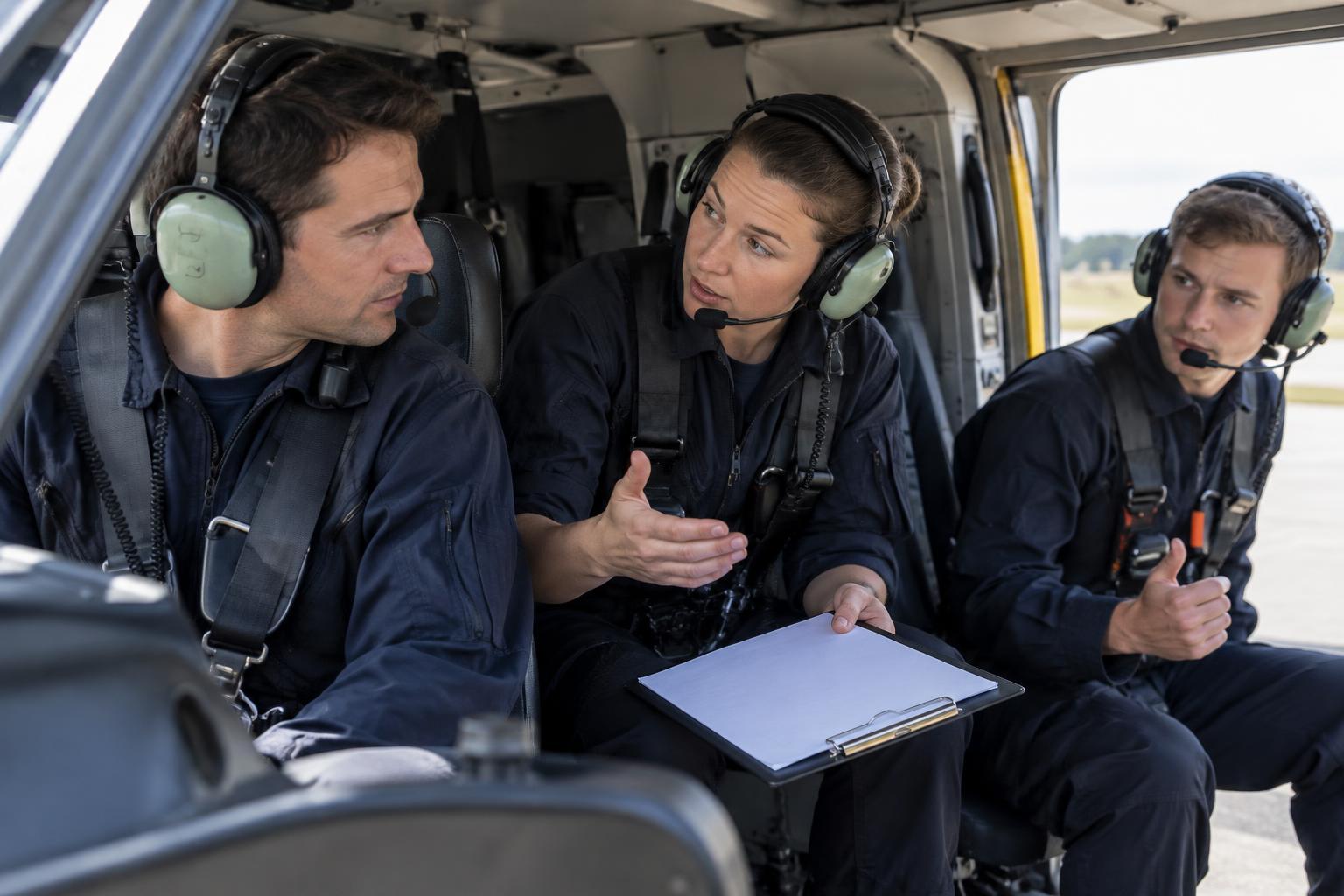
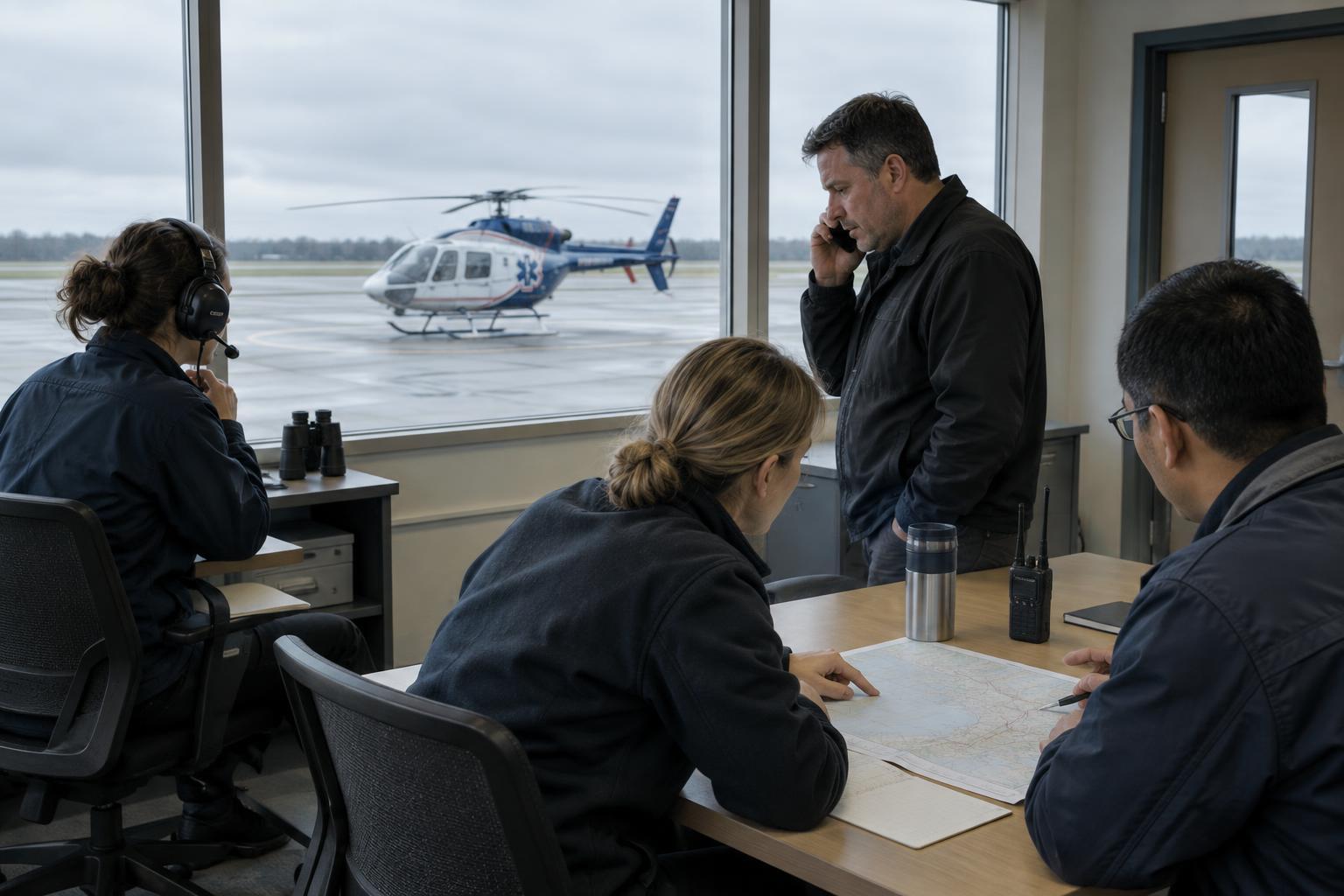
A flight crew needs a workable aviation plan. Ground coordinators need to know whether vehicles, personnel, or access arrangements should remain in place. A sending facility may need to adjust its immediate preparations, while a receiving facility may need to revise its arrival plan. These groups do not all need identical detail, but they do need a consistent account of the transport’s status.
Build a shared picture before sending updates
The first useful message is often a short statement of what is known: whether the transport is delayed or diverted, where it is in the process, and which part of the original plan has changed. It should separate confirmed facts from possibilities. For example, a potential alternate destination is not the same as an accepted destination, and an estimated departure is not a promise.
Someone coordinating the communication can help by keeping a record of the latest confirmed status and the source of each change. This reduces the chance that an older estimate will be repeated after the plan has moved on. Where several organizations are involved, the appropriate communication path and decision authority depend on their established procedures; an update should not be mistaken for an instruction or an approval.
Timing is part of that shared picture. If no reliable arrival estimate is available, saying so is more useful than offering a precise guess. A commitment to provide another update when a decision is made, or at an agreed check-in point, gives others a way to plan without treating uncertainty as settled.
Match the message to the recipient
An update is most helpful when it answers the recipient’s immediate question. A receiving team may need to know whether to maintain its arrival preparations. A ground transport partner may need a confirmed meeting location and a clear indication of whether that location could still change. A sending team may need to know that the transfer is not proceeding on its earlier timeline. Concise, recipient-specific messages are less likely to bury an important change in background detail.
Each message can identify the transport, state the change, explain the practical effect, and name the next expected update or contact point. For a diversion, the new destination should be communicated as confirmed only after the relevant parties have established that it is workable. Information about a patient or other sensitive circumstances should be shared only through appropriate channels and only to the extent needed for the recipient’s role.
Confirmation matters as much as transmission. A message left for a busy desk or sent to a shared channel may not reach the person adjusting the plan. Teams can use their established read-back or acknowledgment practices for consequential changes, especially a new destination, meeting point, or arrival expectation.
Keep the update loop open
One announcement rarely covers an entire delay. An initial update may describe only the immediate interruption; later messages may confirm a new departure window, a diversion, a return to the original plan, or a cancellation. Each significant update should make clear whether it replaces an earlier one. This helps prevent two groups from working from different versions of the plan.
It is also worth communicating when there is no material change at an agreed check-in point. A brief status confirmation tells waiting teams that the communication link is still active, even if a decision is pending. At the same time, frequent speculative messages can create confusion. The aim is a dependable rhythm of verified information, with prompt notice when a change calls for action.
If communication responsibility passes from one coordinator to another, the handoff should include the last confirmed status, outstanding questions, people already notified, and any acknowledgments still needed. That small continuity step helps the next person avoid restarting the conversation or overlooking a stakeholder.
Close the loop after the plan settles
When the transport arrives, is transferred to another arrangement, or ends without the planned flight, a closing status update lets participants stand down or complete their handoffs. It should be clear which location and team received responsibility where that information is relevant and appropriate to share. A final update also prevents an old delay notice from remaining the last message someone has seen.
Afterward, teams may find it useful to review the communication rather than only the transport outcome. Did the right people learn about the change in time to adjust? Were estimates clearly labeled? Did anyone continue working from an outdated destination or schedule? Those questions can reveal practical improvements to contact lists, message templates, and handoff habits. The goal is not to eliminate uncertainty from changing conditions, but to make that uncertainty visible and manageable for everyone coordinating the transport.