The problem was distance, not just the absence of doctors
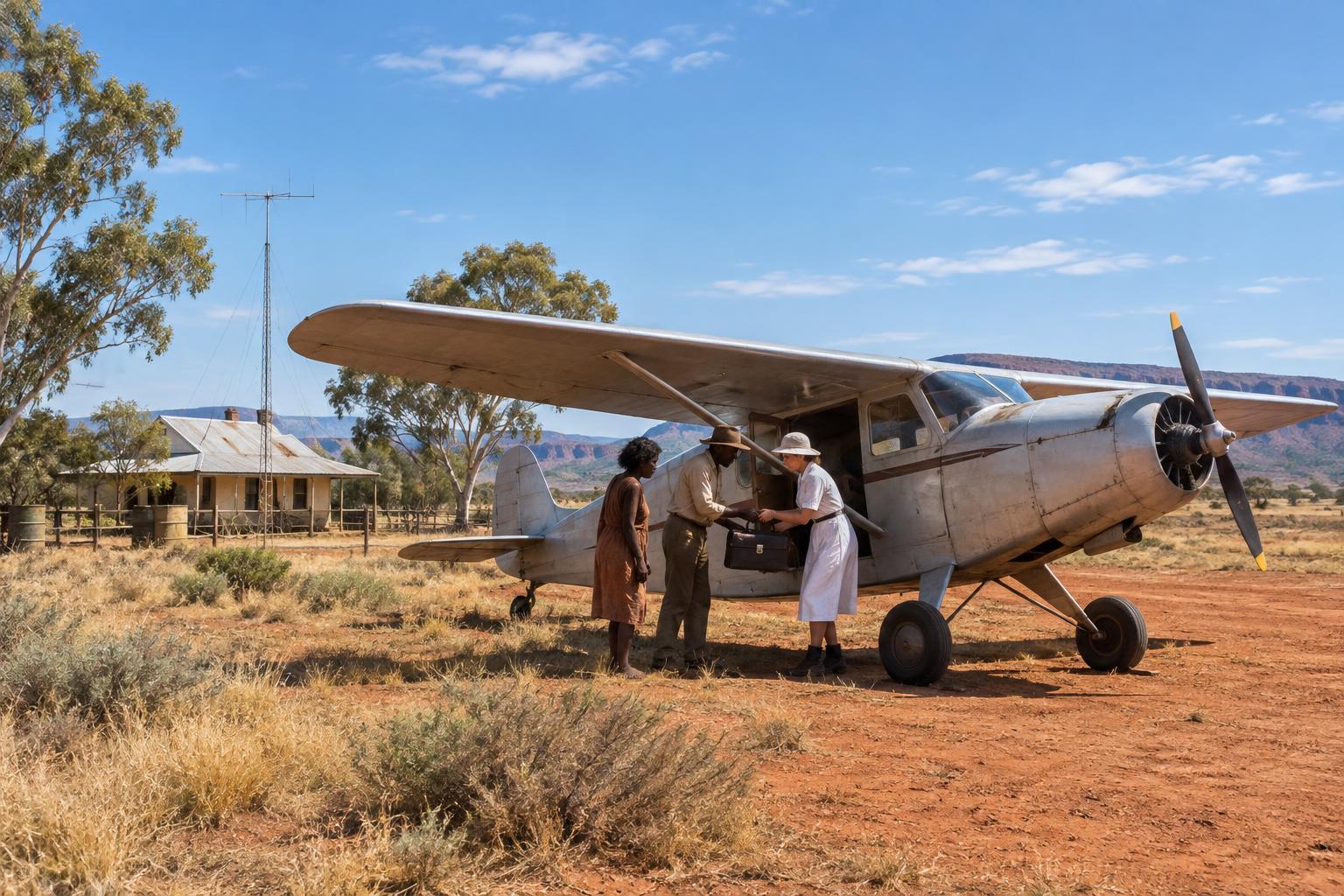
In remote parts of Australia, reaching a doctor once meant overcoming enormous distances. A journey that looked straightforward on a map could involve rough tracks, river crossings and long stretches without a reliable road. Transporting a sick or injured person was difficult, and sending for help could take time before the journey even began. A doctor based in a town could not easily visit every station or settlement that needed care.
These conditions shaped the idea behind what became the Royal Flying Doctor Service. Aircraft offered a way to cover distances faster than overland transport, but a plane alone could not solve the problem. Someone had to report that help was needed, explain the situation, arrange a suitable landing place and connect the patient with care after the flight. The history of the service is therefore as much about communication and coordination as it is about flying.
From an idea to an aerial medical service
The Reverend John Flynn, whose work took him into inland communities, was a leading advocate for using aviation to extend medical care across remote Australia. In 1928, an aerial medical service began operating from Cloncurry in Queensland. A doctor could travel by aircraft to places that would otherwise require a much longer overland trip, or a patient could be flown toward more extensive care.
The early operation depended on existing aviation capability rather than a self-contained medical fleet. Aircraft and pilots had to work alongside medical staff and people on the ground. That partnership established a pattern that remains central to understanding rescue aviation: a successful flight is only one part of a longer chain of decisions, transport and care.
Radio made the aircraft more useful
An aircraft cannot respond to a need it does not know about. Many remote communities initially had limited means of contacting a doctor, so radio became crucial to the flying doctor concept. Inventor Alfred Traeger’s pedal-powered radio equipment helped people communicate where conventional electrical power was unavailable. Radio links allowed remote households and settlements to ask for advice and, when necessary, help arrange a flight.
Communication also meant that not every question required an aircraft journey. A doctor could offer guidance at a distance or decide that an in-person visit was needed. When a flight was arranged, messages could help the crew learn where to go and what conditions they might encounter. Aircraft shortened the travel time; radio helped turn that speed into a workable medical service.
A flying service still needed a network on the ground
Early flying doctor work relied on local knowledge and practical preparation. People near a destination might need to identify a landing area, pass along information or bring a patient to meet the aircraft. Pilots had to consider the limitations of the aircraft and the conditions at both ends of a flight. Doctors needed to decide what could be done during a visit and what required transport to another facility.
The service also developed beyond emergency journeys. Regular visits and remote consultations offered ways to connect people with care before a crisis. Its reach and the experiences of patients were not uniform, however. Australia’s remote communities are diverse, including Aboriginal and Torres Strait Islander communities, and the existence of an aircraft service did not remove every barrier to care.
Why the model mattered
The Royal Flying Doctor Service showed how aviation could become part of a wider care system rather than serve only as fast transport. Its early model linked a request for help, communication with a doctor, a flight plan, local assistance and follow-on treatment. Each link mattered. If a message could not get through or an aircraft could not land, the speed of flight offered little benefit.
That is the enduring lesson of its origins. Bringing aviation to remote medical care required more than a new way to travel: it required people to organize around the realities of distance. The combination of aircraft, radio and community cooperation made medical contact more practical for many people in remote Australia and became an influential example of how transport and communication can work together.