One mission, several conversations
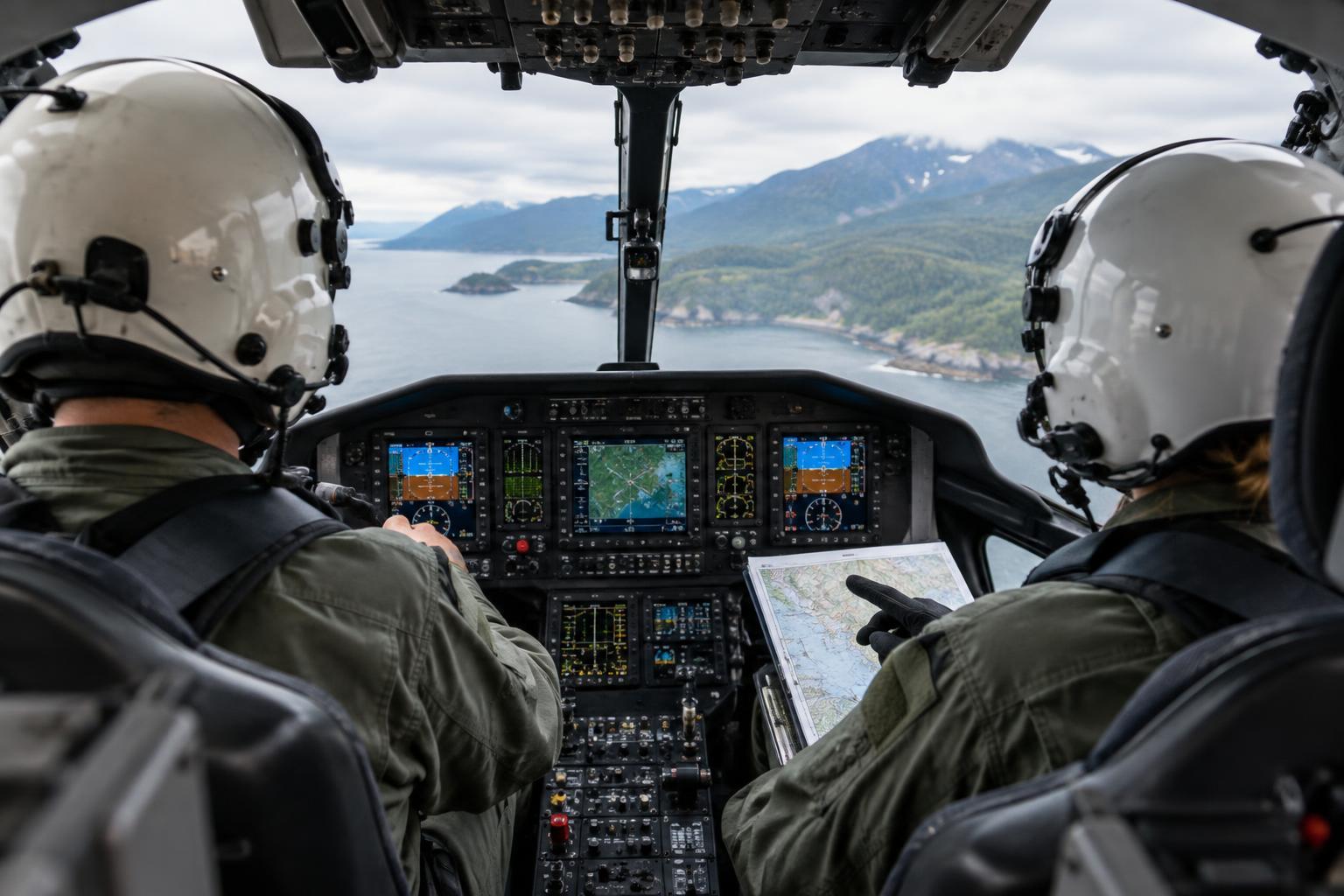
A rescue flight can connect people who are working in very different places: a flight deck, an air traffic control facility, a dispatch center, a landing area and a receiving facility. They do not all need the same information. Air traffic control helps manage aircraft within the airspace and at airports under its responsibility. Emergency agencies coordinate the response on the ground. The crew has to keep those conversations distinct while maintaining a shared understanding of the mission.
That division of work is important because a message that makes sense to one group may not answer another group’s question. A controller may need the aircraft’s position, altitude or intentions. A ground coordinator may need an estimated arrival time or a description of the intended landing location. Good communication is not a single broadcast to everyone; it is the right information sent to the right person at a useful time.
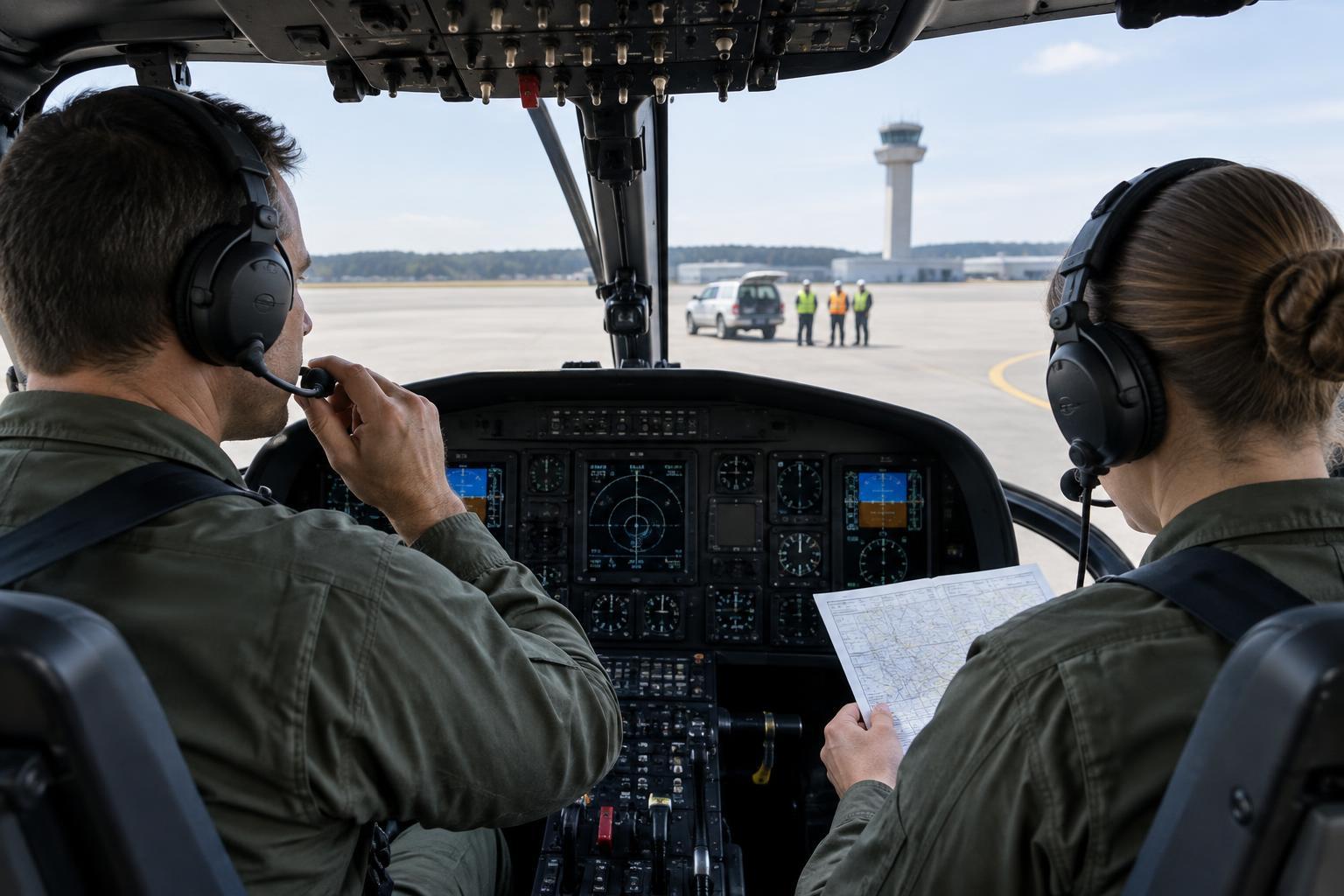
Talking with air traffic control
When a flight is operating in controlled airspace, pilots communicate with air traffic control using established aviation radio practices. They identify the aircraft, state relevant requests and acknowledge instructions or clearances so both sides can confirm what was understood. Controllers may provide traffic information or direct aircraft movements within their area of responsibility. The crew remains responsible for operating the aircraft and assessing whether an instruction can be carried out safely.
Rescue-related urgency can affect what a crew needs from air traffic control, but the circumstances vary. Rather than assuming that every transport receives the same handling, a crew can describe a specific need, such as a change in routing, and communicate how urgent the situation is. Brief, precise messages help controllers understand the request without obscuring details needed for traffic management. If something is unclear, asking for clarification is more useful than acting on a guess.
Coordinating with agencies on the ground
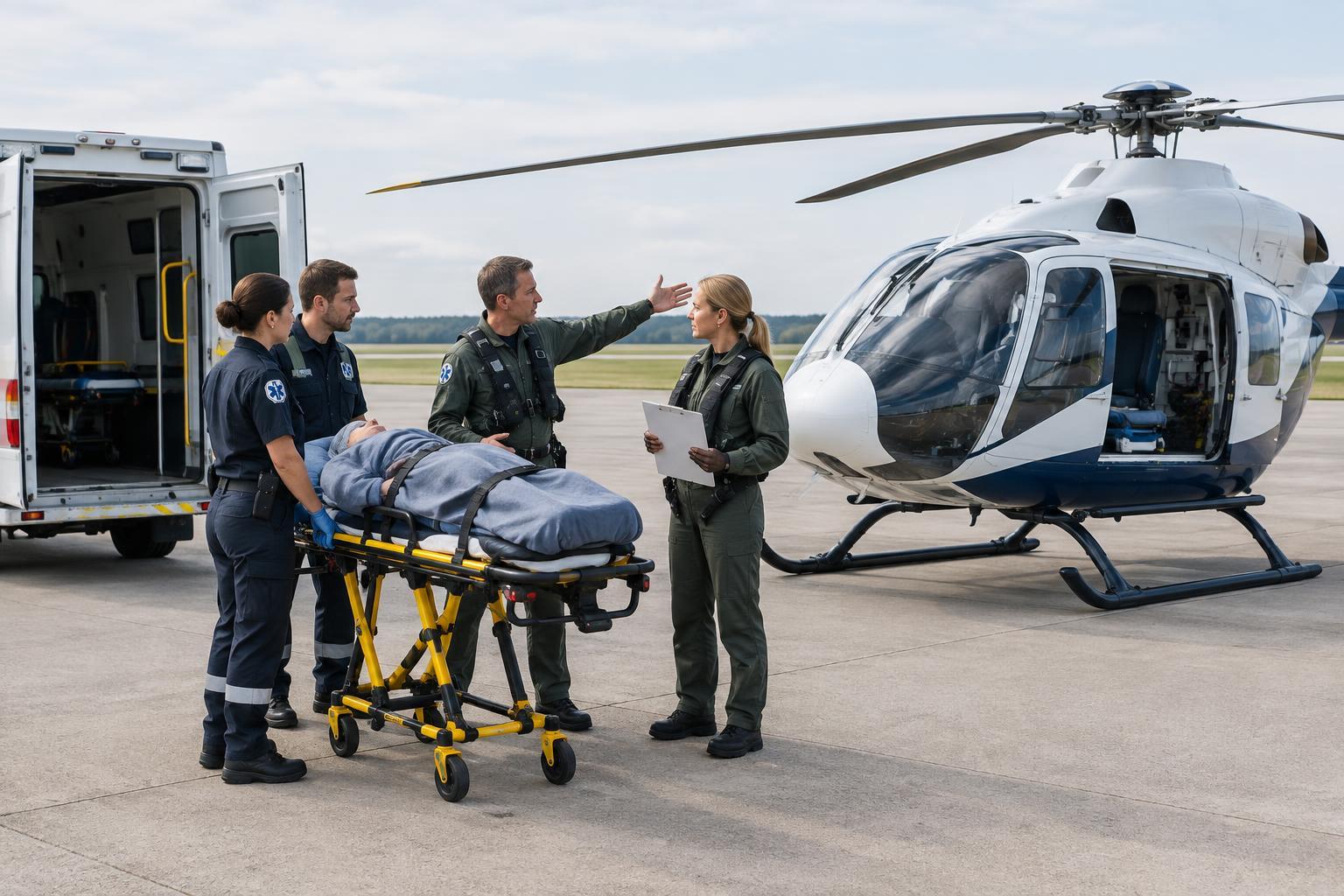
Emergency agencies and dispatchers help connect the aircraft to the wider response. Depending on the mission, they may relay the location of a pickup point, identify a ground contact, coordinate access to a landing area or pass along changes in timing. Receiving facilities may also need an arrival estimate and other information appropriate to their role. These conversations support logistics; they do not replace the pilot’s assessment of the aircraft’s route or landing conditions.
Location descriptions deserve particular care. A place name that is obvious to a local responder might be ambiguous to a crew arriving from elsewhere. Coordinators can reduce confusion by confirming the intended site, who will be present and how updates will be passed along. Conditions may change after an initial plan is made, so a reliable way to report a moved pickup point, a delay or an unavailable landing area matters as much as the original message.
Keeping the crew aligned
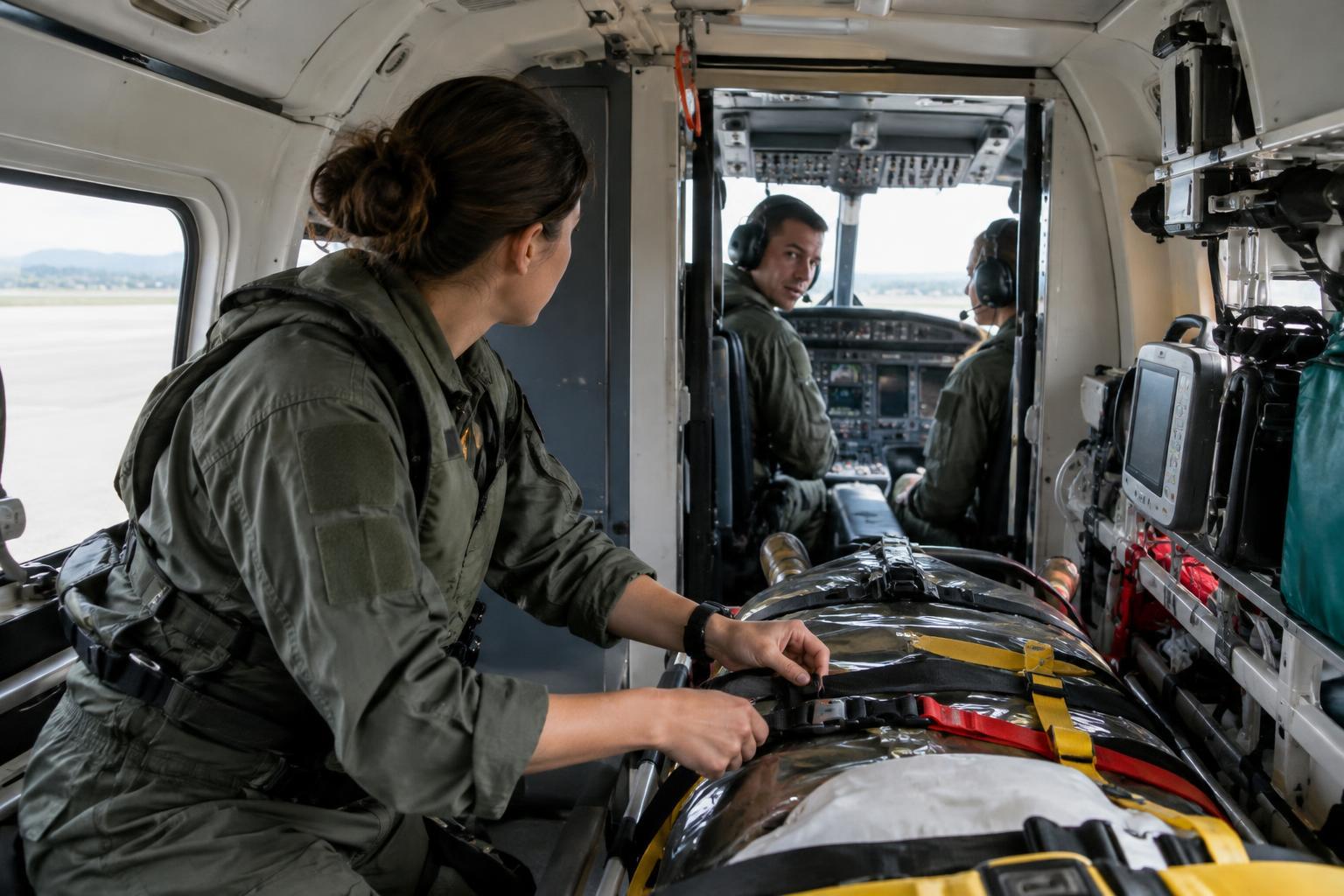
External communication works best when the people aboard the aircraft share an accurate picture of the plan. A crew may agree on who is monitoring a radio, who is handling a call and when an operational update needs to be brought to the pilot’s attention. The details depend on the aircraft and organization, but the aim is consistent: important information should reach the person who must act on it without interrupting a critical flying task unnecessarily.
Handoffs are especially vulnerable to misunderstanding. A new controller, dispatcher or ground contact may not know what was agreed earlier. Repeating essential details, confirming a changed plan and correcting an incorrect assumption can prevent separate teams from working toward different destinations or arrival times. Inside the aircraft, a short verbal recap can also help crew members distinguish a confirmed plan from a proposal that is still being discussed.
When the plan changes
Weather, traffic, aircraft needs and ground conditions can all affect a mission after departure. If the crew changes course or chooses another landing site, air traffic control and ground partners may each need an update, but for different reasons. Controllers need information relevant to the aircraft’s movement through airspace. Emergency agencies need to know how the change affects their people, equipment and meeting point.
The useful habit is to close the communication loop: state the change, make sure the intended recipient has received it and check that any dependent plans have been updated. Not every participant needs every detail, and radio time can be limited. Clear priorities, plain descriptions and explicit confirmation help a changing situation remain understandable across the flight deck, the airspace system and the response on the ground.