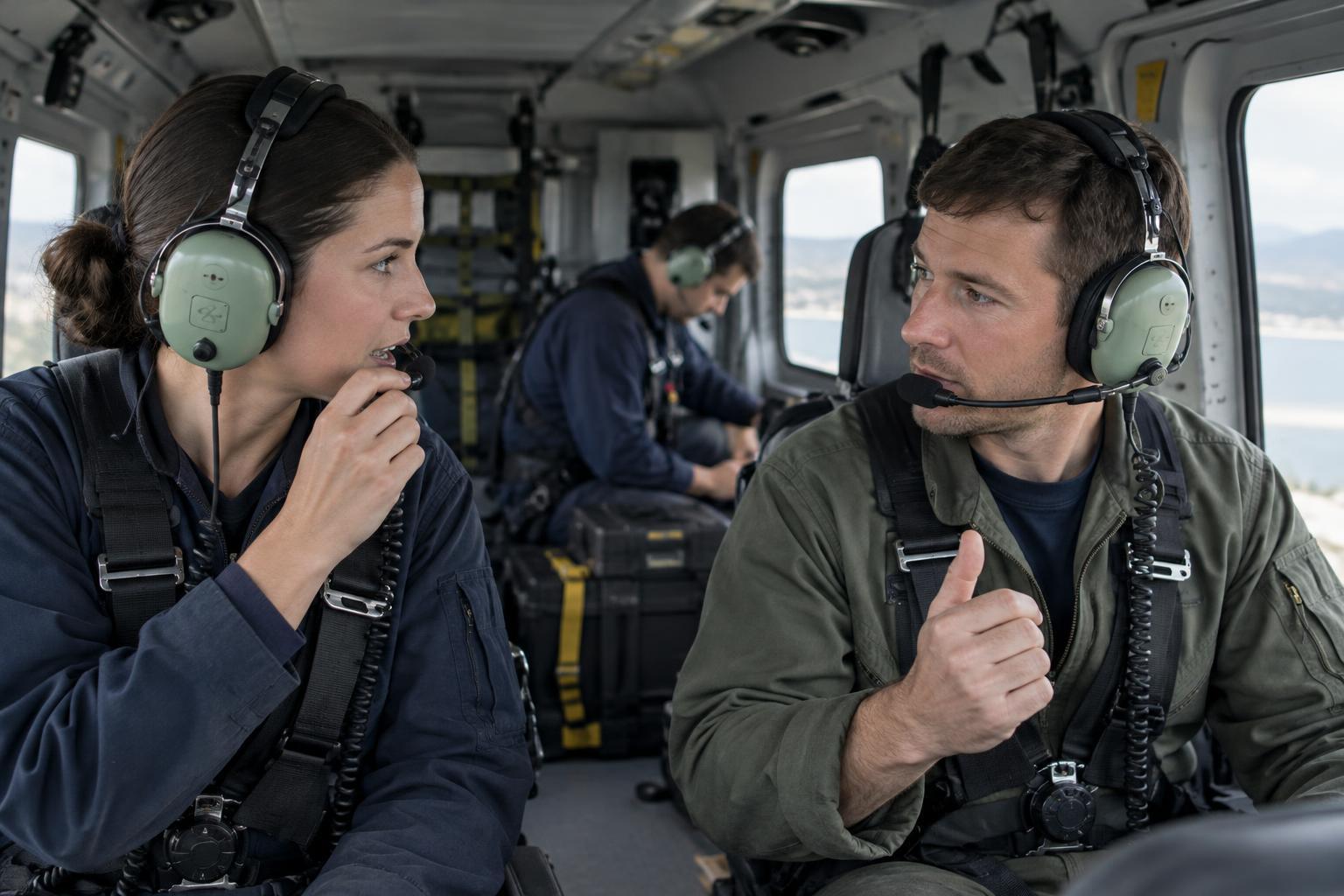
One mission, different information needs
A transport request can bring together people who are not in the same room, or even at the same facility. A coordinator may receive the initial request and work through timing and destination details. A pilot assesses the aviation side of the mission. A medical crew considers the patient’s transport needs and the equipment and personnel available. Each role contributes to a shared picture, but no one person starts with every detail.
Useful communication therefore does more than pass along facts. It identifies what is known, what still needs confirmation and who is responsible for the next decision. For example, a destination name alone may not tell the pilot where the aircraft can arrive, while a landing location alone may not tell the medical crew where the patient handoff will occur. Keeping those questions distinct helps prevent an assumption in one part of the mission from becoming a problem in another.
Building a common picture before departure
Before a flight, coordinators generally bring together information such as the requested origin and destination, contact points, expected timing and any access constraints. The medical crew may need a concise description of the patient’s transport requirements so it can consider space, equipment and staffing. The pilot needs information relevant to the proposed flight, including locations and timing, but remains responsible for aviation decisions. The exact workflow varies by organization and aircraft type.
A good briefing makes changes and uncertainties visible. If a pickup location is tentative, saying so is more useful than presenting it as settled. If a piece of equipment may affect cabin space or loading, raising it early gives the crew time to clarify what is feasible. Briefings are most effective when participants can repeat back critical details or ask questions rather than simply acknowledge that a message arrived.
Keeping communication clear in flight
Once underway, the team still needs a way to share developments without overwhelming one another. Pilots manage the flight and aviation communications; medical crews focus on the patient and care-related tasks. Coordinators may remain a link to people on the ground. Messages between these groups are most useful when they state the change, its likely effect and any action being requested. A revised arrival estimate, for instance, matters because it may affect who is ready to meet the aircraft.
Timing matters as much as wording. A nonurgent update can wait for an appropriate moment, while an issue affecting flight safety or a significant change in transport needs should be communicated promptly through the team’s established channels. Because noise, workload and radio limitations can make messages easy to miss, short acknowledgments and confirmation of important details help everyone know whether information was received and understood.
Managing changes without blurring responsibilities
Transport plans can change: a departure may be delayed, an arrival point may need clarification, or the receiving team may provide new information. Clear coordination allows the people affected to reassess their part of the plan. It does not mean every team member makes every decision. The pilot determines whether the flight can be conducted safely; medical personnel address clinical questions within their roles; coordinators help connect the parties and update the transport plan.
When a change crosses those boundaries, the team benefits from stating both the issue and its consequence. “The receiving location has changed” is less complete than explaining which location is now proposed, whether the arrival arrangement is confirmed and who still needs to be notified. Separating confirmed facts from proposals gives each role room to evaluate the change before the group treats it as the new plan.
Closing the loop at handoff
Arrival is not the end of the information chain. The receiving team needs an orderly handoff from the medical crew, while the pilot and coordinator may need confirmation that the transport portion has concluded and that any remaining logistics are understood. These are different conversations, and keeping them distinct makes it easier to direct questions to the person best placed to answer them.
A useful handoff also captures changes since the last update rather than assuming earlier messages reached everyone. After the mission, teams may review communication gaps, such as an unclear location or an update that arrived too late to be useful. The general lesson is simple: reliable coordination depends on sharing relevant information early, confirming critical details and making clear who owns each decision.