A handoff is a connection, not a single conversation
In air medical transport, information travels alongside the patient. A referring team knows what happened before the flight crew arrived. The flight crew observes what occurs during transport. A receiving facility needs both perspectives to continue care without unnecessary gaps. A handoff connects these separate views into a useful account of the patient's journey.
That connection is built through several exchanges rather than one report. Teams may discuss the transport request, share an update when the crew arrives, confirm details before departure and give another report at the destination. Each exchange has a different purpose. Early information helps people prepare; a bedside conversation can clarify what is happening now; an arrival report describes what changed along the way.
This article describes coordination at a general level, not a clinical handoff protocol. Local procedures, patient needs and the roles of the people involved determine what information is required in any particular transport.
Before pickup: turning a request into a shared picture
The first exchange often begins before the aircraft reaches the referring location. The crew needs enough context to understand the transport request and prepare for the patient and any equipment traveling with them. The referring team, meanwhile, benefits from knowing when and where the crew expects to meet them and whether there are practical constraints at the pickup point.
A useful early report distinguishes confirmed facts from details that may change. For example, a patient's condition, support equipment or departure location may be different by the time the crew arrives. Treating the initial report as a starting picture, rather than a final one, leaves room for updates without making either team guess which version is current.
The receiving facility is part of this picture too. A destination may need advance notice about the expected arrival, the kind of space or equipment to prepare and the team that will accept the patient. Sharing those logistics early can make the final transfer less dependent on last-minute phone calls.
At the bedside: making details usable
When the flight crew meets the referring team, the handoff becomes more concrete. Records and verbal reports can explain the course of events, while a direct conversation gives both sides a chance to resolve differences or missing details. The goal is not simply to repeat a chart. It is to establish a clear understanding of the patient's present condition, what has changed recently and what the transport team is taking responsibility for.
Equipment deserves its own attention in that conversation. A device may be familiar to both teams yet have different settings, connections or power needs. Clarifying which equipment and supplies will travel, and who will manage them during each stage of movement, reduces ambiguity when the patient leaves the referring room.
A good handoff also allows questions in both directions. The flight crew may need clarification about earlier observations; the referring team may need to know what can accompany the patient. Confirming the intended destination and the next communication point helps everyone work from the same plan.
During transport: keeping the story continuous
Once transport begins, the flight crew becomes the link between the referring team's account and the receiving team's next decisions. The crew can document observations, care provided and notable changes during the journey. At arrival, that transport account helps the receiving team distinguish what was known before departure from what happened afterward.
Communication during a flight can be constrained by noise, workload and the availability of a reliable connection. For that reason, teams may benefit from agreeing in advance on who should receive updates and how important changes will be relayed under their procedures. A message to the receiving facility is most useful when its meaning is clear: whether it is an estimated arrival update, a change in the patient's condition or a request to prepare for the handoff.
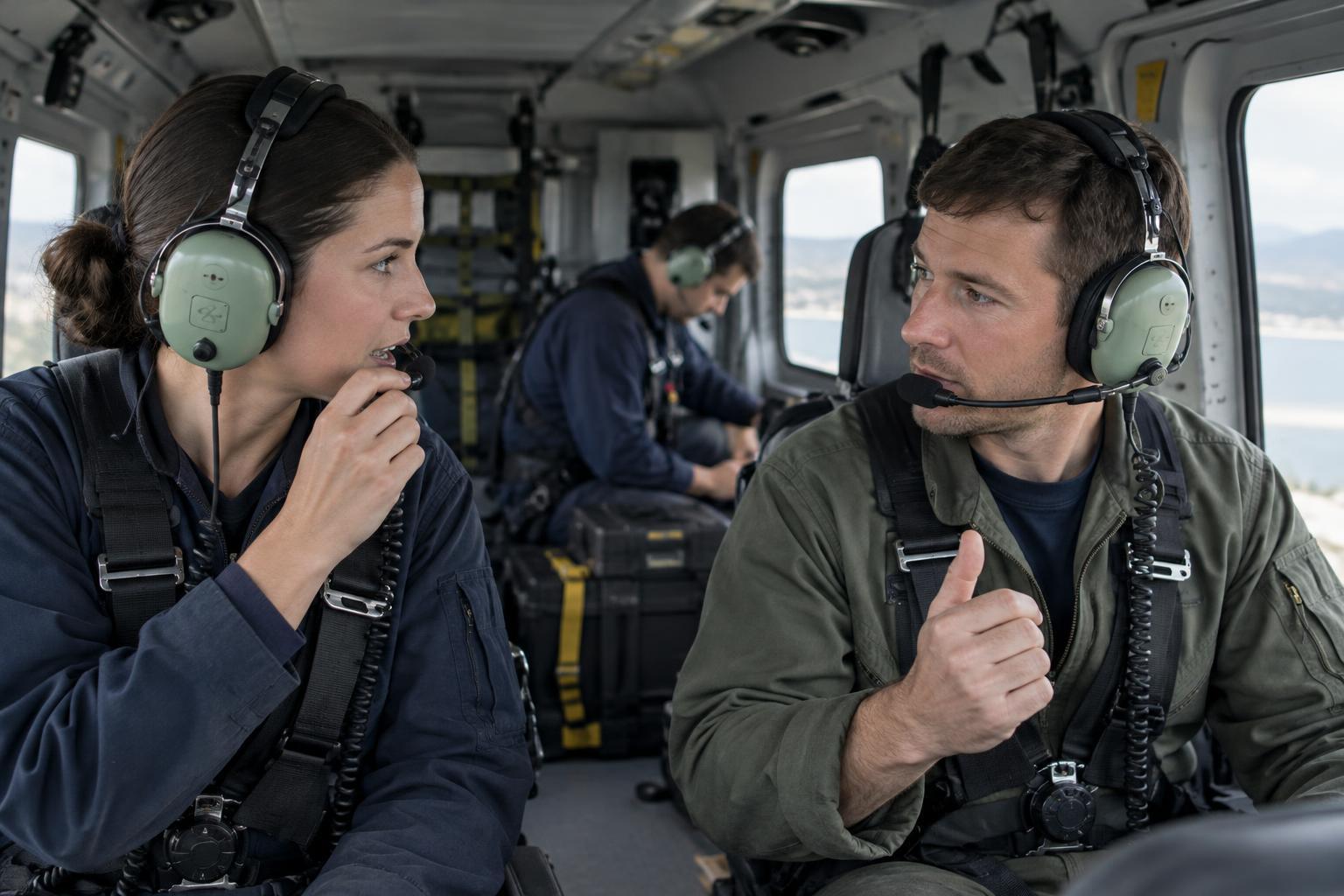
Crew coordination matters within the aircraft as well. When team members share an understanding of who is communicating, who is documenting and who is managing equipment, they are less likely to assume someone else has passed along a critical detail.
At arrival: closing the loop
The final handoff brings together the history from the referring team and the events of transport. The receiving team needs to know not only where the patient came from, but also the patient's current status, significant changes during the trip and any equipment or belongings being transferred. A direct exchange creates an opportunity to ask questions before the flight crew leaves.
Closing the loop also means making responsibility clear. A spoken report, accompanying records and the physical transfer of equipment may happen at different moments. Teams can avoid confusion by confirming who has accepted the patient and which outstanding details still need to be passed along.
No handoff format can eliminate every interruption or uncertainty. What connects the three teams is the habit of updating the shared picture: stating what is known, identifying what changed and checking that the next team has what it needs. In a journey with many moving parts, that continuity is one of the most valuable things a handoff can provide.