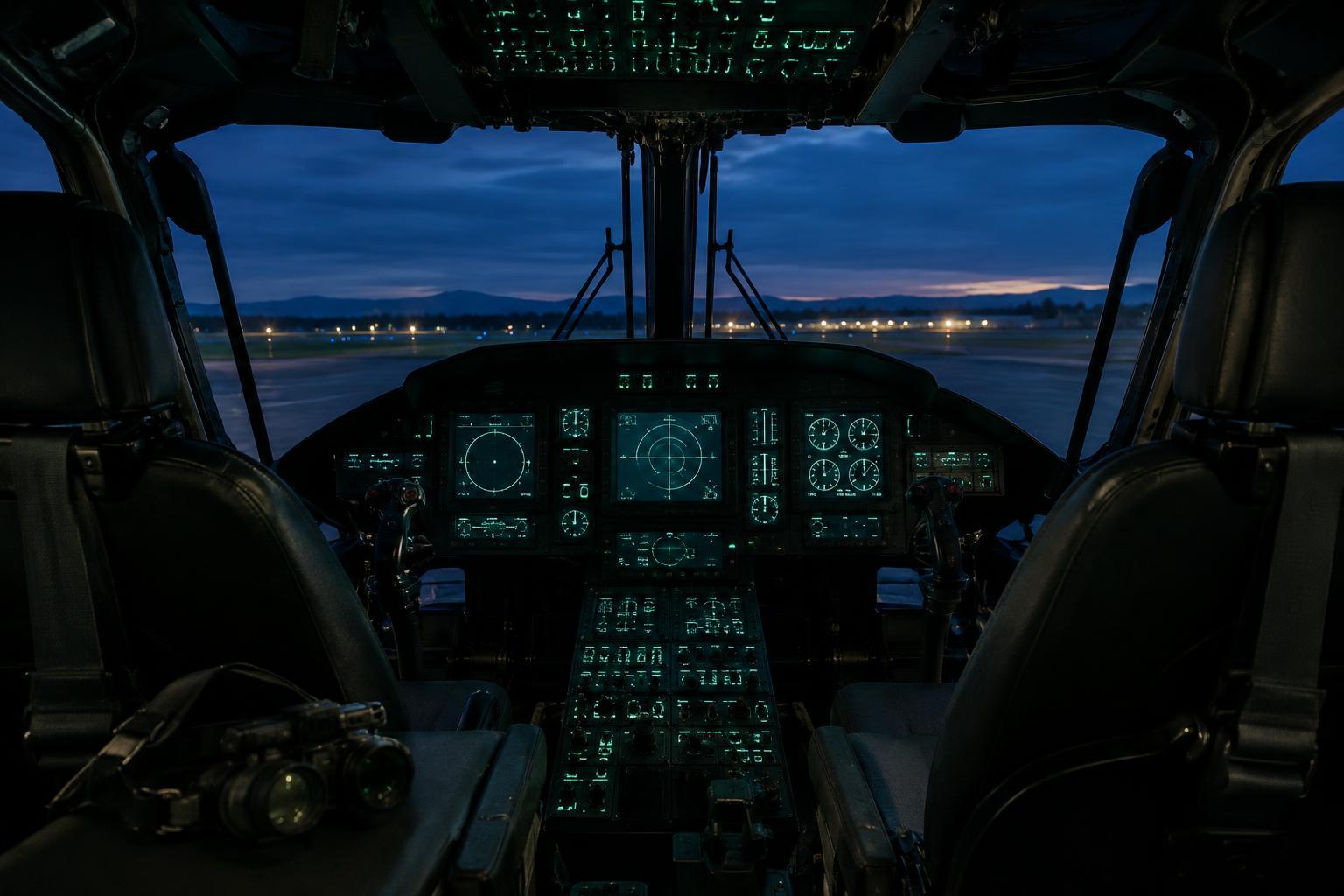
Two ways of seeing in one cockpit
A cockpit light has a straightforward job in ordinary night flying: make controls, labels and displays readable without creating unnecessary glare. Crews generally want light that can be adjusted as their eyes adapt to darkness. When pilots use night-vision goggles, the lighting has a second job. It must remain useful to the unaided eye while avoiding light that the goggles will amplify or scatter across the view.
This distinction matters in rescue aviation, where a crew may need to read an instrument and then look outside at a dark landing area. Night-vision goggles do not simply make all light brighter in a uniform way. Their response depends on the wavelengths and intensity of the light reaching them. A cockpit lamp that looks modest to a person may appear distracting through goggles or cause the goggles to reduce their gain, making the outside scene harder to see.
Compatibility is about spectrum, not just brightness
Standard cockpit lighting can use a range of lamp colors and display technologies. Turning those lights down may improve comfort, but dimming alone does not necessarily make them suitable for night-vision-goggle use. Night-vision-compatible lighting is designed or modified to limit the wavelengths that would interfere with the goggles while preserving enough visible light for a pilot to identify essential information.
Color by itself is not a reliable shortcut. A green-looking switch light is not automatically compatible, and a red lamp is not automatically unsuitable. Two lights that appear similar to the naked eye can emit different amounts of energy outside the colors a person can readily distinguish. Compatibility depends on the whole lighting arrangement, including filters, display output and how light behaves at usable brightness settings.
The practical differences around a panel
A night-vision-compatible cockpit may use filtered or purpose-built instrument lighting, carefully selected indicator lamps and displays with controlled output. Designers also consider whether labels and markings remain legible across the dimming range. A light that avoids interfering with goggles is of little help if the crew cannot promptly read a warning, confirm a switch position or distinguish nearby controls.
Placement matters as much as the light source. Light can reflect from a windshield, side window, glossy panel or a crew member’s equipment and enter the goggles indirectly. Small status lights can be especially noticeable against an otherwise dark cockpit. Shielding, aiming and consistent dimming controls help keep necessary information visible without letting a bright point or reflection dominate the field of view.
Why an isolated lamp change is not enough
Replacing one bulb with a dimmer or differently colored version does not establish that the cockpit works as a system. A display might change its behavior when a menu opens or an alert appears. A portable device, map light or newly installed accessory can introduce an unexpected bright source. Even a compatible light can become distracting if it is aimed toward a window or set brighter than needed.
For that reason, compatibility is considered across normal operating conditions rather than judged only by how a parked aircraft looks in the dark. The question is whether crews can recognize essential information, operate controls and maintain an effective outside view when the lighting and goggles are used together. Aircraft-specific equipment and procedures govern how that balance is achieved.
A useful way to understand the design goal
Standard lighting primarily supports reading and control identification in a dark cockpit. Night-vision-compatible lighting must do that while also protecting the goggles’ ability to present the outside scene. The best result is not necessarily the darkest possible panel. It is a balanced one: instruments remain clear, controls are recognizable, warnings attract appropriate attention and stray light stays controlled.
That balance also explains why crew coordination matters. If one person changes a display setting or uses a task light, others may experience the effect through reflections or their goggles. Understanding the difference between dim lighting and compatible lighting helps explain why cockpit illumination is treated as part of an aircraft’s overall night-operations design, not merely as a choice of bulb color.