Why coordination deserves its own practice
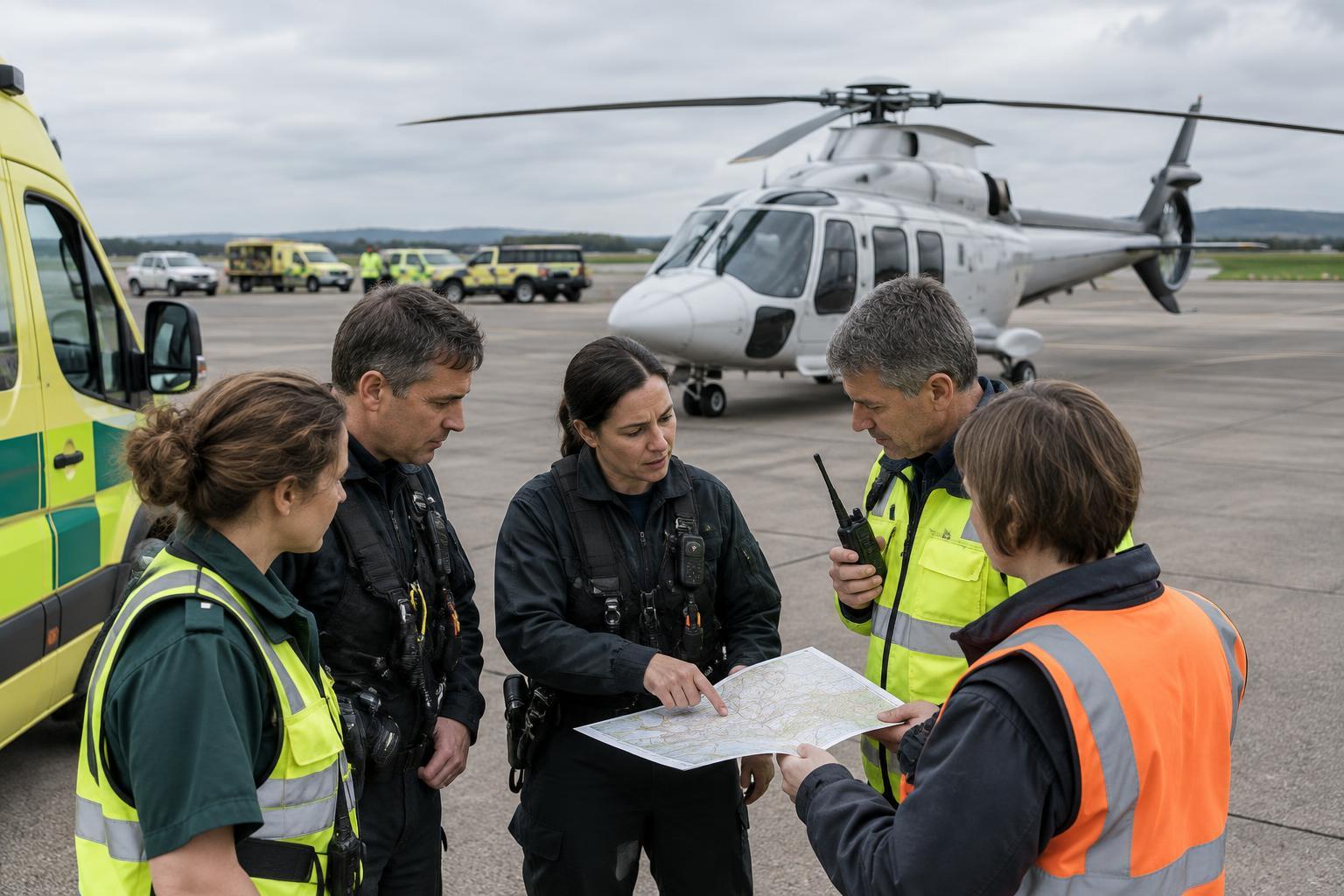
A rescue aviation mission is not a single team performing a single task. Flight crews, medical personnel, dispatchers, ground responders, and receiving facilities may all contribute to a transport. Each group sees a different part of the situation and uses its own shorthand. Even when everyone is experienced, a detail that seems obvious to one person may never reach the person who needs it.
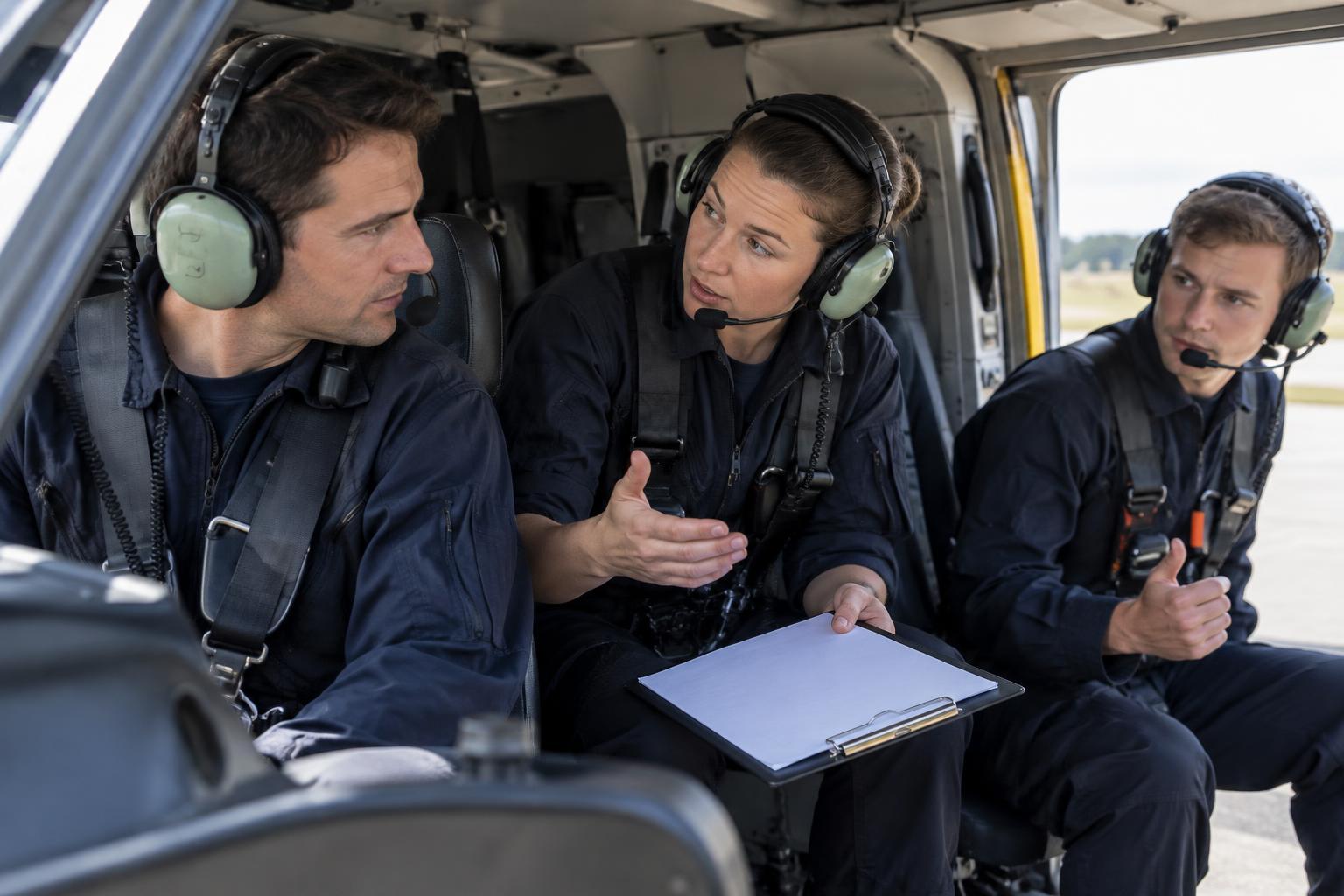
Multidisciplinary simulation brings those perspectives into the same exercise. Participants work through a realistic scenario while making the calls, exchanging the information, and adjusting to the constraints they might encounter during a transport. The goal is not simply to test whether individuals know their roles. It is to see how well those roles fit together when plans change, time is limited, or information is incomplete.
Designing a scenario around decisions
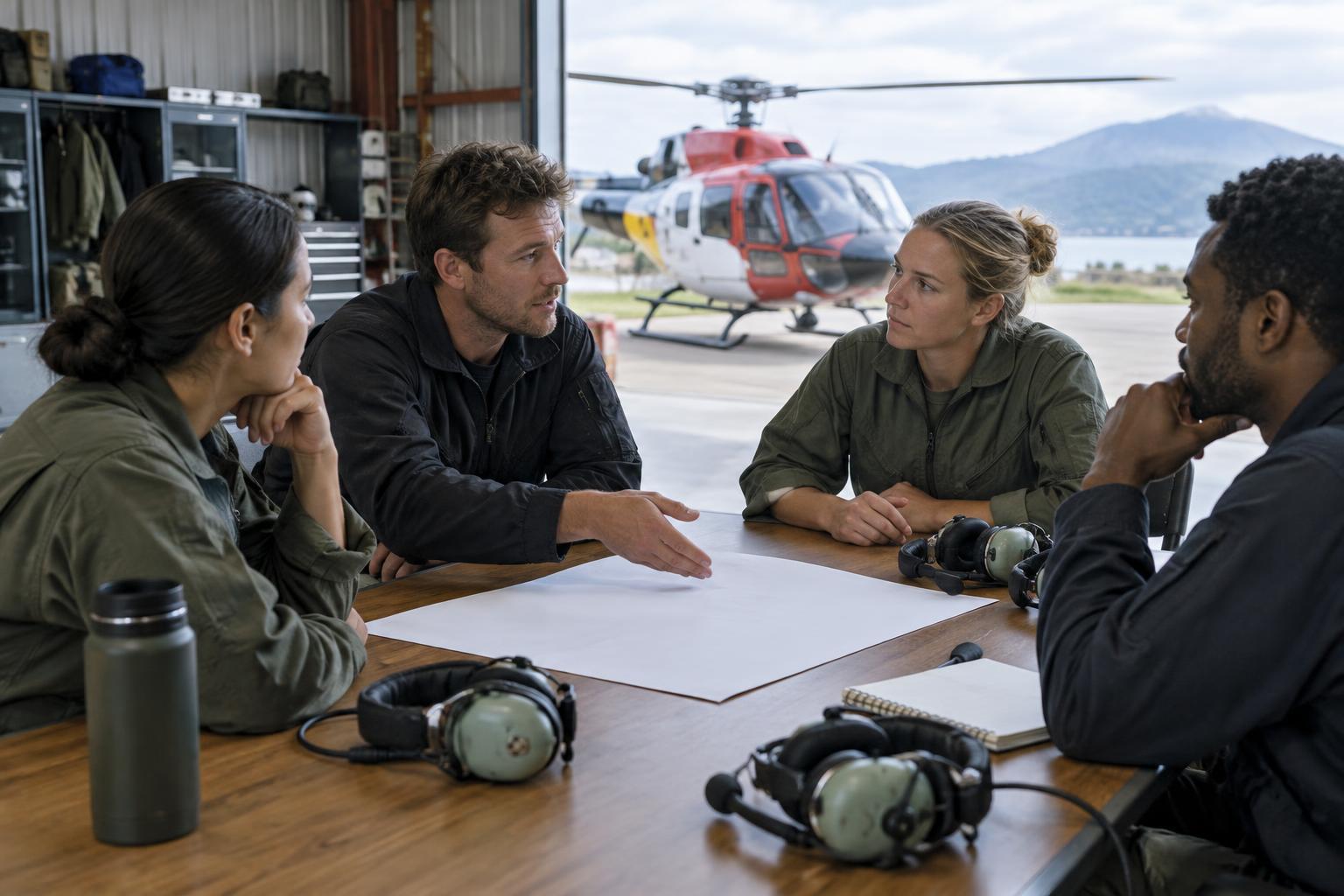
A useful exercise begins with a clear coordination objective. A team might practice an initial request, a change in landing arrangements, a patient handoff, or a decision to pause while a concern is resolved. The scenario should give each discipline a reason to contribute. If one group can complete the exercise without listening to anyone else, the simulation is unlikely to reveal much about teamwork.
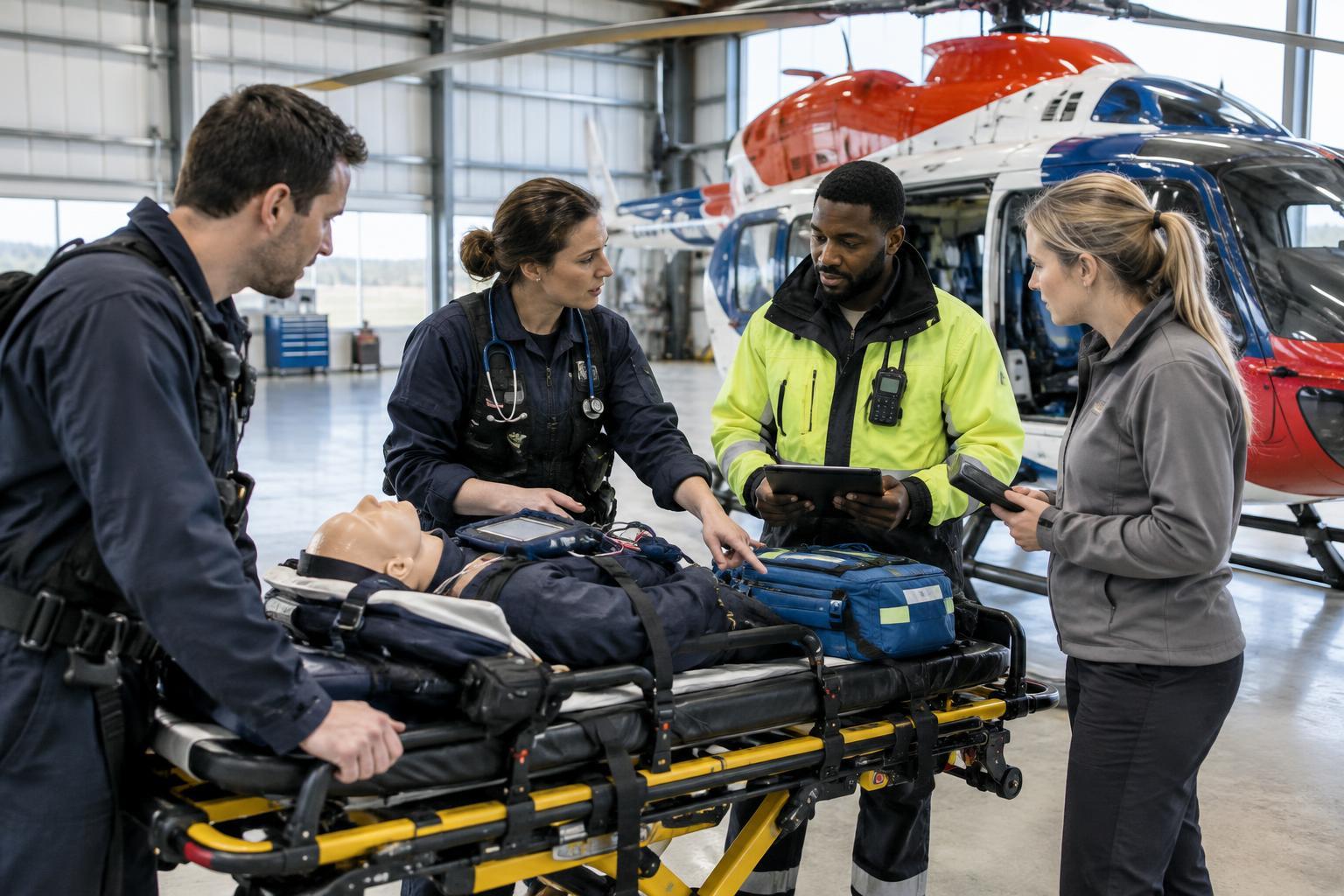
Realism matters, but elaborate equipment is not always necessary. A tabletop discussion can expose gaps in who calls whom. A role-play using radios or phones can reveal ambiguous wording. A larger exercise may let participants practice movement and handoffs around an aircraft or a suitable training substitute. In every format, the safest and most useful exercise is one with boundaries: participants should know what is simulated, who can stop the activity, and which real-world procedures still apply.
Scenarios also benefit from a manageable amount of uncertainty. Giving every participant identical information removes the need to communicate. Giving them too little can turn the exercise into guesswork. A well-planned scenario provides enough context for decisions while allowing new information to emerge through the team’s own conversations.
Making communication visible
Simulation lets observers notice communication habits that are easy to miss during routine work. Who states the immediate objective? Does a request identify the action needed, or merely describe a problem? When a plan changes, does the update reach everyone affected? These questions matter because a team can agree in general terms while holding different assumptions about what happens next.
Participants can practice concise briefings, explicit questions, and confirmation of important information. They can also practice speaking up when something does not fit: an unclear location, an unexpected delay, or a task assigned to someone who cannot complete it. The point is not to make every exchange formal. It is to develop a shared habit of checking meaning at moments when misunderstanding could affect the next decision.
Handoffs are especially valuable to rehearse. They require one group to select what another group needs to know, often without sharing the full history of the mission. A simulation can show whether essential details survive that transition and whether the receiving team has an opportunity to ask questions.
Learning across professional boundaries
A multidisciplinary exercise gives participants a clearer view of one another’s constraints. A ground responder may learn why the flight crew needs a particular update before arrival. A dispatcher may see how a late change affects both the crew and the team preparing to receive a patient. Medical and aviation personnel can compare how they describe urgency, readiness, and uncertainty without assuming those words carry the same meaning for everyone.
This understanding can improve coordination without blurring responsibilities. Each discipline remains accountable for its own decisions and procedures. Simulation provides a place to identify where responsibilities meet: who supplies information, who acknowledges it, and how the group handles a concern that crosses those boundaries. Practicing respectful disagreement is part of that work. A team needs a way to raise a question without treating it as a challenge to someone’s expertise.
Turning an exercise into lasting improvement
The debrief is where a scenario becomes a learning tool. Rather than asking only whether the team completed the task, facilitators can ask participants what they expected, what they heard, and when their understanding changed. Comparing those perspectives often reveals a coordination gap more clearly than judging the final outcome alone.
Constructive debriefs focus on observable actions and the conditions around them. If an update did not reach someone, the group can examine the handoff point, the available communication channel, and whether ownership of the message was clear. It can then choose a small improvement to try in a later exercise. Repeating a scenario with that adjustment helps participants see whether it works in practice.
Simulation cannot reproduce every pressure or complication of a real mission. Its value lies in creating a deliberate space to practice together, notice mismatched assumptions, and refine how information moves between people. For rescue aviation teams, coordination is not just an individual skill. It is something the whole system builds through shared practice.