From an available aircraft to a planned evacuation system
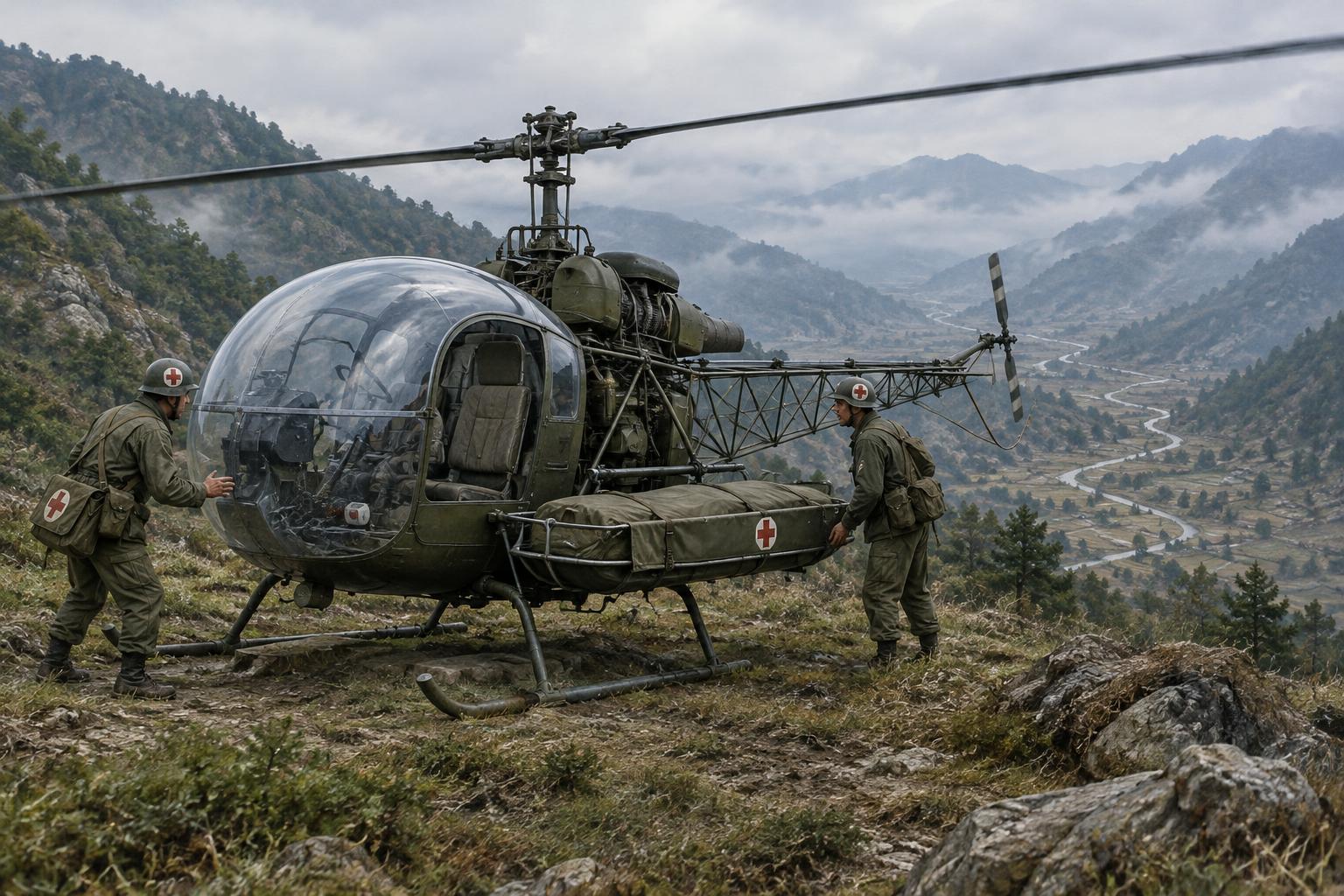
Helicopters were used to move wounded personnel before the Vietnam War, notably during the Korean War. What changed in Vietnam was the scale and complexity of the task. Ground units often operated far from roads, across difficult terrain, and in places where moving a casualty by vehicle could be slow or impossible. A helicopter could shorten the journey to medical care, but only if someone could request it, identify a suitable landing area and direct the aircraft to the right destination.
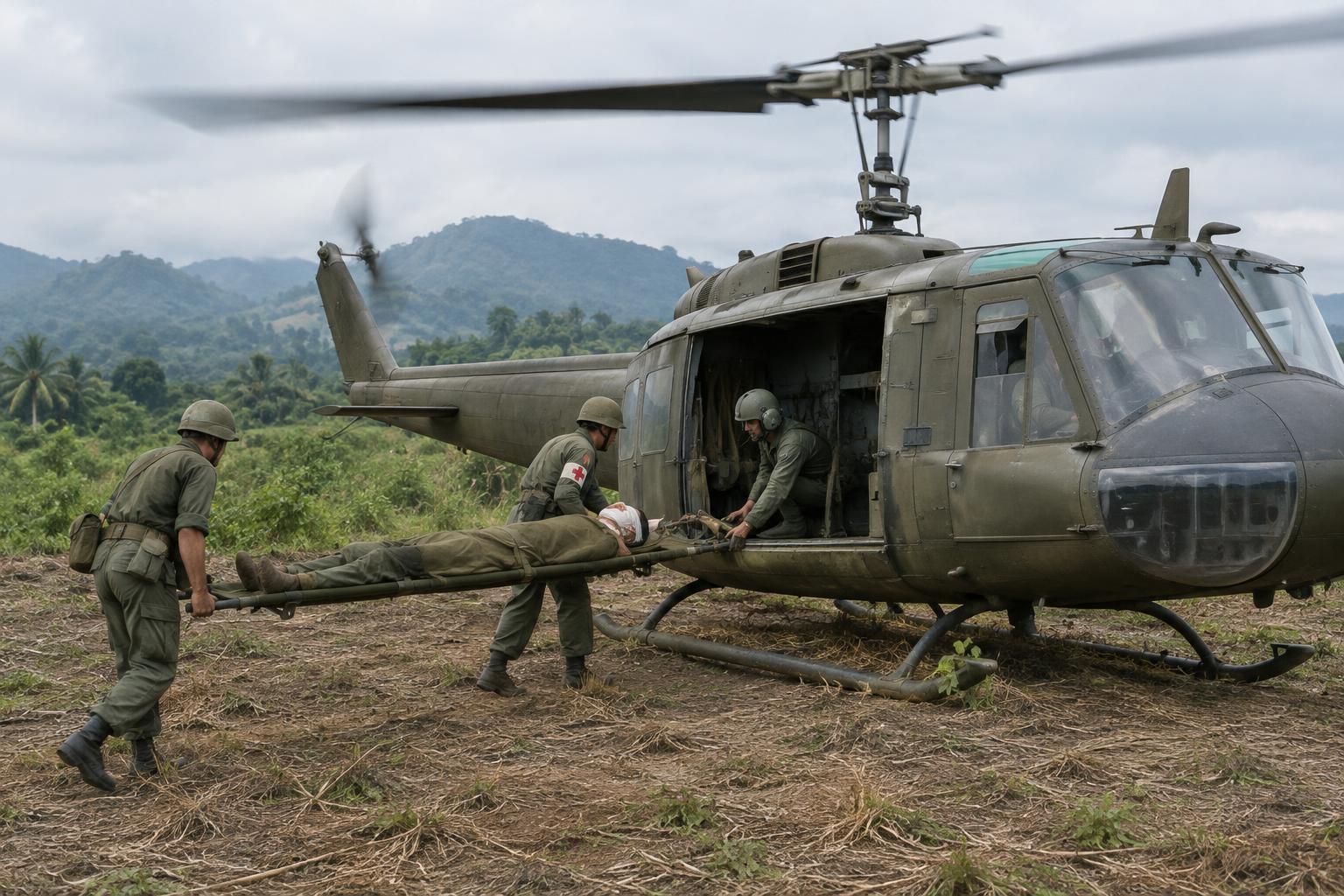
Evacuation therefore became more than a flight. It linked people at the scene with dispatchers, aircrews and receiving medical facilities. Dedicated medical evacuation helicopters were an important part of that system, although other aircraft also carried casualties when circumstances required. Practices varied by unit, location and stage of the war; there was no single method that worked everywhere.
Radio calls became part of patient movement
In a ground emergency, an aircrew needed more than a location. It needed to know whether a helicopter could approach safely, how many people required transport and what conditions it might encounter near the pickup point. Radio procedures helped turn an urgent request into information the crew could use while planning a route and preparing to land.
That exchange depended on cooperation. Ground personnel had to describe the site and communicate changes, while aviation personnel had to assess the aircraft’s capabilities and the risks of the approach. A landing zone that looked open from the ground might still be difficult from the air because of trees, slope, dust, obstacles or limited visibility. Clear communication could reduce confusion, but it could not remove those hazards.
Crews adapted to difficult landing zones
Helicopter evacuation is often pictured as a brief stop followed by a direct flight to a hospital. In practice, reaching and leaving a pickup site could be the most demanding part of the mission. Crews had to judge terrain, aircraft performance, weather and the possibility of hostile fire. Ground personnel might need to prepare a landing area or move casualties to a position the aircraft could reach.
These pressures encouraged close coordination between pilots, crew members and people on the ground. A crew might need to revise an approach, use another pickup location or decline an unsafe landing. The helicopter’s ability to land in relatively confined spaces was valuable, but it was not unlimited. Vietnam demonstrated both the flexibility of vertical flight and the importance of recognizing when a particular landing was too dangerous.
The flight became a link in a chain of care
The purpose of evacuation was not simply to remove someone from a battlefield. It was to connect the casualty with an appropriate level of care. Medical evacuation crews could provide care during transport within the limits of their training, equipment and flying conditions. At the same time, decisions about where to take a patient affected what treatment would be available on arrival.
This made coordination with receiving facilities essential. Casualties might need to be sorted by urgency, and a destination had to be chosen with the patient’s needs and the wider transport network in mind. Helicopters could reduce travel time in many situations, but speed alone did not guarantee an outcome. The patient’s injuries, initial care, weather, landing conditions and capacity at the destination all mattered.
What the experience left behind
Vietnam made helicopter evacuation a prominent example of how aircraft, communication and medical services could work together. The lessons were not a simple blueprint for every later operation. Civilian emergency transport, for example, works under different conditions and must make its own decisions about safety, equipment, crew roles and access to care.
The enduring lesson is organizational as much as technological. A capable aircraft is useful only when a team can request it effectively, guide it to a feasible pickup point, care for the patient and hand that patient over at an appropriate destination. Studying Vietnam-era evacuation reveals how those connected tasks developed under pressure, while also showing why every mission depends on the conditions faced by its crew.