Build a shared picture before arrival
A ground-to-air patient transfer connects two teams that may have different responsibilities, equipment and views of the situation. Coordination begins before they meet. The ground team can describe where the patient is, how the transfer area can be reached and what practical obstacles may affect movement. The aircraft crew can explain its expected arrival, equipment needs and any constraints on accepting the transfer. These early exchanges help both sides prepare without assuming that the original plan will remain unchanged.
Updates matter as much as the first message. A change in access, weather, timing or patient condition may affect the meeting point or the resources needed there. A useful update is brief and specific: what changed, where it matters and who has been informed. Teams also benefit from confirming important details rather than relying on a message having been heard. The aim is not constant radio traffic, but a shared understanding that stays current.
Make responsibilities visible
Several tasks may happen at once: guiding the ground vehicle, preparing the patient for movement, arranging equipment and identifying a clear route to the aircraft. When no one knows who owns a task, it can be missed or duplicated. Naming a point of contact on each team gives questions a clear destination. Before movement begins, a short role check can establish who will lead the transfer, who will assist and who will communicate a need to pause.
Some decisions belong to particular crew members. Aircraft crew members assess matters such as aircraft access and the suitability of the area around it; clinical team members manage patient-care responsibilities within their roles. Ground personnel contribute local knowledge that an arriving crew may not have. Good coordination respects those different areas of responsibility while giving everyone a way to raise a concern. If the route or plan no longer looks workable, stopping to clarify is better than pressing ahead on assumptions.
Treat the transfer area as part of the plan
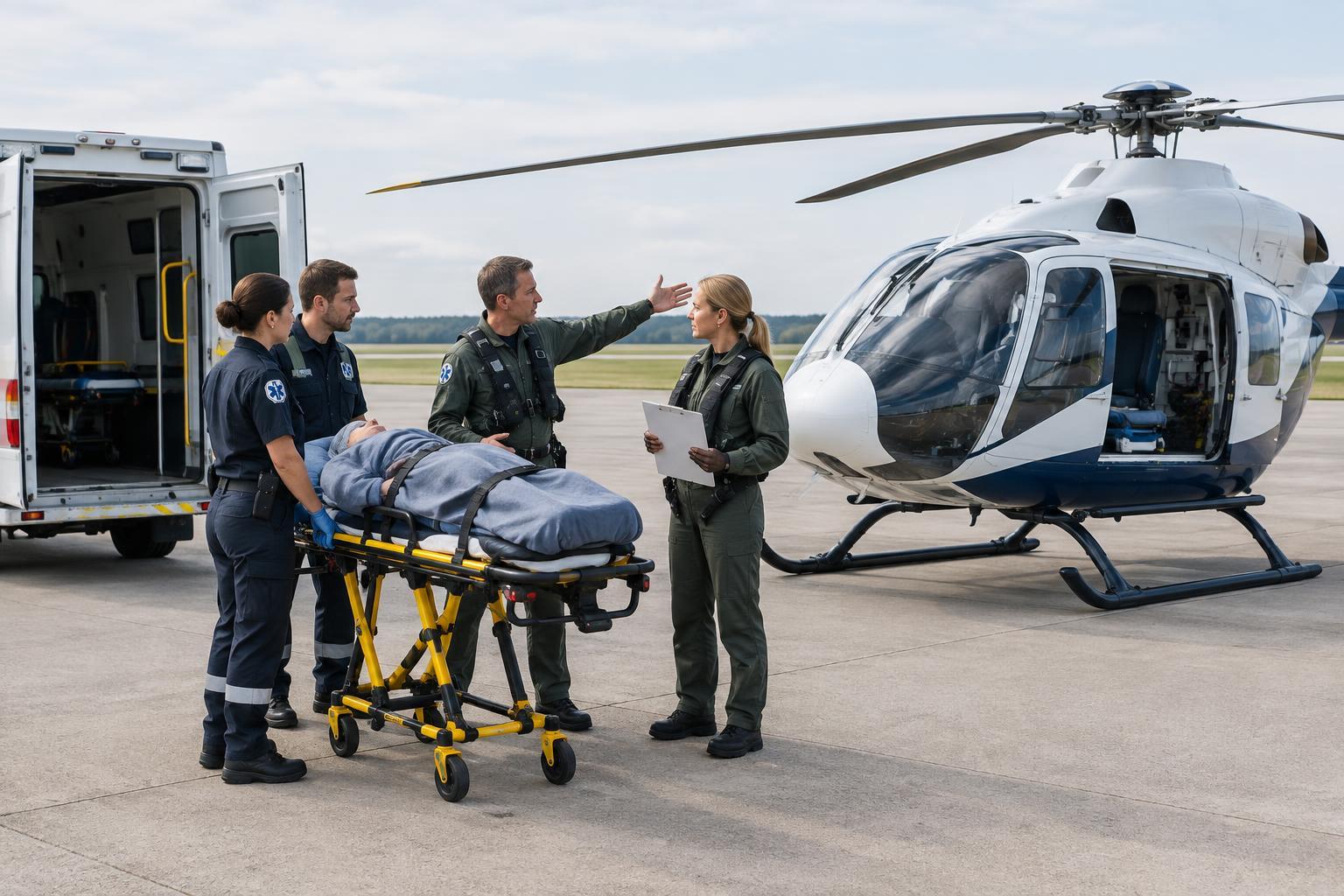
The space between a ground vehicle and an aircraft can be a demanding part of the journey. Distance, uneven ground, lighting, weather and the position of equipment can all make movement more difficult. Teams can reduce confusion by agreeing on a route and keeping unnecessary people and objects out of it. The aircraft crew’s directions around the aircraft are especially important because hazards may not be obvious to someone who does not work near it regularly.
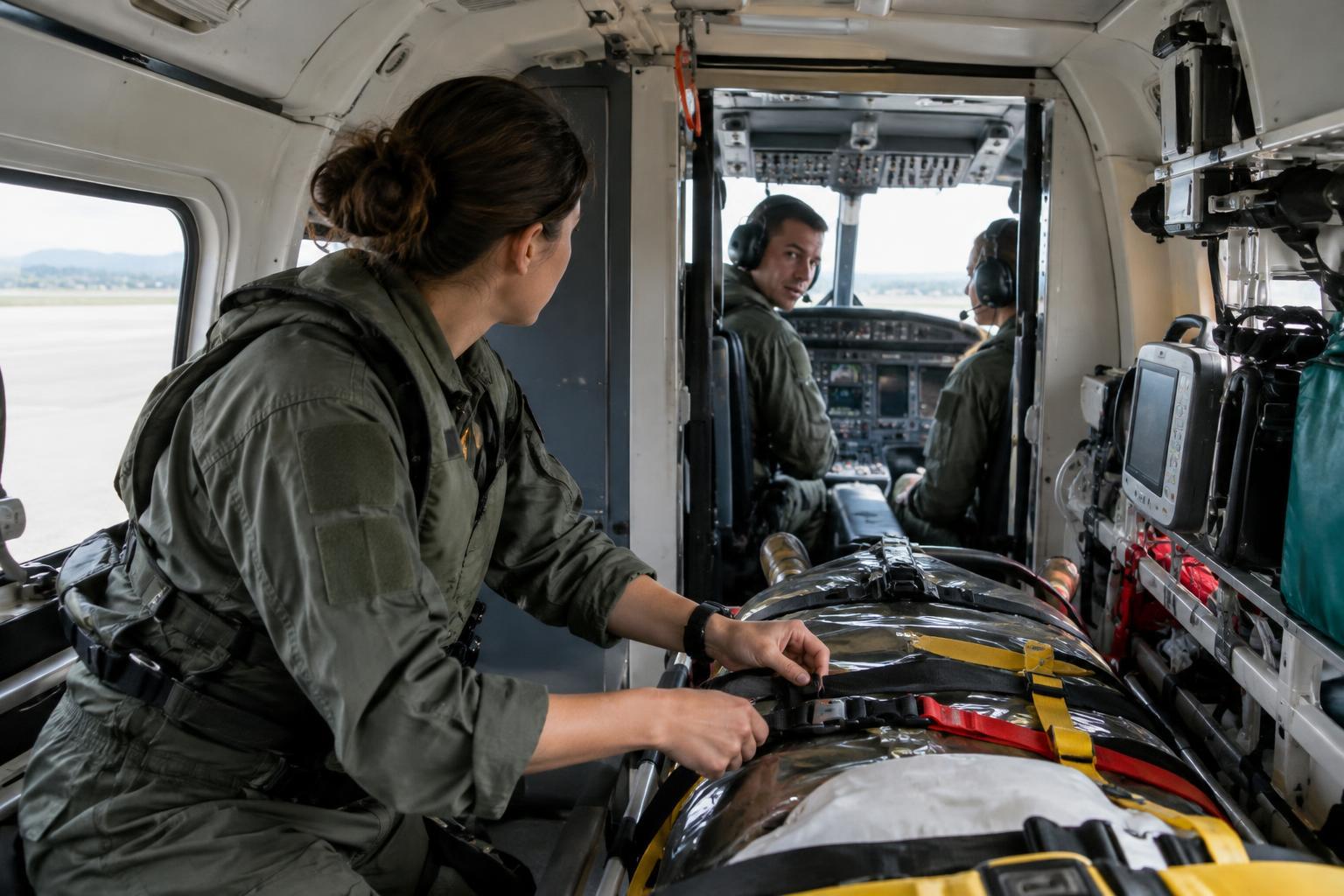
Equipment also needs a place in the plan. Bags, monitors and other items must be accounted for without obstructing the people moving the patient. Connections or attachments may need attention before and after movement, according to the teams’ procedures. A deliberate pause to check that the patient, personnel and equipment are ready can prevent a rushed departure from the ground vehicle. Exact methods vary by aircraft, equipment and organization, so coordination depends on the crews using their established practices.
Give a handoff the attention it needs
A handoff is more than passing along paperwork. The receiving crew needs a concise account of the patient’s situation, relevant changes during ground transport, care already provided and any immediate concerns. The ground team should have a chance to identify information that could be lost once the patient is moved, while the aircraft crew should be able to ask questions. A familiar handoff structure can help, but it should support conversation rather than replace it.
The setting may be noisy, crowded or time-pressured. In that environment, repeating a critical detail back can reveal a misunderstanding before it carries forward. Teams can also distinguish between what is known, what is uncertain and what is still being checked. Patient information should be shared with the people who need it for the transfer, using the appropriate channels and local privacy practices. Clear, relevant communication is more useful than a long account that obscures the immediate priorities.
Close the loop before departure
The final moments of a transfer are a chance to confirm that the shared plan has actually been completed. The teams can check that the patient and necessary equipment are with the receiving crew, that essential information has been handed over and that no one is still waiting for an answer. If the plan changed during the transfer, the relevant people need to know which version is now in effect.
Coordination does not require every transfer to look identical. It requires each team to communicate changes, understand its role and make uncertainty visible. A clear point of contact, a prepared route and an unhurried handoff give ground personnel and aircraft crews a stronger basis for working together, even when the circumstances around a transfer change.