A connection point for a complex mission
A rescue aviation mission involves more than an aircraft and its crew. A request may pass through a dispatch center, an aviation program, ground responders and receiving personnel before anyone departs. A flight communications specialist helps connect those participants. Depending on the organization, the role may be called a communications specialist, flight coordinator or dispatcher, and its responsibilities can vary.
The specialist’s central task is to help the right people receive accurate information at the right time. That can mean recording a request, confirming key details, relaying updates or maintaining a record of the mission’s progress. This work does not replace the judgment of pilots, medical crews or other qualified decision-makers. It supports them by reducing the chance that an important detail is lost between conversations.
Building a useful picture from incoming information
Early information can be incomplete. A caller may know where help is needed but not have a precise landing location. A facility may be ready to discuss a transfer while transport arrangements are still being worked out. Communications specialists organize what is known, note what remains uncertain and seek clarification through established channels. Presenting a detail as unconfirmed, rather than treating it as settled, can help a team understand what still needs attention.
They may also bring together information from people who view the same mission differently. A ground responder might focus on access to a scene, while an aviation crew needs a clear understanding of the proposed landing area and operational constraints. The communications specialist helps each party share relevant updates without assuming that everyone has heard the same conversation. Clear summaries and careful read-backs are useful habits when names, locations or plans could be misunderstood.
Keeping coordination steady as plans change
A mission can change after an initial request. A departure may be delayed, a destination may change or a ground team may provide new information about access. The communications specialist tracks those developments and passes them to the appropriate participants according to the organization’s procedures. The goal is not simply to send more messages; it is to make changes understandable and ensure that earlier information is not mistaken for the latest plan.
Good coordination also depends on respecting roles. A specialist may gather weather information or relay an operational concern, but decisions about whether and how to fly belong to authorized aviation personnel. Likewise, a specialist can convey patient-related information provided by others without making clinical judgments. Clear boundaries help each professional contribute their expertise while maintaining a shared picture of the mission.
Using tools without losing the human context
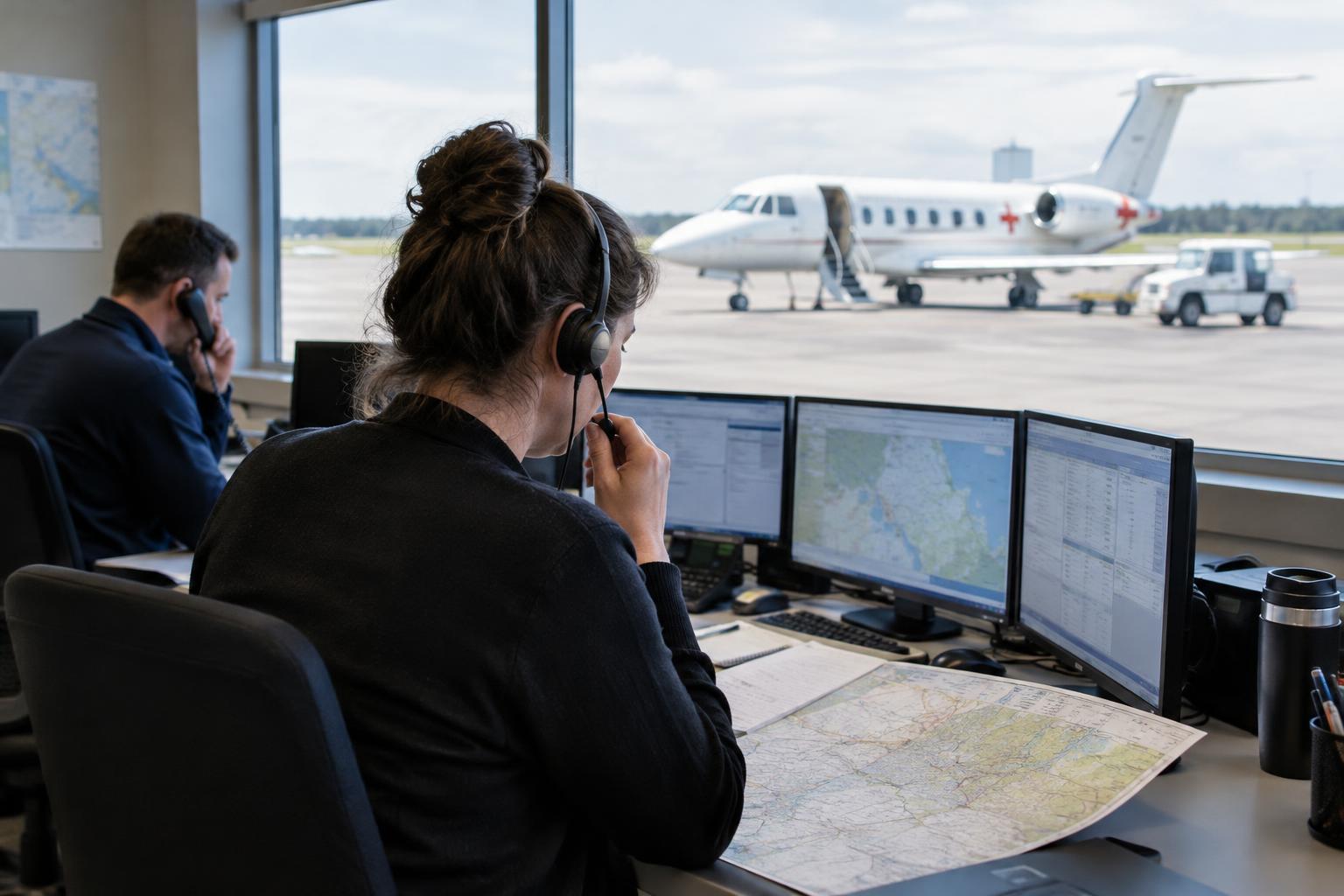
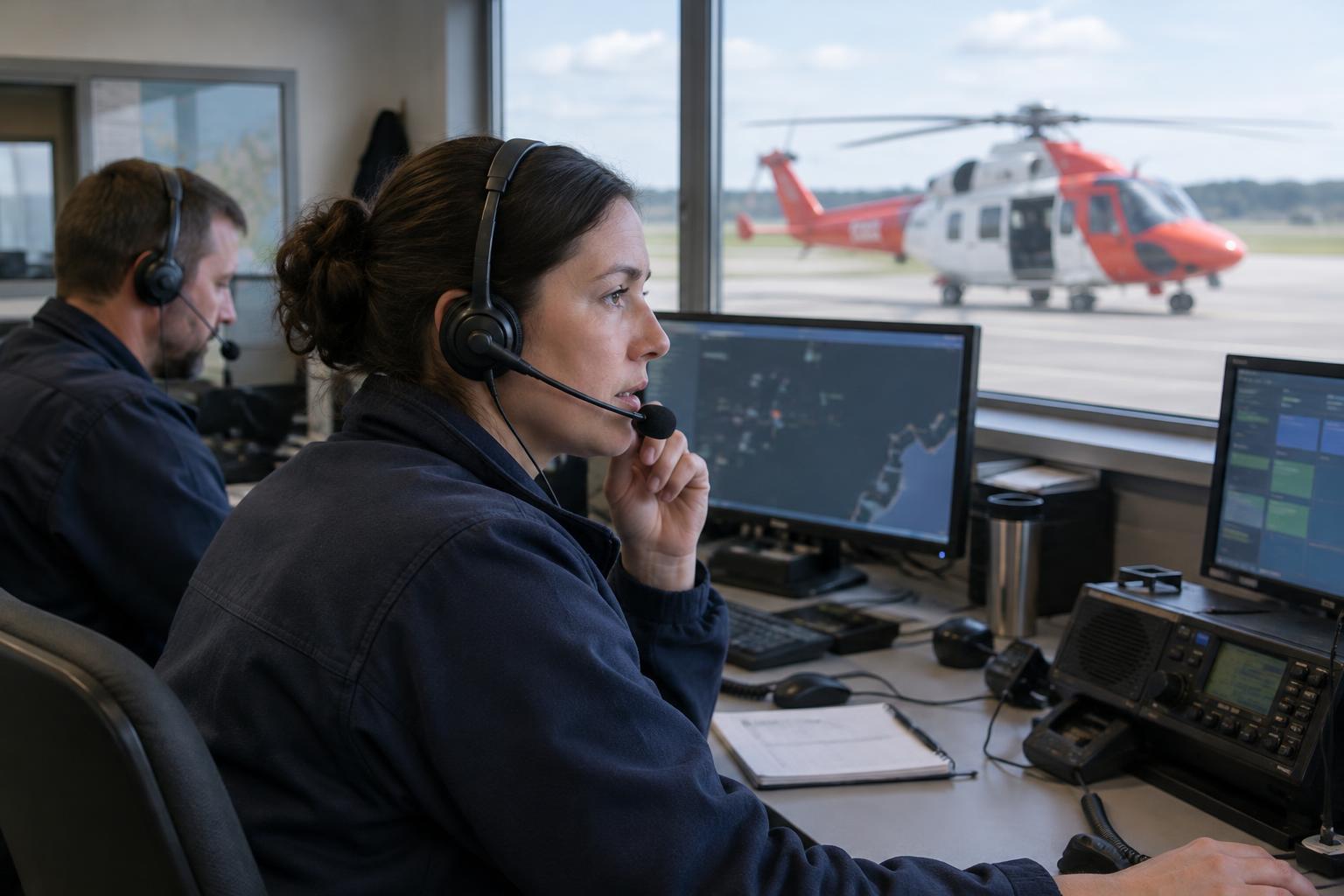
Communications centers may use telephones, radios, mapping systems and electronic records to manage requests. These tools can make information easier to locate and pass along, but they still depend on careful human use. Similar place names, outdated contact details or a message entered under the wrong record can create confusion. Specialists need to check details, document changes and know how their organization handles a failed connection or unavailable system.
The human side matters just as much. A person calling during an urgent situation may speak quickly or lack answers to every question. A calm, concise specialist can help guide the exchange without implying certainty that does not exist. Communication is also a two-way skill: listening for hesitation, asking a focused follow-up question and confirming what was heard can be as valuable as delivering a polished message.
What draws people to the career
This career may appeal to people who enjoy organizing details, communicating under pressure and working as part of a larger team. Useful strengths include attentive listening, accurate recordkeeping, comfort with multiple communication tools and the ability to shift priorities when new information arrives. Training and entry requirements differ among organizations; some roles emphasize dispatch experience, while others provide substantial instruction in aviation terminology and local workflows.
For someone exploring the field, the most useful questions concern the actual scope of a position: Who makes operational decisions? Which partners does the communications center contact? How are updates documented and handed over between shifts? Those answers reveal how the specialist fits into a particular team. The work is often out of public view, but its value is straightforward: helping people with different responsibilities act on a clear, current understanding of the same mission.