From military experience to a civilian question
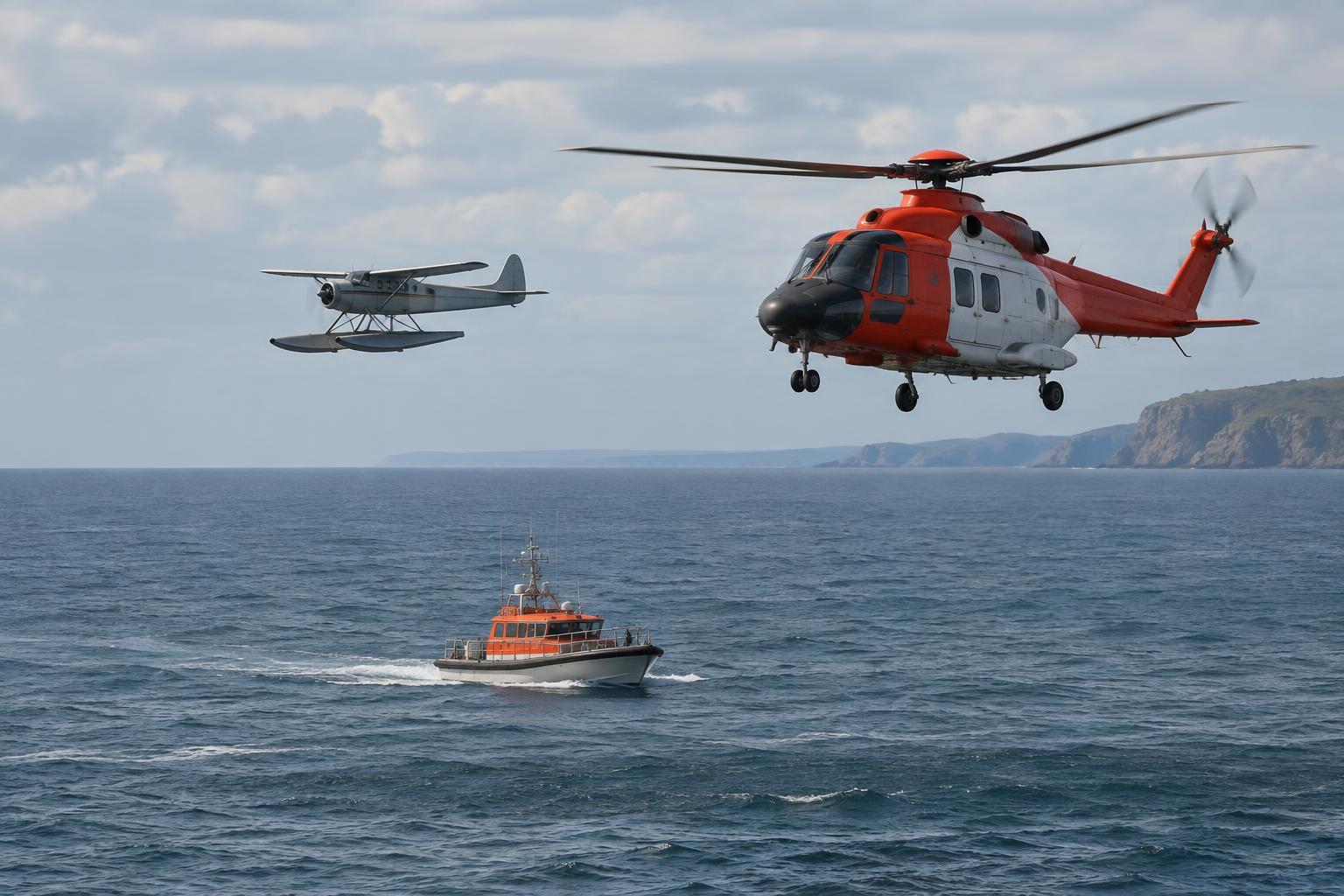
Helicopters became familiar as tools for moving casualties during twentieth-century military conflicts. Their ability to reach places without runways and carry patients over difficult terrain showed what vertical flight could offer. Civilian emergency care, however, posed a different challenge. A useful civilian service needed more than an aircraft: it needed a way to decide when to fly, a destination able to treat the patient, and a team prepared to provide care during transport.
As emergency medical systems and specialized hospital services developed in the United States, planners began considering how helicopters might connect patients to those services. A severely injured person, for example, might need care at a trauma center rather than simply at the nearest hospital. In some circumstances, a helicopter could shorten or simplify that journey. The important idea was not that air transport was always faster, but that the aircraft might bridge a gap in a larger system of care.
The emergence of hospital-based programs
Civilian helicopter emergency medical services gained visibility in the 1970s, when hospital-based programs helped establish a model for dedicated medical flights. These programs linked aviation resources with clinicians, communications staff and receiving hospitals. Over time, other organizational models also developed, including arrangements involving independent operators and public agencies. The details varied by community, geography and available resources.
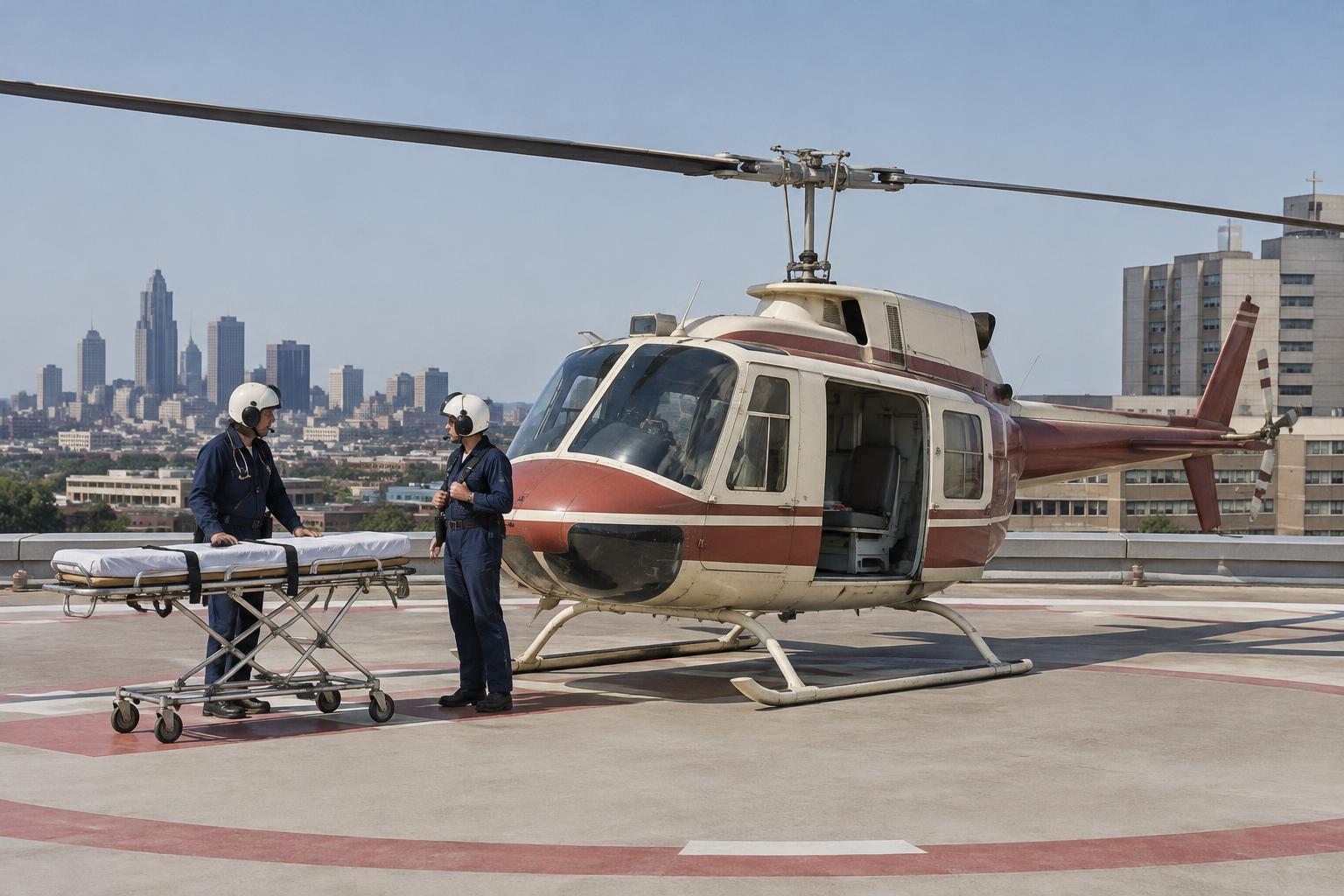
Early growth required people from different fields to solve ordinary but demanding problems together. A helicopter needed a suitable place to land, maintenance and fuel. A medical team needed equipment that would fit securely inside a small cabin and remain usable in flight. Dispatchers needed reliable information about the patient, location, weather and destination. Each successful transport depended on coordinating these pieces, not merely on the helicopter's ability to take off.
A link between scenes, hospitals and specialty care
Helicopter EMS came to serve two broad transport roles. In a scene response, a crew travels to a location near an emergency and carries a patient onward for care. In an interfacility transfer, a patient moves from one healthcare facility to another that can provide services not available at the first. These missions place different demands on landing sites, communication and preparation, but both depend on choosing a destination appropriate to the patient's needs.
Geography helped shape where programs could be useful. Long ground routes, remote communities and obstacles such as mountains or congested roads can make air transport attractive. Yet distance alone does not determine whether flying helps. Time spent requesting an aircraft, reaching a landing site and transferring the patient all matters. Weather, visibility, terrain and aircraft limitations can also rule out a flight. A sound transport decision considers the entire journey, including whether ground transport is the better option.
Why the crew and equipment evolved together
As civilian programs matured, the helicopter increasingly became a working environment for a coordinated crew rather than simply a vehicle carrying a patient. Clinical crew members needed to assess and care for patients in a confined, noisy space. Pilots needed clear operational information without being drawn into medical decisions. Dispatch and communication personnel helped connect the aircraft, ground responders and receiving facility. Defined responsibilities and concise handoffs made those connections more dependable.
Equipment design reflected the same constraints. Stretchers, oxygen supplies, monitors and other devices had to be secured against movement, accessible when needed and compatible with limited cabin space and electrical capacity. Designers and crews also had to consider vibration, noise and the difficulty of communicating beside a running aircraft. Improvements in layout and procedures could make the cabin more workable, but they could not remove the fundamental limits of caring for someone in flight.
A lasting lesson about systems and safety
The expansion of helicopter EMS brought greater attention to aviation risk. Urgent requests can create pressure to launch, but a medical need does not change the weather or an aircraft's performance limits. Programs therefore rely on operational checks, crew training and the ability to decline or stop a flight when conditions are unsuitable. The precise practices differ among operators, but the principle is straightforward: a transport should not create an avoidable emergency for the patient or crew.
The history of civilian helicopter EMS is best understood as the development of a transport network, not the story of a single invention. Helicopters offered a way to connect some patients with appropriate care across distance or difficult terrain. Hospitals, ground responders, communications teams, aviation personnel and medical crews made that capability usable. Its enduring lesson is that the aircraft has value when it is integrated into careful decisions about patient needs, destination, timing and safety.