Cabin climate is an equipment-design issue
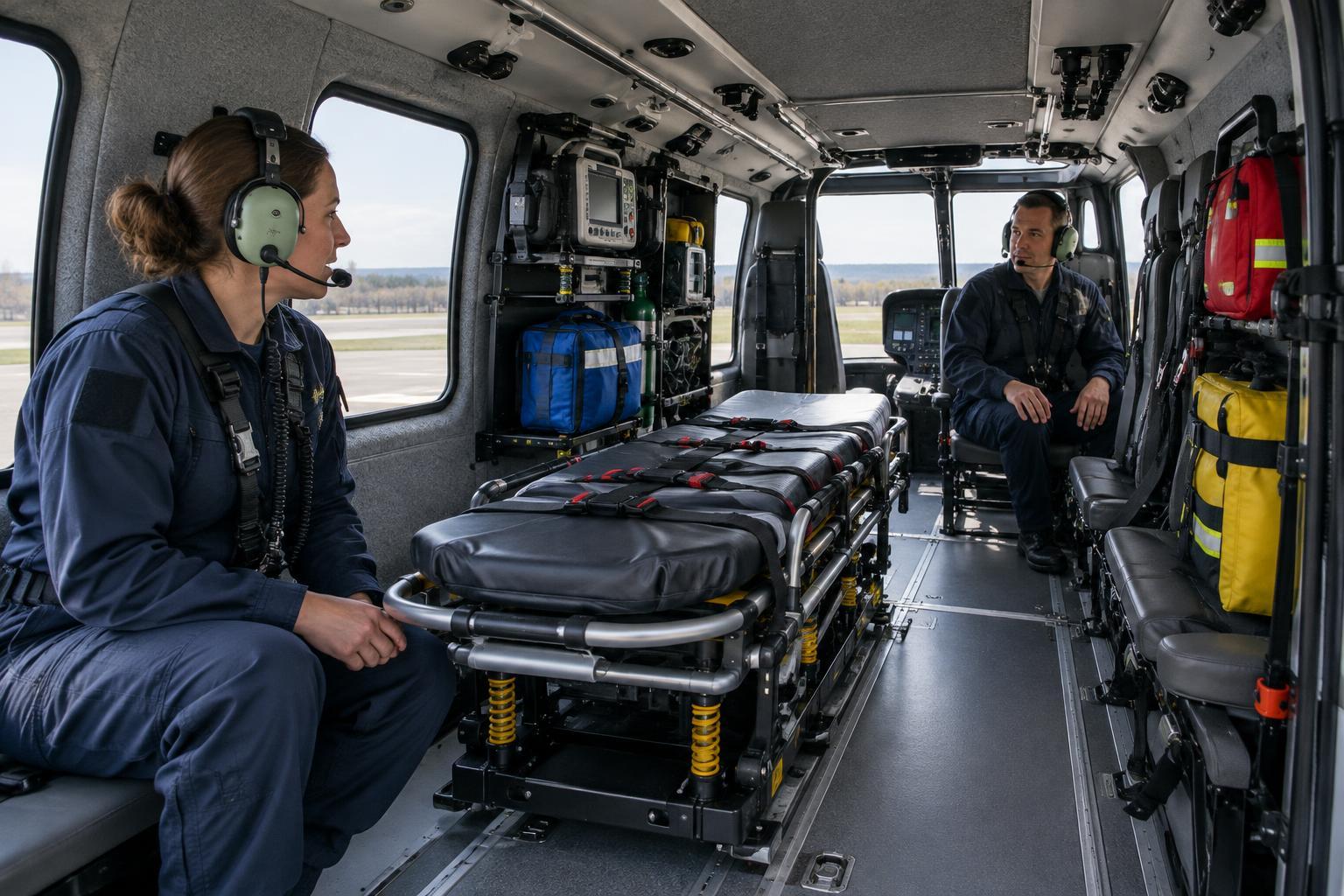
A rescue aircraft cabin is a working space, not just a passenger compartment. It may hold communications gear, lighting, storage, and equipment used to support a patient during transport. Each item occupies space, draws power, produces heat, or changes how air moves through the cabin. Heating, cooling and ventilation therefore matter when designers decide what equipment to install and where to place it.
These three functions solve different problems. Heating raises cabin temperature; cooling removes heat; ventilation moves and replaces air. A cabin can have adequate heating yet still have a poorly ventilated corner, or it can feel cool while equipment enclosed in a cabinet remains warm. Looking at the cabin as a whole helps designers avoid treating temperature at one seat as a measure of conditions everywhere.
Temperature affects both people and devices
Crews need a workspace where they can handle controls, communicate and complete tasks without avoidable discomfort. Equipment also has operating and storage limits set by its manufacturer. A device left in an aircraft between flights may face different conditions from one running in a conditioned cabin. Designers must consider both states, rather than assuming that a cabin heater or cooler will protect every item at all times.
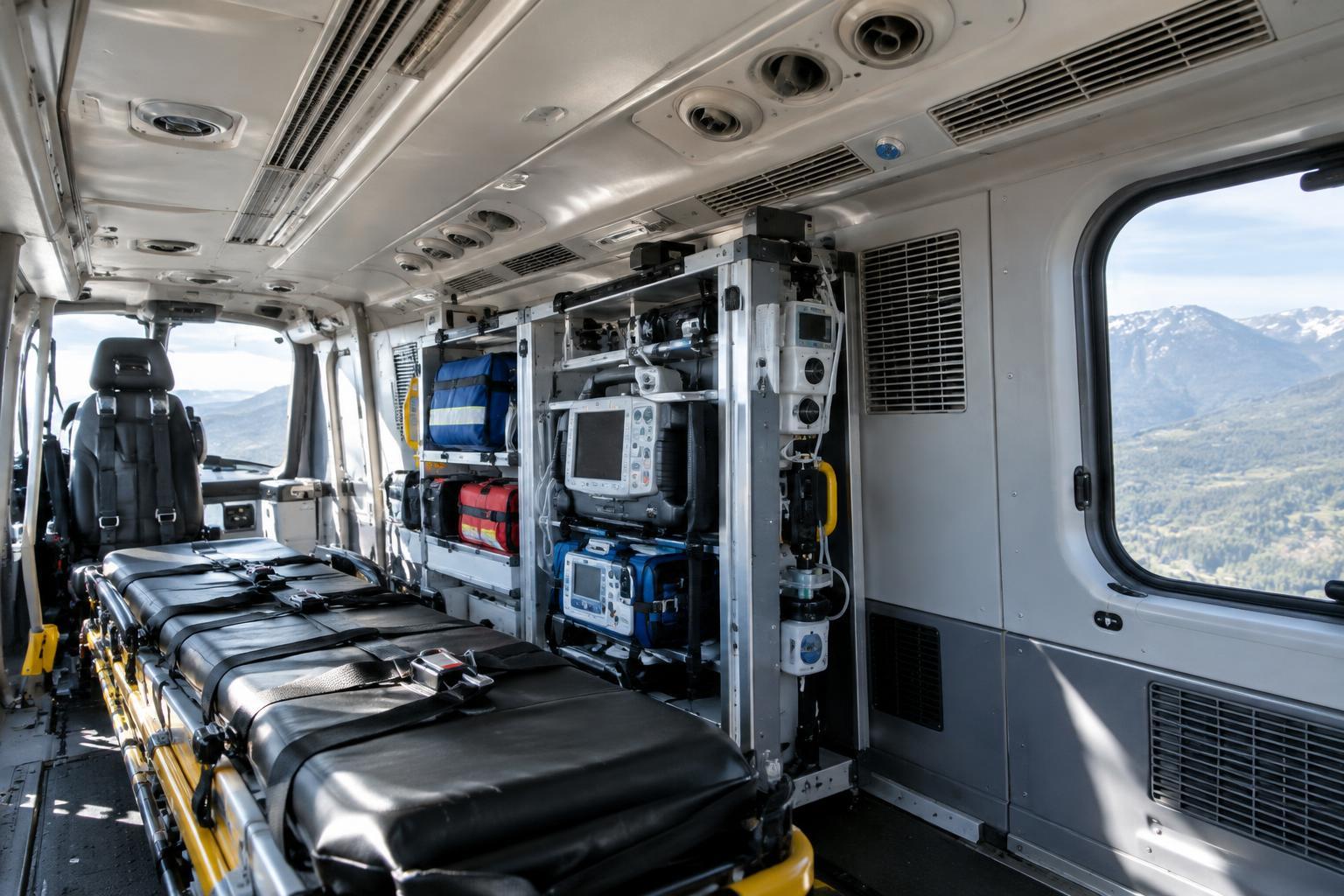
Powered devices can add heat to the space around them. If several are placed close together, a cabinet or mounting panel may need room for airflow. At the same time, a heater outlet directed at a device could expose it to a warmer local environment than the rest of the cabin. Placement is consequently a balancing act: equipment must be reachable and secure without blocking climate outlets or collecting unwanted heat.
Temperature choices can also affect electrical planning. Fans, cooling equipment and cabin heaters may compete with other electrical loads, depending on the aircraft design. Any proposed addition has to be considered as part of the aircraft’s approved power and installation arrangements, not simply as an accessory that fits in an empty space.
Airflow shapes the cabin layout
Ventilation works best when air has a path through the areas where people and equipment actually are. Tall storage units, equipment racks or partitions can interrupt that path. A device mounted neatly against a wall may still create a problem if it covers a supply vent or return-air opening. Designers therefore need to look beyond whether equipment physically fits.
Air movement also affects the crew’s experience. A strong stream aimed at a seat may be distracting, while weak circulation around a work area can leave that area feeling stale or unevenly heated. During equipment selection and layout planning, it helps to consider seated working positions, doors that may be opened on the ground, and the ways crew members move around the cabin.
Airflow can matter inside equipment enclosures as well. Some devices rely on open vents or clear space around their cases to shed heat. Putting them in a closed compartment may change their operating environment even if the cabin itself is comfortable. Manufacturer installation requirements and the aircraft’s approved configuration set the boundaries for such decisions.
Moisture and cleanliness add another layer
Changes in temperature can allow moisture to collect on cool surfaces. Wet clothing or gear brought into the cabin can add to the moisture load. Designers cannot prevent every change in conditions, but they can avoid placing sensitive items where drips, damp storage or condensation are more likely to affect them. Materials and enclosures also need to suit the cleaning practices expected in a transport cabin.
Ventilation components require access, too. Filters, ducts and outlets can be harder to inspect or clean if later equipment installations hide them. A layout that looks efficient on paper may be less practical if a routine check requires moving several mounted items. Leaving appropriate access supports both climate-system upkeep and equipment maintenance.
Designing for the whole working environment
Cabin climate decisions connect to other design choices: electrical capacity, equipment mounting, crew access, noise and maintenance. Adding a fan, moving a cabinet or changing a vent can have consequences elsewhere. The useful question is not only whether the cabin can be heated or cooled, but whether people and equipment can work together across the conditions the aircraft is expected to encounter.
No single layout suits every aircraft. Cabin size, installed systems and operational roles vary. A sound design process treats heating, cooling and ventilation as part of equipment integration from the start, then checks the resulting arrangement against applicable aircraft approvals and device instructions. That approach makes climate control a feature of a usable cabin rather than an afterthought.