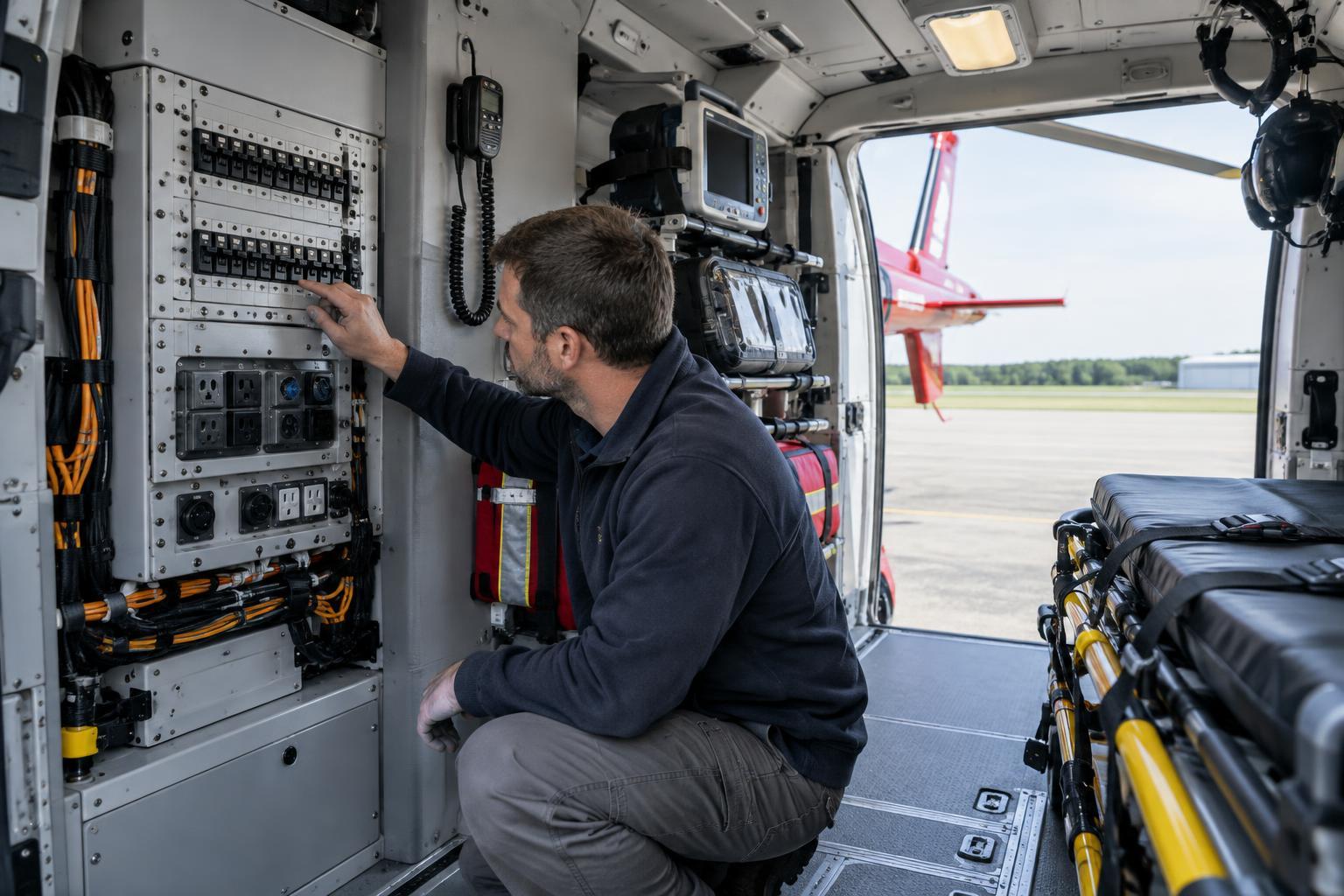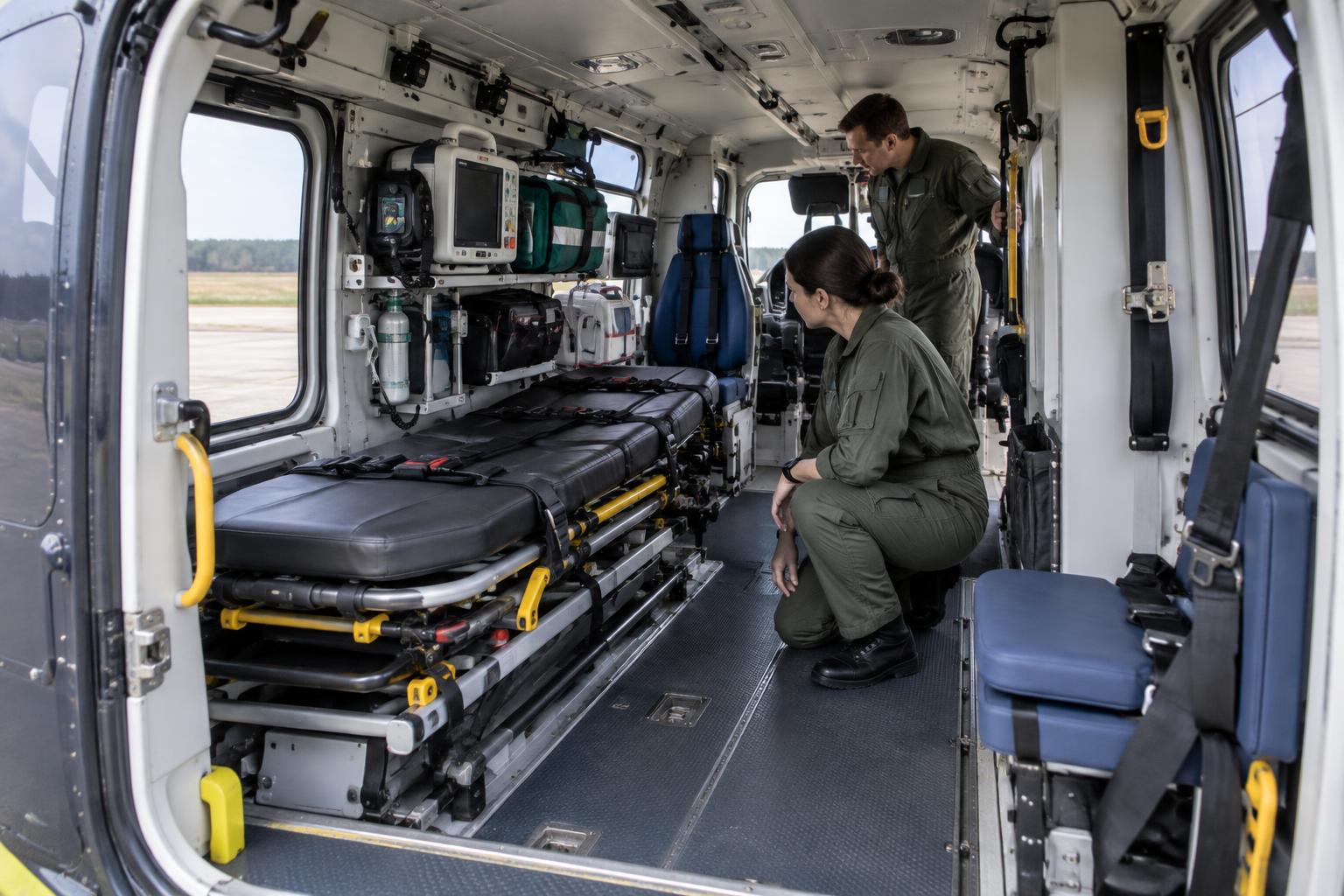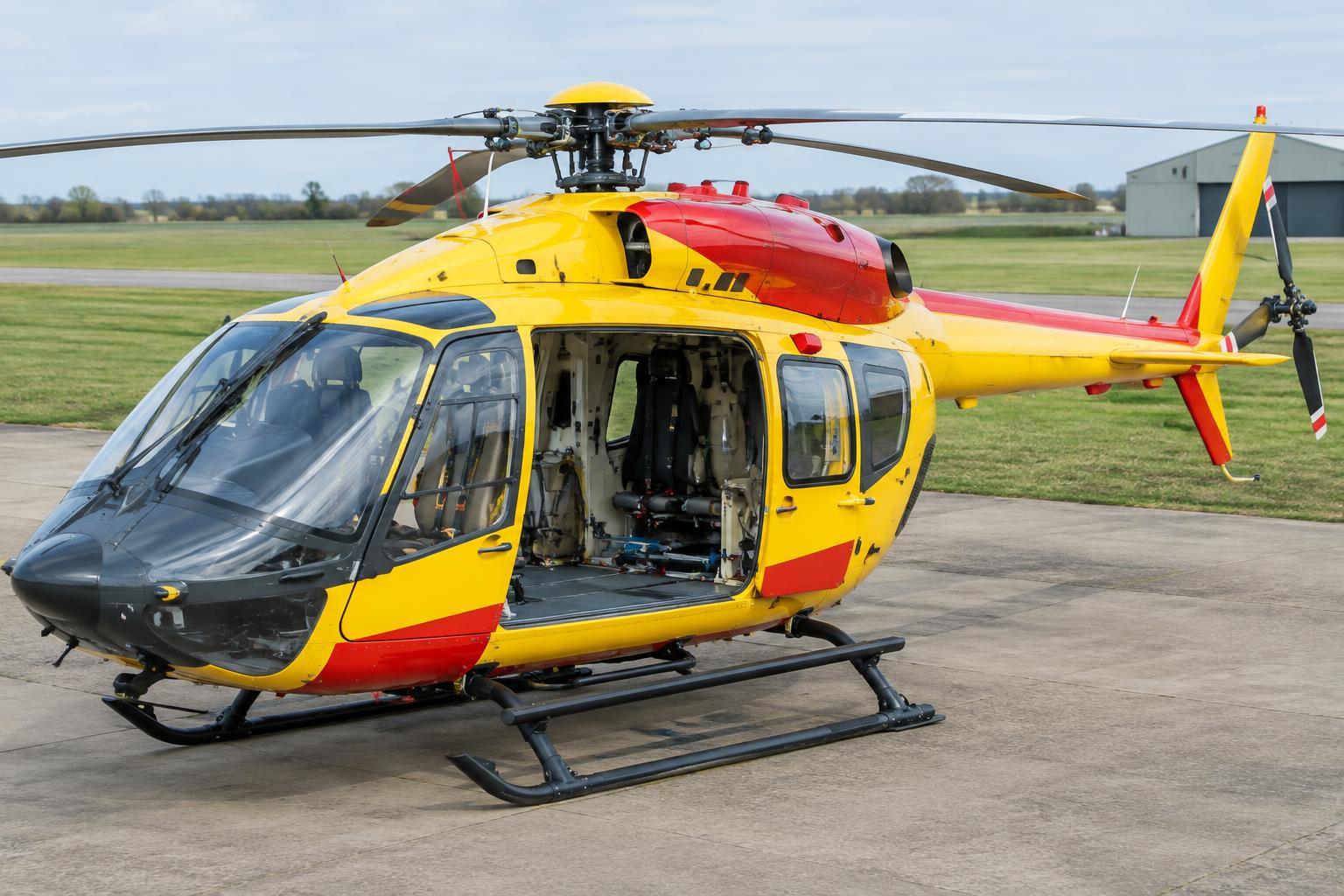
The mount is part of a larger restraint system
A patient on a stretcher must remain supported while the aircraft accelerates, turns, encounters turbulence and lands. The stretcher mount provides the connection between the stretcher assembly and the aircraft. It is not the same as the straps that secure the patient to the stretcher: those restraints serve a separate purpose. Both connections matter. A firmly attached stretcher cannot protect someone who is not properly restrained on it, and patient straps cannot compensate for an unsecured stretcher.
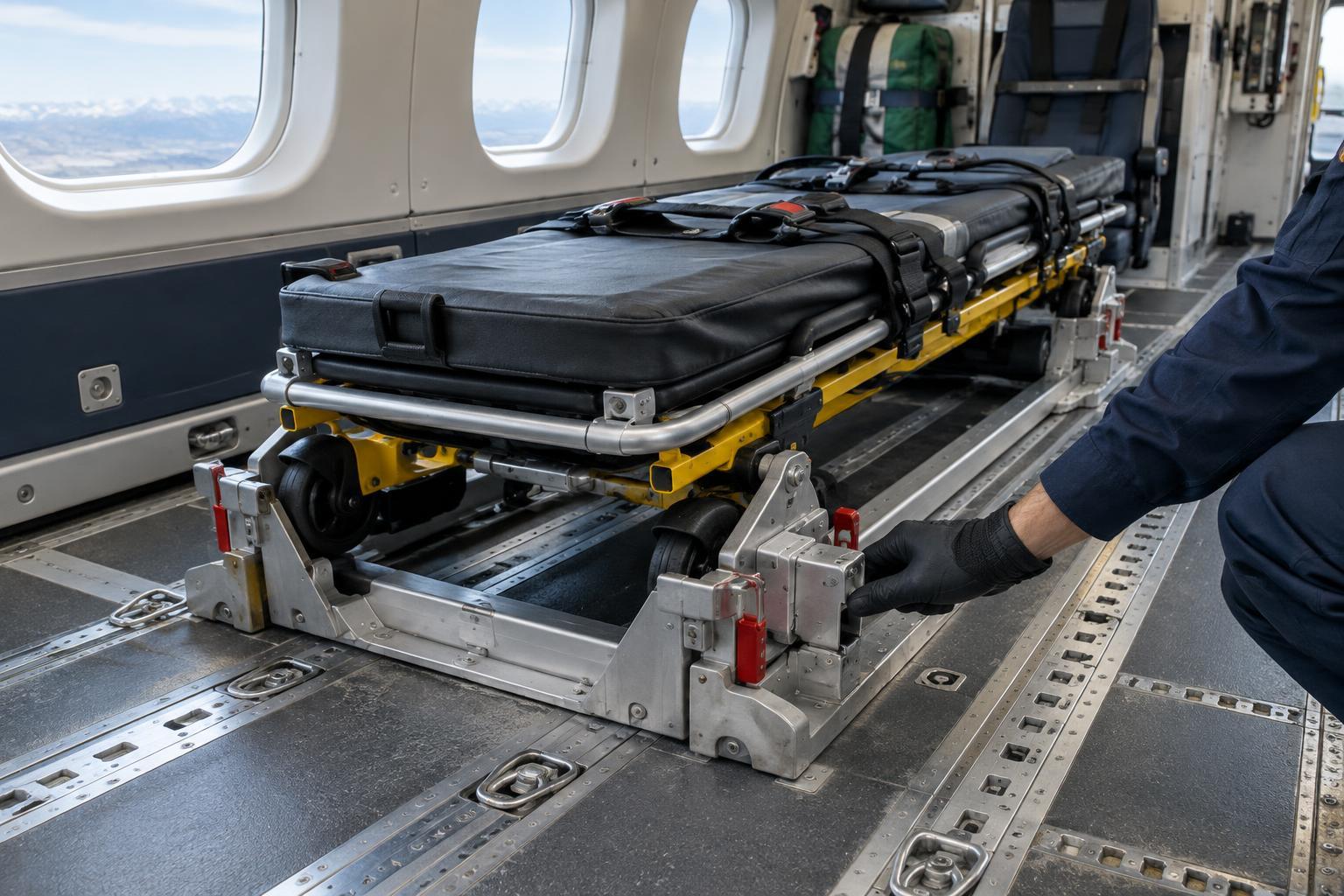
Mounts vary with the aircraft and cabin layout, but they commonly use a base or track interface, locating features that position the stretcher, and latches or locks that hold it in place. The design must account for forces in more than one direction. It must also fit within the aircraft’s approved configuration rather than simply attaching to a convenient-looking point on the floor.
A secure path from stretcher to aircraft
A mount works by giving loads a defined path: from the stretcher into its fittings, through the mount, and into suitable aircraft structure. Designers consider how each part behaves when pulled, pushed or twisted. They also look at joints, fasteners and connection points, because a strong rail is of little use if the fitting at its end can release or deform under the loads the installation is intended to withstand.
Aviation equipment must remain secure in demanding conditions, not just during a smooth flight. The requirements for a particular installation depend on the aircraft and its certification basis, so there is no universal mount design that fits every cabin. Compatibility matters as much as apparent strength: a stretcher, adapter and aircraft fitting need to be used as an approved combination. An improvised connection may look stable on the ground without providing a dependable load path in flight.
Locks that are practical to use and check
Crews need to load and secure a stretcher in a confined space. Mounts may therefore include guides that help align the stretcher and locking features that engage as it reaches its intended position. Depending on the design, a handle, indicator or other visible cue may help a crew member confirm that a latch is fully engaged. A positive check is important because a stretcher can appear to be in place while a fitting has not locked.
A useful design also considers what happens during unloading. Release controls should be accessible without inviting accidental operation, and the stretcher should remain controlled as it is disengaged. Instructions and checks are specific to the equipment in use; a general description cannot replace them. Clear operation, repeatable alignment and inspectable components all reduce opportunities for a missed connection.
Cabin space, access and weight matter too
The mount occupies valuable cabin space and helps determine the patient’s position relative to doors, seats and other equipment. Its placement needs to allow the stretcher to move through the loading opening while leaving appropriate access once it is secured. Crew members may need to reach restraints, equipment or storage areas without stepping over the patient or obstructing an exit. These considerations can make a compact, well-positioned mount more useful than one that is merely easy to attach.
The mount, stretcher, patient and associated equipment also add weight and affect how it is distributed within the aircraft. Cabin configurations are planned with loading limits and balance in mind. Designers must consider the mount’s own weight alongside its strength, while operators must use the installation within the applicable aircraft and equipment limitations. A secure fitting is only one part of a workable transport layout.
Security is a design and inspection task
Durability matters because mounts are handled repeatedly and may be exposed to vibration, cleaning and ordinary wear. A fitting that becomes difficult to latch, a damaged guide or a loose fastener can change how reliably the system works. Designs that make wear and damage easier to see support routine inspection, while clear documentation helps crews and maintenance personnel recognize the equipment’s intended condition.
The central idea is straightforward: the patient is restrained to the stretcher, the stretcher is locked to its mount, and the mount is connected to suitable aircraft structure. Each link has a distinct job. By designing those links as a compatible system—and making them practical to check—aircraft stretcher mounts help keep a patient’s position predictable throughout transport.