Two ways to connect air and ground transport
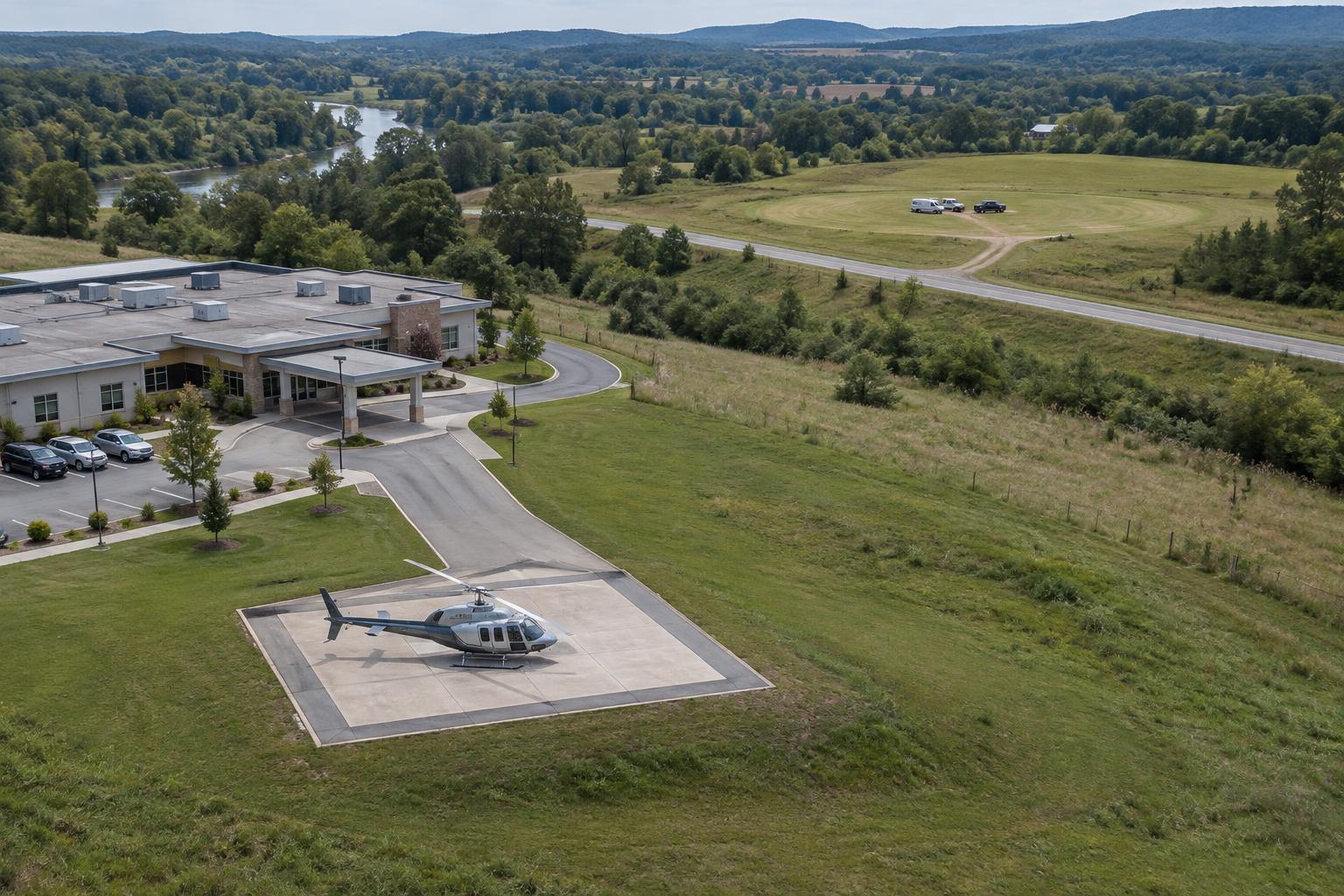
A helipad is a designated place intended for helicopter arrivals and departures. It may serve a hospital, airport, public facility or other location. A temporary landing site, by contrast, is a place considered for a particular situation rather than maintained as a standing helicopter facility. Both can help bridge the distance between an aircraft and a destination, but they offer different levels of familiarity and supporting infrastructure.
The distinction matters because an aircraft landing is only one step in a transport journey. People, equipment and vehicles must also reach the site and move away from it. A nearby helipad may have an established ground route, while a temporary site may require a route to be identified and communicated for that occasion. Neither label alone establishes that a location is suitable for a particular flight; that determination belongs to the responsible aviation personnel under the conditions they face.
What a designated helipad can make more predictable
A designated helipad can provide a known point of contact and a familiar destination for crews and ground partners. Its location, access arrangements and ordinary users may already be documented. Where a facility has established procedures, participants may know which entrance to use, where vehicles should wait and whom to notify before an arrival. That familiarity can reduce the number of questions that must be settled from scratch.
Predictability is not the same as automatic availability. Access may depend on facility rules, other aircraft activity, maintenance or changing conditions. A helipad can also be some distance from the place where a person or equipment is needed. Planners therefore have to consider both the flight destination and the ground connection: a clearly identified pad is most useful when the route beyond it is understood.
Why temporary sites need more coordination
A temporary landing site may be considered when a designated helipad is impractical or too far from the relevant ground location. Its potential advantage is flexibility. Its challenge is that details a regular facility might already have documented must be established for the specific situation. These include who controls access to the property, how people and vehicles will approach, what activity is taking place nearby and how the location will be described to those who need to find it.
Conditions at a temporary site can be less familiar and may change while plans are being made. Obstacles, loose materials, bystanders, vehicle movements and the available space are among the matters aviation personnel may need to evaluate. Ground partners can support coordination by sharing accurate observations and keeping communication channels clear, but they should not treat an informal description of a space as approval for an aircraft to use it. The crew and operator remain responsible for their aviation decisions.
Access is more than distance on a map
The closest possible landing location is not necessarily the easiest one to use. A short straight-line distance can conceal a fence, locked gate, steep path or road that ground vehicles cannot reach. Conversely, a more distant designated helipad may offer an established vehicle entrance and a predictable transfer point. Comparing options means looking at the whole route rather than measuring only the distance between an aircraft and a destination.
This is especially important when equipment or a person must be transferred between teams. Questions about where vehicles can stop, who can enter an area and how the next leg of the journey will begin are logistics questions, not simply aviation questions. Resolving them early helps different groups work from the same plan. If a location changes, the revised meeting point and access route need to be communicated clearly to everyone involved.
A shared plan supports a smoother handoff
Whether the destination is a helipad or a temporary site, coordination depends on a common understanding of the location and each group's role. Clear location descriptions, a reliable contact path and agreement about the ground-side handoff help prevent people from converging on different entrances. A designated facility may make those arrangements routine; a temporary site may require them to be assembled for one use.
The practical lesson is not that one type of site is always better. A helipad offers the potential benefits of a known facility, while a temporary site offers flexibility when circumstances warrant it. Both require attention to access, changing conditions and the journey after landing. Thinking of the landing point as one link in a wider transport chain makes the planning differences easier to understand.