What landing gear needs to do
A helicopter’s landing gear supports the aircraft while it is parked, absorbs some of the forces of landing and helps keep the fuselage clear of the ground. Its design also affects what happens after touchdown: whether the aircraft can roll, how it is moved into a hangar and how crews approach it on a landing site.
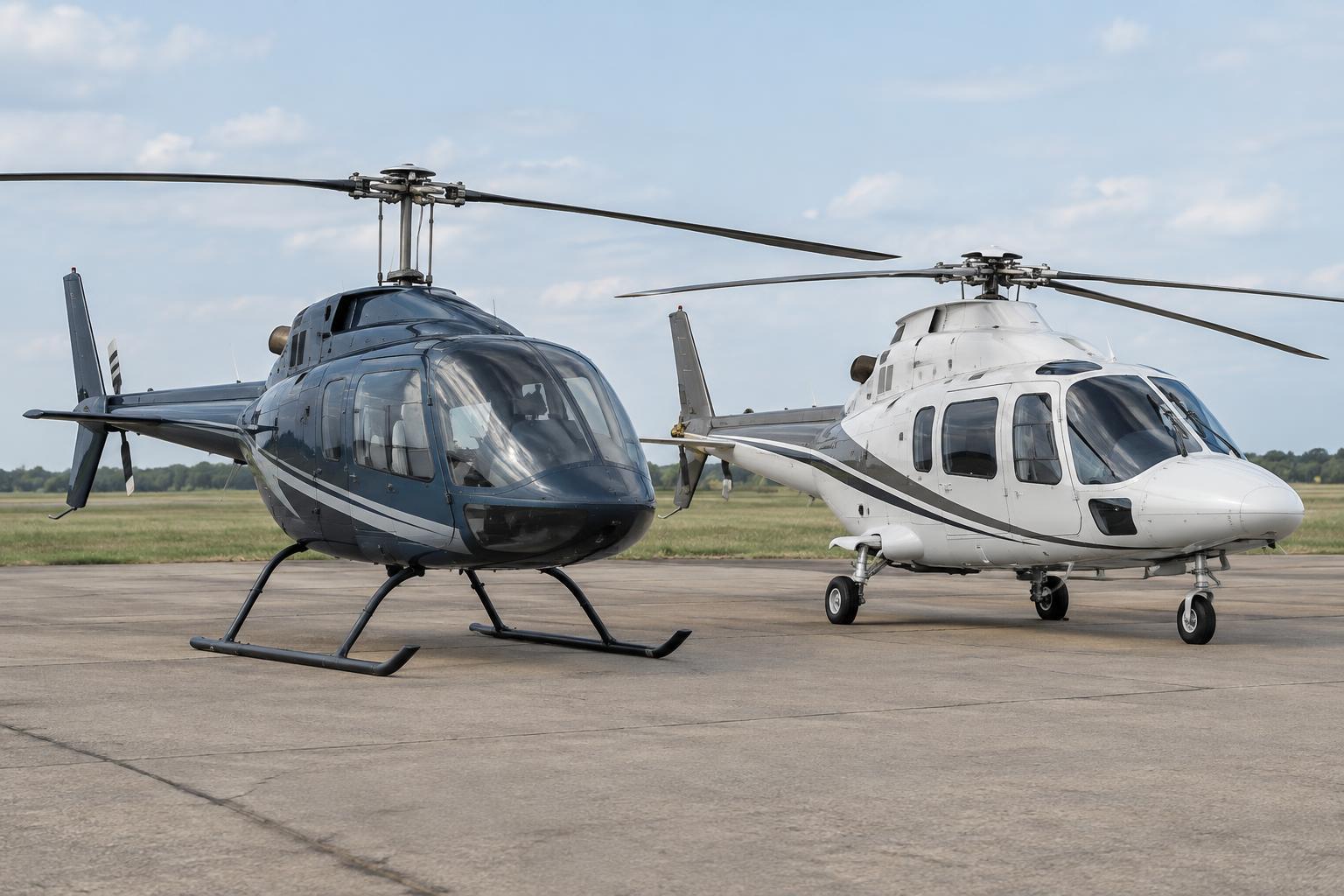
Skids and wheels are the two familiar solutions. Neither is automatically better for rescue aviation or any other mission. A designer must balance aircraft weight, available space, expected landing surfaces and the way the helicopter will be handled between flights. The details vary considerably by model, so a broad comparison is more useful than a universal rule.
Skids: simple support with limited ground movement
A typical skid arrangement has two long runners connected to the fuselage by cross tubes or other supporting structure. With relatively few moving parts, skids can offer a straightforward, comparatively light solution. Their structure is designed to flex or otherwise manage landing loads within the aircraft’s limits. The exact load path and permitted landing conditions depend on the helicopter.
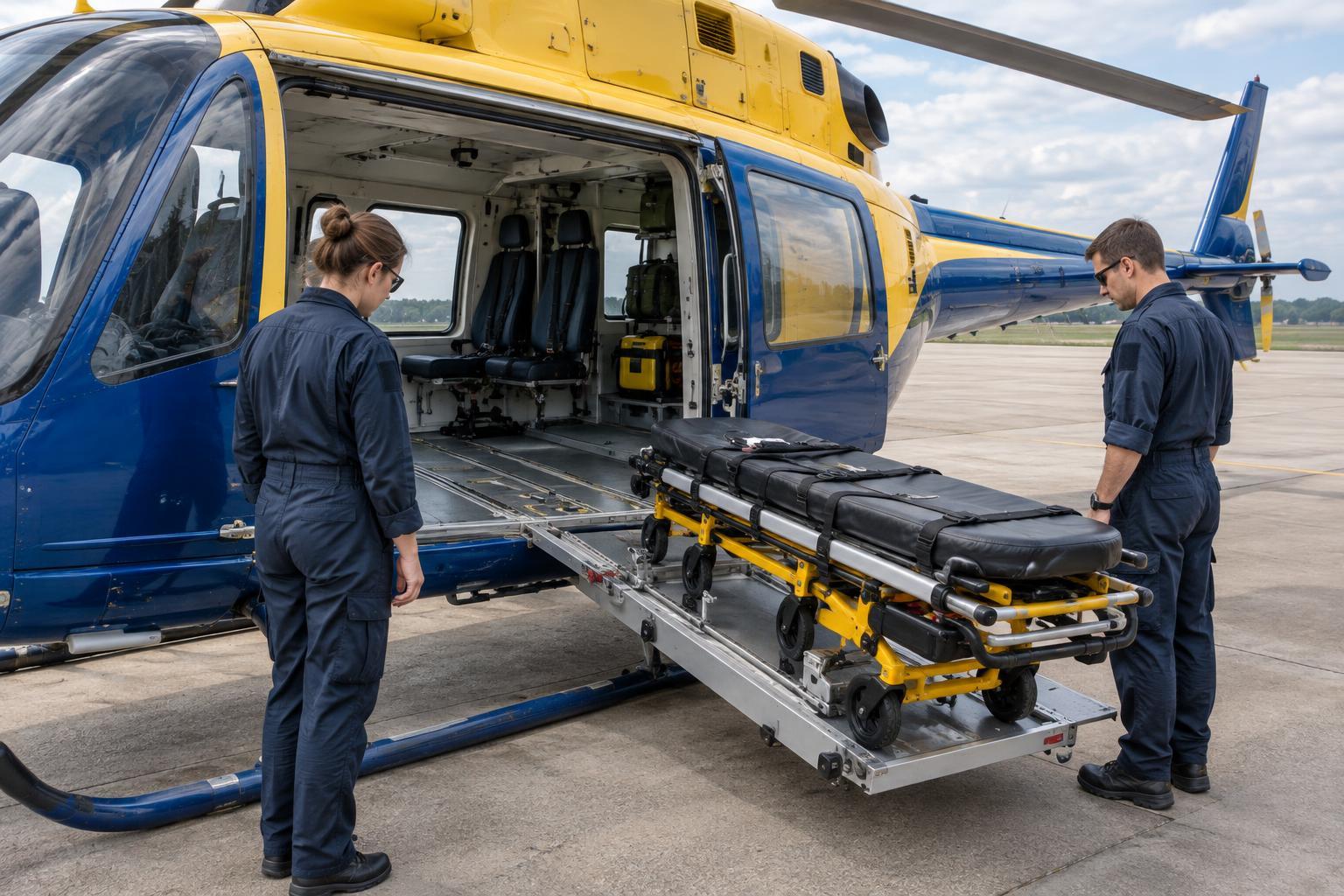
The tradeoff appears on the ground. Skids do not let a parked helicopter roll into a hangar or along a ramp by themselves. Ground crews may use approved handling wheels, dollies or other equipment to move it. Those steps require suitable equipment and coordination; a skid-equipped helicopter is not simply pushed like a wheeled vehicle.
Skids can be well suited to operations where the aircraft lands, loads or unloads, and departs without much ground repositioning. But their long contact surfaces do not make every rough or soft site suitable. Obstacles, uneven support and ground that may give way still matter, and the aircraft’s approved limits govern its use.
Wheels: easier rolling, more components
Wheeled landing gear allows a helicopter to roll on the ground. Depending on the model, that may make ramp movement easier and may permit ground taxiing where the aircraft and operating procedures allow it. Wheels can be especially useful at facilities where helicopters are regularly repositioned between parking, servicing and hangar areas.
That capability brings additional components. Tires, bearings and, on many designs, brakes or shock-absorbing assemblies need inspection and upkeep. Some helicopters also have retractable gear, which can reduce drag in flight but adds mechanisms, controls and indications. Other wheeled designs are fixed. The weight and maintenance effects therefore depend on the particular arrangement, not merely on whether wheels are present.
Wheels can also move when movement is unwanted, so parking, braking and securing the aircraft become important considerations. A wheel does not guarantee that a surface will support the helicopter: soft ground can still be a problem, and bumps or slopes can complicate ground handling.
Why landing sites change the comparison
For an emergency transport mission, landing gear is only one part of site suitability. The crew must consider the available area, surface condition, obstacles, wind and the space people need to work around the aircraft. Rotor clearance and safe access remain essential whether the helicopter rests on skids or wheels.
The gear can, however, shape the practical workflow. At a prepared base, a wheeled helicopter may be easier to reposition for servicing. At a temporary landing site, the ability to roll may offer little benefit if the aircraft will take off from where it landed. Conversely, a simple skid arrangement does not remove the need to assess ground support and clearance. Both types must be used within the aircraft’s limitations and the organization’s procedures.
A design choice, not a ranking
Skids tend to favor structural simplicity and low weight while requiring separate means for most ground movement. Wheels favor rolling mobility but introduce tires and, often, more mechanical systems. Designers weigh those differences alongside the helicopter’s size, intended facilities, performance goals and expected operating conditions.
For readers comparing aircraft, the most useful question is not “Which gear is best?” but “What work is this helicopter designed to do, and where will it spend time on the ground?” Landing gear is a small visible part of the aircraft, yet it connects flight design to everyday tasks: landing, loading, parking, maintenance and movement around a facility.