When getting there was the main achievement
The earliest uses of aircraft for patient evacuation were shaped by a straightforward problem: a person needed to reach care that was too far away, or too difficult to access, by other means. The aircraft’s value lay largely in crossing that distance. Onboard attention could include basic comfort and observation, but cramped cabins, limited equipment and the demands of flight constrained what attendants could do.
That history is not a simple story of transport being replaced by treatment. Even a well-equipped aircraft cannot substitute for every resource at a hospital, and movement remains central to an air ambulance mission. What changed over time was the expectation that the interval between departure and arrival could also be used to assess, support and monitor the patient.
A cabin becomes a workspace
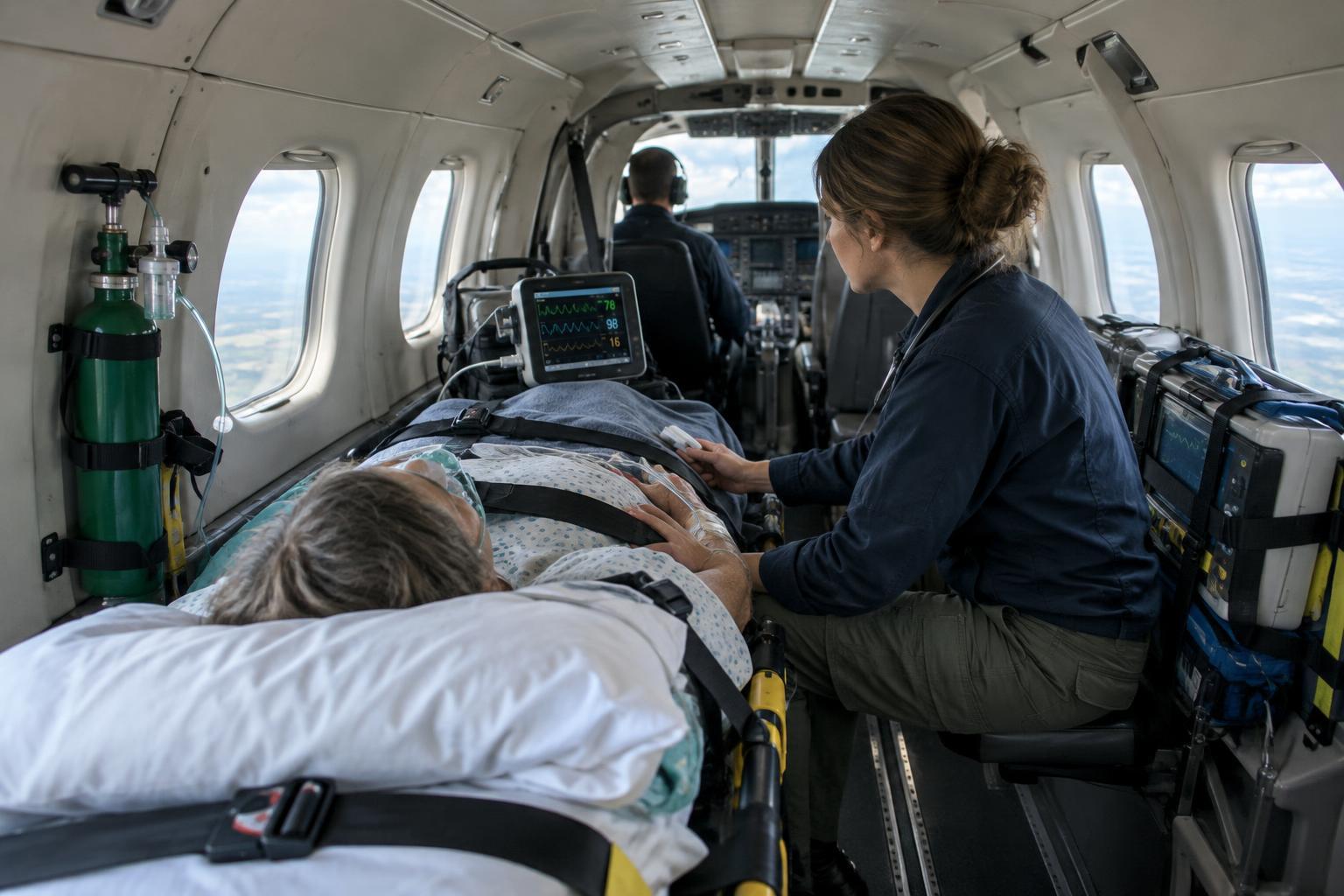
Providing care in flight requires more than putting medical supplies beside a stretcher. Equipment must be secured so that it does not shift during takeoff, landing or turbulence. Crew members need access to the patient while working around seats, doors and other aircraft features. Lighting, noise, vibration and limited room can make ordinary tasks harder than they would be on the ground.
As air ambulance interiors became more deliberately arranged for patients and caregivers, the cabin could support a wider range of monitoring and interventions. Equipment selection still involves trade-offs: an item may be useful in a clinical setting but too bulky, difficult to secure or poorly suited to the aircraft environment. Layout also matters. A device is less helpful if a caregiver cannot see its display or reach it at the moment it is needed.
These design choices help explain why aircraft used for similar purposes may look different inside. A helicopter serving short, time-sensitive trips and a fixed-wing aircraft carrying someone over a longer distance can pose different questions about space, access, supplies and patient comfort.
What continuous care changed
With a more capable onboard workspace, caregivers could do more than wait for arrival. They could follow changes in a patient’s condition, maintain support already begun before the flight and respond within the limits of their training, equipment and operating environment. In this sense, the air ambulance became a link in a chain of care rather than merely a bridge between two locations.
That role made preparation especially important. Teams may need to consider what support a patient already requires, what could change during the trip and which supplies must remain accessible. The aircraft environment can complicate those plans: noise affects conversation, movement may interrupt a task, and the crew must work within flight-safety requirements. More onboard capability does not remove these limits; it makes planning around them more consequential.
It also changes how a flight is understood. A patient’s journey includes the transfer into the aircraft, the time in the air and the handoff after landing. Continuity across those stages matters as much as any single piece of equipment.
From individual effort to coordinated work
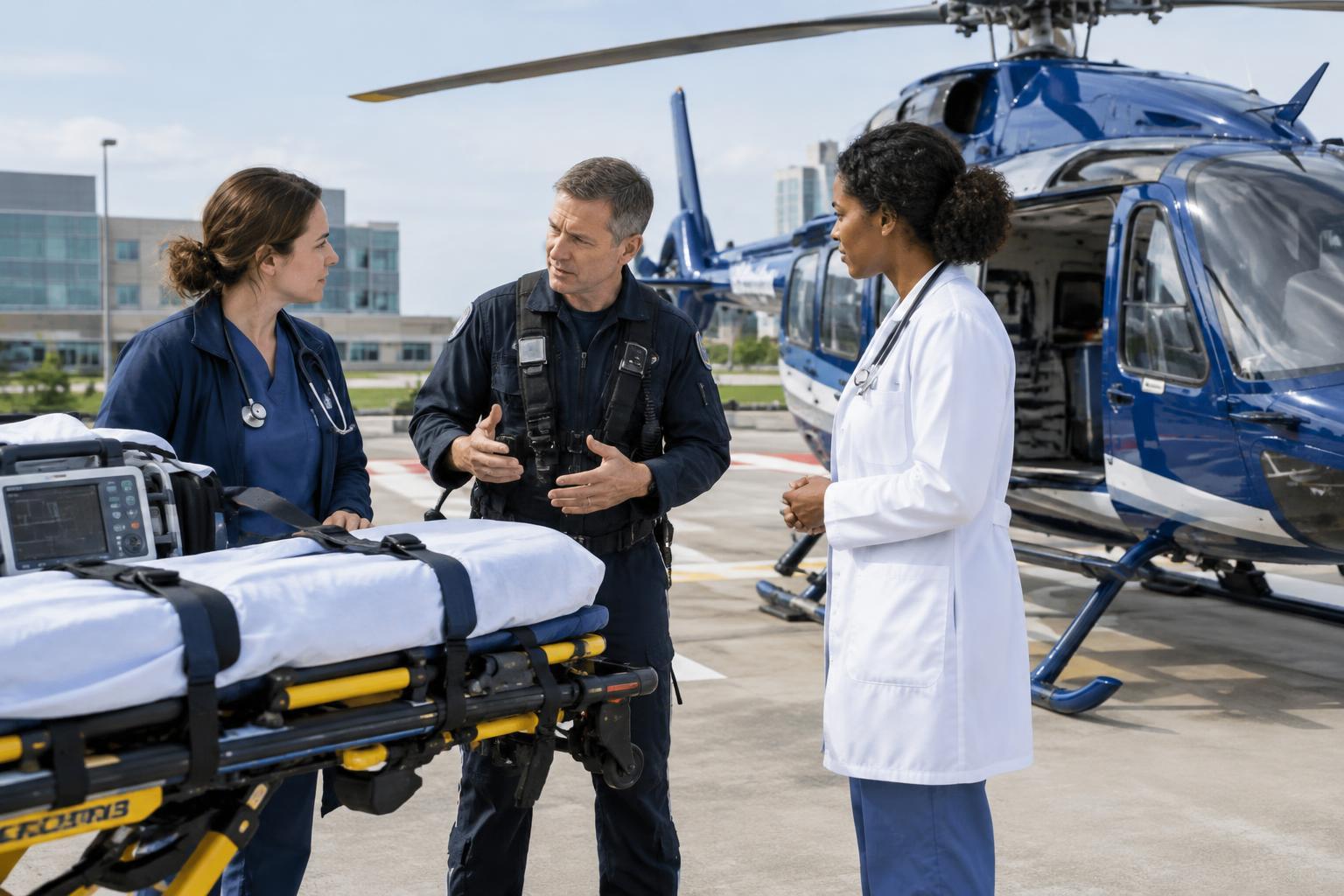
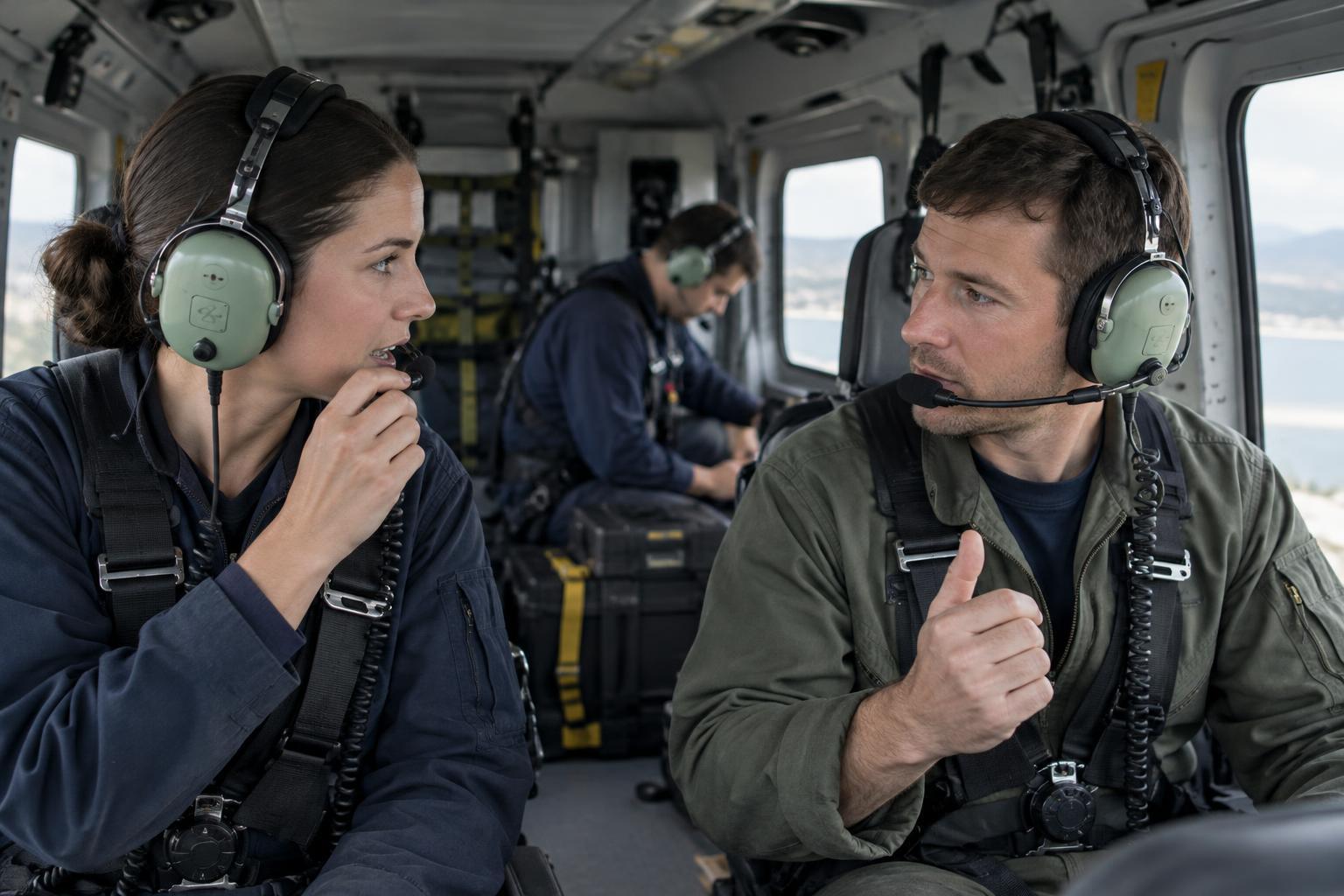
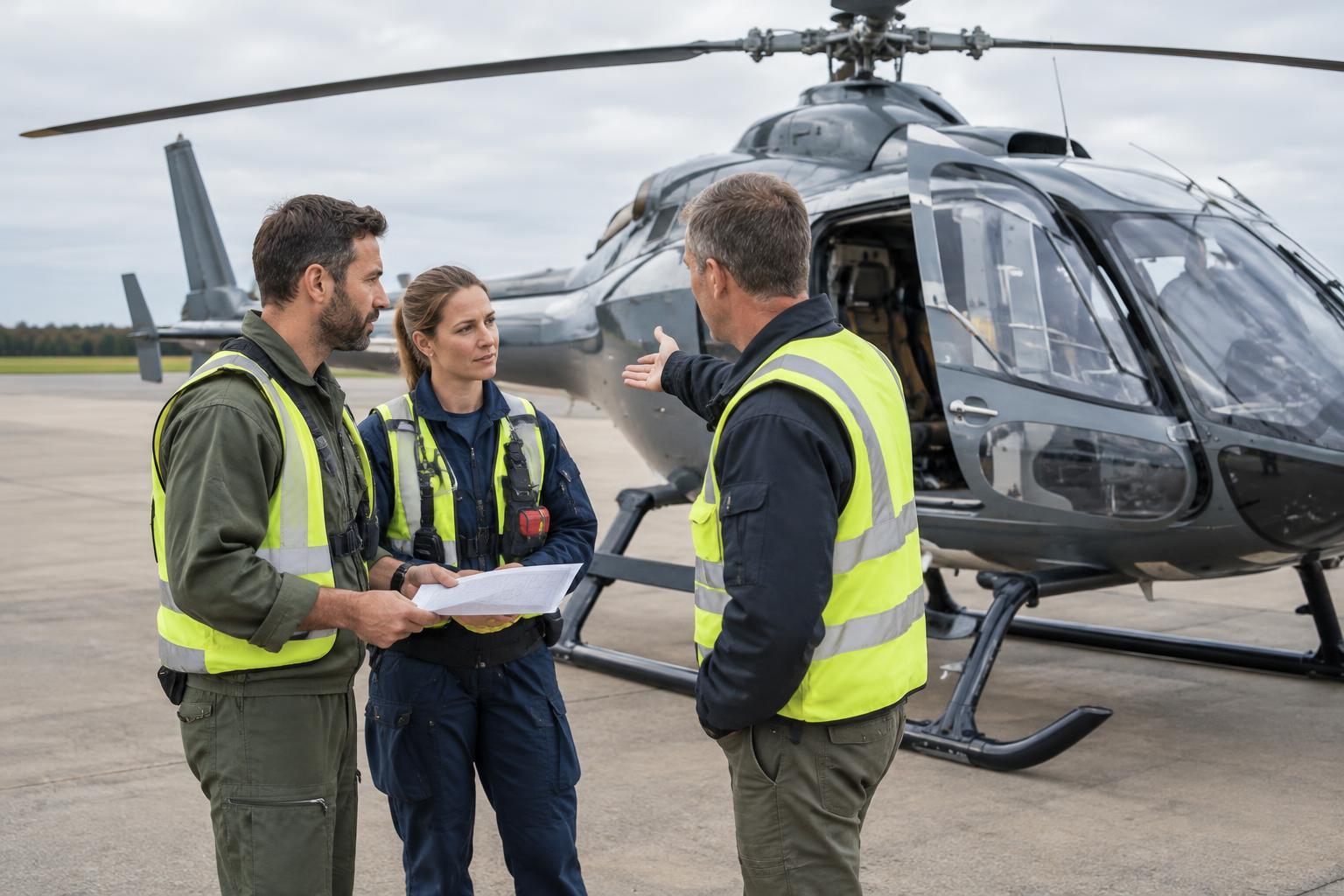
The shift toward onboard care placed greater emphasis on coordination among flight and clinical personnel. Pilots manage the aircraft and its safe operation, while medical crew members focus on the patient. Their responsibilities differ, but decisions about loading, timing, cabin conditions and changes during flight can affect both sides of the mission. Clear communication helps each person understand constraints without assuming that everyone has the same view of the situation.
Coordination extends beyond the cabin. People at the sending and receiving facilities, ground transport crews and dispatch personnel may each hold part of the information needed for a smooth transfer. Useful handoffs identify the patient’s needs, the support in place and any important changes, rather than relying on the flight itself to fill gaps in communication.
This team-based view is an important part of the historical change. As onboard care became more involved, success depended not only on what a caregiver could do in the aircraft, but also on how well the flight fit into a larger transport plan.
An evolution with a constant purpose
Air ambulance history can be read as a gradual expansion of possibilities inside a demanding space. Better-suited cabin layouts, portable equipment and more defined team roles helped turn travel time into an opportunity for care. The extent of that care has never been identical on every flight; it depends on the aircraft, crew, patient and mission.
The enduring purpose is to help a patient reach an appropriate destination while managing the journey as safely as possible. Understanding the move from transport toward treatment makes the modern air ambulance easier to appreciate: it is both an aircraft and a carefully organized workplace, with neither function able to stand alone.