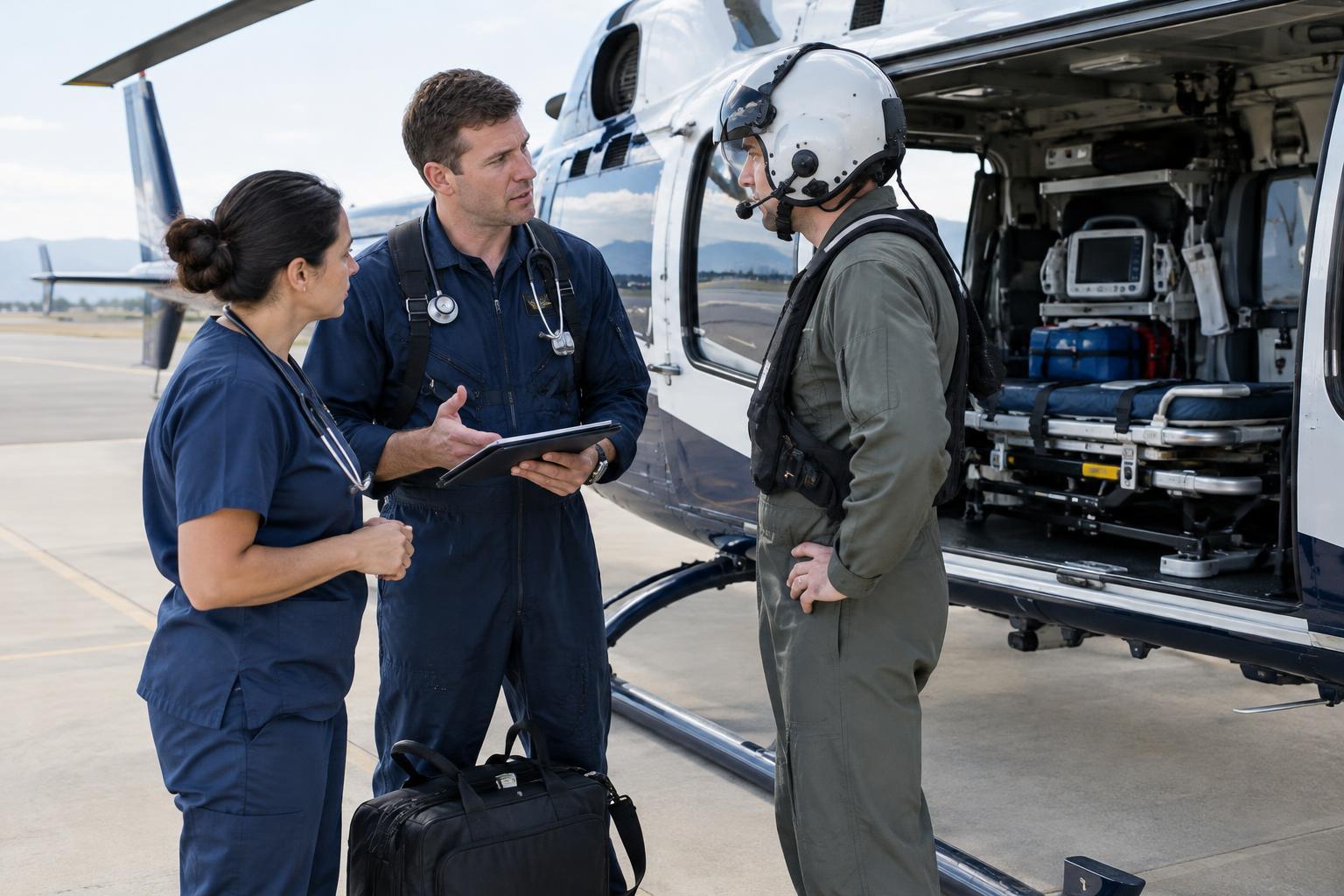
What does a flight physician do?
A flight physician is a doctor who participates in transporting patients by aircraft. The role is not the same in every organization. Some programs routinely include a physician on the transport team; others use physicians for particular types of missions or rely on them primarily for consultation and medical oversight. Aircraft type, patient needs, staffing and local requirements all shape the job.
When assigned to a transport, a flight physician helps assess the patient, establish clinical priorities and plan care that can continue during the journey. They may review information from the referring team, discuss the receiving team's needs and work alongside nurses, paramedics or other clinicians. The goal is continuity: the transport team needs a shared understanding of the patient's condition, the available equipment and what changes would require a different plan.
Clinical work in a constrained environment
Care in an aircraft is different from care in a hospital room. Space is limited, equipment must be secured, and noise can make conversation and assessment harder. Access to the patient may also change once everyone is seated and the aircraft is moving. A flight physician therefore has to think ahead about monitoring, medication, supplies and the placement of equipment before departure.
Clinical decisions remain team decisions in practice, even when responsibilities are clearly assigned. A physician may bring experience in managing complex illness or injury, while another crew member may know a particular aircraft's equipment and transport workflow especially well. Effective teams make room for both forms of expertise. They confirm who is doing what, communicate changes promptly and avoid assuming that an instruction was heard over cabin noise.
How aviation responsibilities fit the role
A flight physician needs to understand how aviation conditions affect a transport, but that does not make the physician the pilot. Flight planning, aircraft operation and decisions about whether conditions permit a flight belong to the aviation professionals responsible for them. The physician's contribution is to explain clinical needs in terms the rest of the team can use: how urgently a patient needs transport, what equipment is required and whether a proposed journey presents a concern for patient care.
Good coordination begins before boarding. The crew may discuss patient size and positioning, power needs, oxygen supply, loading steps and the ability to reach essential equipment. A physician should also be prepared for a change in plan, such as a delay or a different destination. Clear communication matters more than pressing for a particular flight outcome; safety limits and clinical priorities both need to be understood.
Training and qualities that matter
Physicians who enter transport medicine may come from different clinical backgrounds. The preparation expected for a specific position depends on the program and its patients. Relevant learning can include critical care, emergency care, transport equipment, aircraft safety procedures, crew communication and the differences between ground and air transport. Anyone considering a position should check the actual qualifications, supervision structure and training offered by the organization rather than assume there is one universal route.
Technical knowledge is only part of the work. Flight physicians need to stay composed when information is incomplete, explain priorities briefly and listen to concerns from colleagues with different expertise. They also need to recognize when the transport setting limits what can be done. Rehearsing routine tasks and unusual scenarios as a team can help people work together without relying on any one person's memory or authority.
Exploring a flight physician career
For a physician interested in this field, a useful first step is to compare job descriptions carefully. Is the position primarily bedside transport, medical direction, education or a combination? What kinds of patients does the program carry, and who joins the crew? How are clinical decisions documented and reviewed? These questions reveal more about day-to-day work than the job title alone.
It is also worth asking how a program approaches orientation, simulation, fatigue and communication between clinical and aviation staff. A flight physician career can appeal to someone who enjoys complex care and collaborative problem-solving, but the central skill is not simply working in an aircraft. It is helping a multidisciplinary team make sound, coordinated decisions while respecting the responsibilities and limits of every person on board.