The nearest airport is only a starting point
On a map, choosing an airport can look simple: find the airfield closest to the departure point and another closest to the destination. In a fixed-wing transport, that pair may not produce the most workable journey. The aircraft has to be able to use each airport, people and equipment must be able to reach the aircraft, and the ground trip at either end must fit the broader transport plan.
This is especially important when a journey involves a time-sensitive handoff. A short flight to a remote airport can be less useful than a somewhat longer flight to one with dependable vehicle access. Airport selection is therefore a door-to-door logistics question, not just a question of distance flown. The people coordinating a specific trip must confirm the details with the aircraft operator, airports and ground transport providers.
Runway access means more than runway length
An airport must be suitable for the particular aircraft and the conditions expected for the trip. Runway dimensions and surface are obvious considerations, but suitability also depends on factors such as aircraft performance requirements, available approaches, local restrictions and the condition of movement areas. A runway that appears adequate in a directory is not, by itself, a promise that a flight can use it.
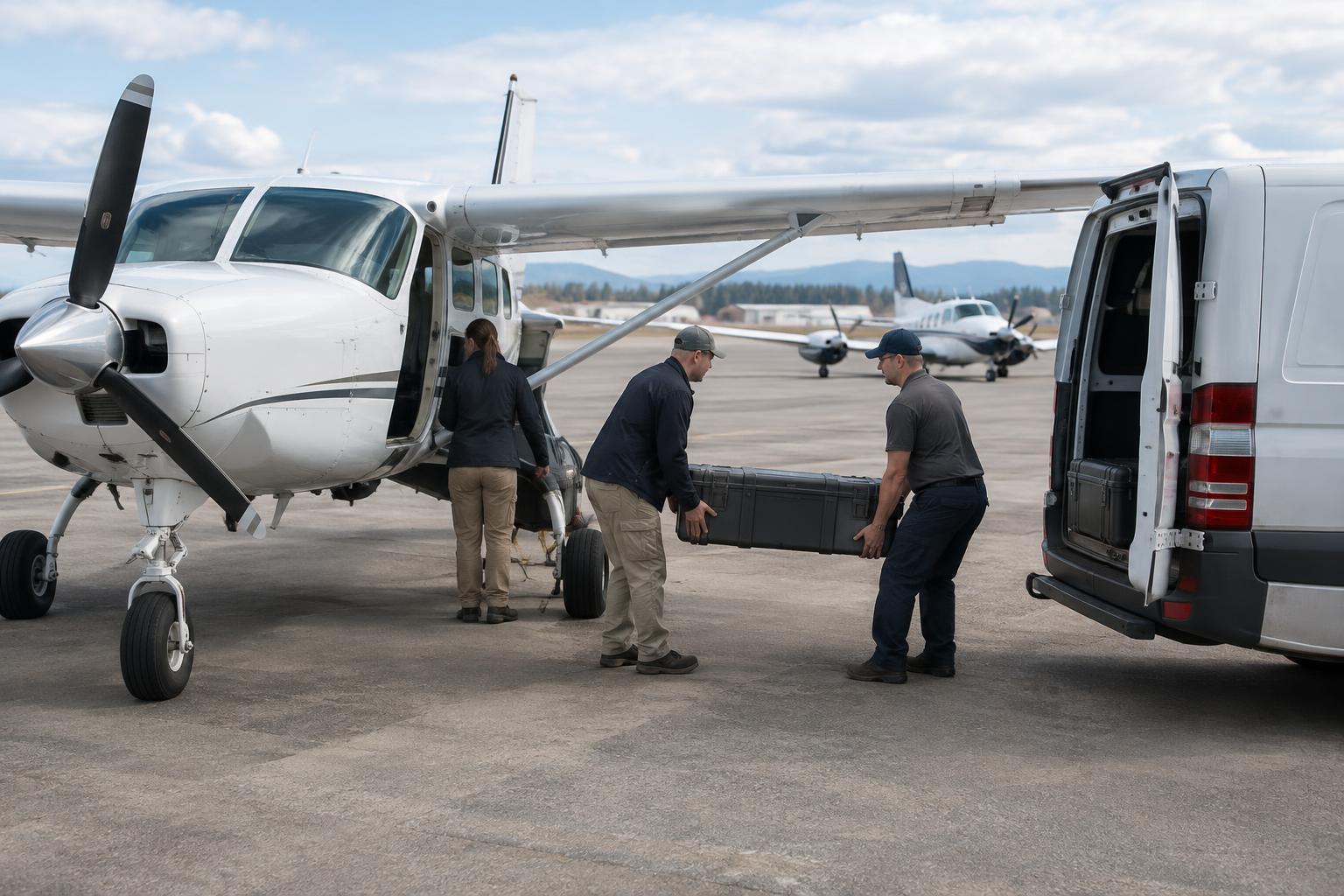
Access continues beyond the runway. The aircraft needs an appropriate place to park, and the ground team needs a workable route between the vehicle and the aircraft. Depending on the transport, crews may need room to move a stretcher or other equipment without creating an obstacle on a ramp. Gates, escorts and permission to enter controlled areas can matter as much to the handoff as the distance from the terminal to the aircraft. These arrangements are best checked in advance rather than assumed.
Airport hours and services shape the schedule
An airport may be open to aircraft at times when its terminal, fuel provider or ground services are not staffed. Published hours also may not describe every service needed for a particular arrival. Coordinators distinguish between whether an aircraft can arrive, whether it can park and depart again, and whether the necessary people and facilities will be available when it does.
After-hours arrangements may be possible at some airports, but they require confirmation. The same applies to fuel availability, access to buildings, ramp support and any local procedures affecting arrival or departure. Weather or a schedule change can shift an arrival outside the expected window, so a plan benefits from knowing whom to contact and what would happen if a service is unavailable. Qualified flight personnel determine what the aircraft and crew can safely undertake; a logistics plan should not treat an estimated arrival time as a guarantee.
Compare the whole ground journey
For each candidate airport, it helps to consider both the drive to the departure airport and the drive from the arrival airport. Road distance alone may conceal difficult access roads, traffic, loading constraints or an awkward route to the intended destination. A farther airport with a straightforward vehicle handoff may serve the overall trip better than a nearer one that adds uncertainty on the ground.
Location also affects coordination between organizations. The sending and receiving parties need a shared understanding of which airport, which entrance or meeting point, and which team is responsible for each transfer. Clear identifiers matter when an area has several airports or when an airport has separate general aviation facilities. Confirming the handoff location with everyone involved reduces the chance that an aircraft and a vehicle arrive at the same airfield but wait in different places.
Build a plan that can be checked and revised
A useful airport comparison brings the main constraints together: aircraft suitability, confirmed hours and services, ramp access, ground travel and handoff arrangements. It also identifies which details are verified and which remain open. An airport should not be treated as available simply because it has worked for a similar trip before; staffing, permissions and operating conditions can differ.
Plans may need to change if weather, aircraft availability, airport access or ground transport changes. Having another plausible airport in mind can support a revised plan, but an alternative still needs its own checks. The goal is not to select an airport from a single attractive feature. It is to give qualified operators and transport coordinators a clear picture of how the flight connects to the journey on the ground.