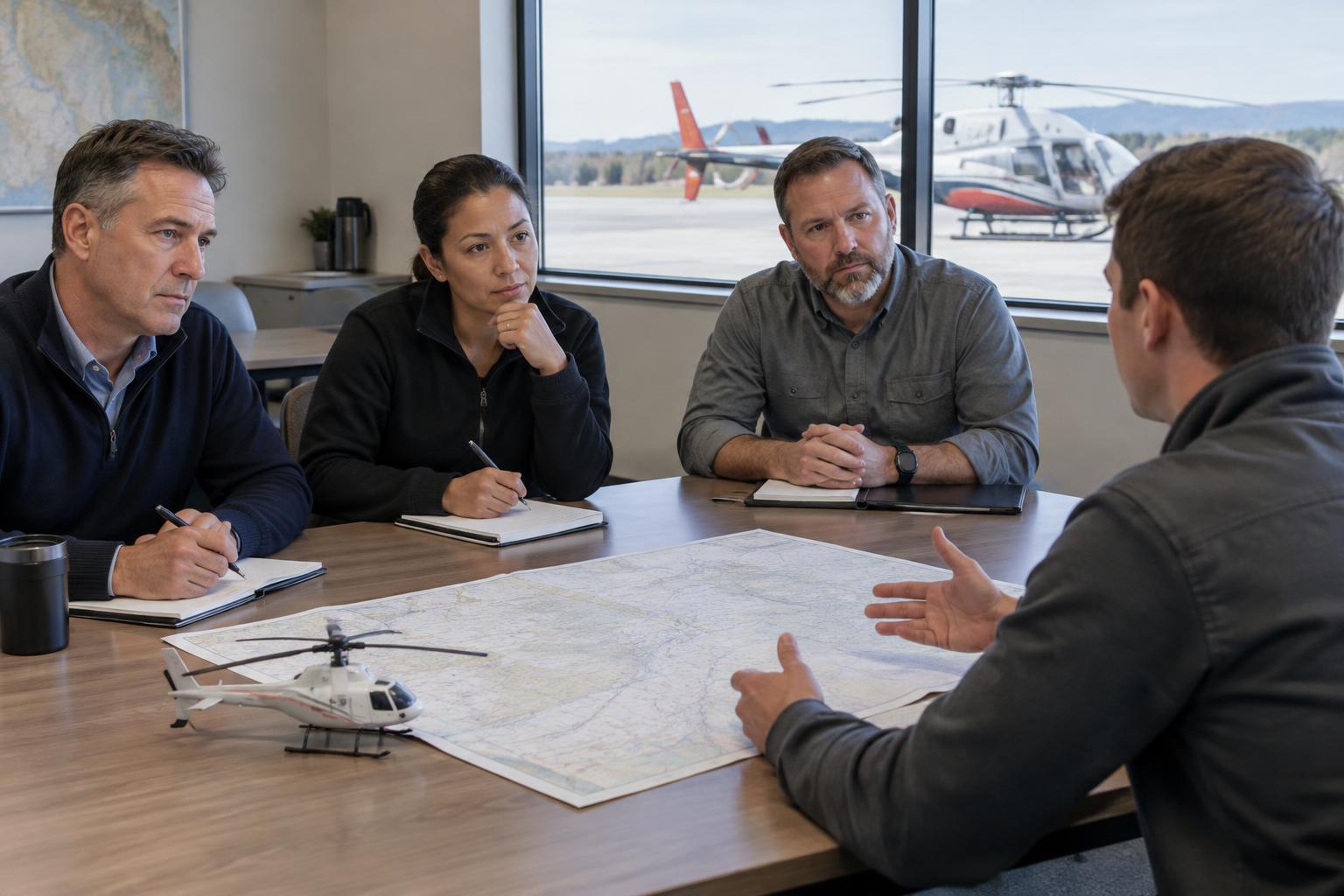
Start with the role, not the aircraft
Rescue aviation involves more than the people aboard an aircraft. Depending on the organization, teams may include pilots, maintenance personnel, dispatchers, logistics staff, communications specialists, and people who support training or equipment readiness. These roles have different entry requirements. A portfolio is most useful when it shows why your experience fits a particular kind of work rather than treating every rescue aviation job as interchangeable.
Begin by choosing one or two roles to explore. Read job descriptions closely and note the recurring tasks: maintaining records, coordinating handoffs, checking equipment, communicating under time pressure, or working within established procedures. Separate tasks you have performed from qualifications you still need. If a position requires a license, certification, or specific operational experience, a strong portfolio can help explain your preparation, but it cannot replace that requirement.
Find the relevant work you have already done
Lack of flight experience does not mean lack of relevant experience. A warehouse inventory project may demonstrate careful equipment tracking. A customer-service role may show how you clarify requests and pass along accurate information. Work in a repair shop, volunteer group, school lab, or event team may offer examples of following checklists, documenting changes, and coordinating with others. The connection matters more than the setting.
For each example, describe the situation, your responsibility, what you did, and what resulted. Keep the focus on actions you can substantiate. “Created a sign-out sheet that made missing items easier to identify” tells a reader more than “excellent attention to detail.” If you worked as part of a group, distinguish your contribution from the team’s. This makes it easier for someone reviewing the portfolio to understand both your skills and your judgment.
Build samples that show how you think
A portfolio can include brief, self-directed samples when your paid or volunteer experience is limited. You might draft a sample equipment inventory template, map the steps in a hypothetical transport handoff, or write a short explanation of how a crew member could confirm that a message was understood. Label these clearly as learning exercises, not operational documents. Their purpose is to demonstrate organization and reasoning, not to prescribe how a real team should work.
A good sample states its assumptions and boundaries. For a hypothetical handoff, for example, you could list what information needs to move between people, identify points where details might be missed, and explain how you would seek clarification. Avoid presenting a generic checklist as suitable for actual flight or patient-care use. Real organizations set their own procedures, and safety-critical work requires the appropriate training and oversight.
Make evidence easy to review
Choose a small number of strong examples rather than collecting everything you have done. Give each item a clear title and a short note explaining the context, your contribution, and the skill it illustrates. If you include training certificates, name the course and what it covered without suggesting that attendance alone proves operational competence. A concise résumé can point readers to the portfolio items most relevant to the role.
Protect other people’s information while assembling your materials. Remove names, contact details, patient information, proprietary records, and anything you do not have permission to share. If an example depends on sensitive work, describe the process in general terms or create a fictionalized sample instead of uploading the original. Clear labeling also helps: distinguish completed work from drafts, team projects from individual work, and real examples from hypothetical exercises.
Show readiness to learn, not a claim to experience
Rescue aviation work often depends on people recognizing the limits of their own knowledge and communicating those limits clearly. Your portfolio can reflect that habit. Include a short statement about the role you are pursuing, the skills you can already demonstrate, and the gaps you intend to address. Those gaps might involve formal training, familiarity with aviation terminology, or experience working within an organization’s procedures.
Revisit the portfolio as you gain experience. Replace early exercises with stronger examples, update descriptions when your responsibilities change, and remove items that no longer represent your best work. A useful portfolio does not need to make you look as though you have already worked in flight operations. It should give a prospective employer a clear, honest view of what you can contribute now and how thoughtfully you are preparing for the next step.