Two communication systems, two different jobs
In a rescue aircraft, communication has to reach both inside and outside the cabin. Radios carry messages between the aircraft and external parties, such as air traffic services or other aircraft. An intercom connects people on board so they can talk over engine, rotor and airflow noise. The two systems often share headsets and microphones, but they serve different purposes: an intercom conversation does not automatically go out over a radio.
The exact arrangement depends on the aircraft and its equipment. A cockpit may have more than one radio, allowing the crew to monitor or use different channels. Cabin crew may have intercom access without the same radio controls available to pilots. Understanding these distinctions helps explain why a person might hear a transmission but be unable to reply on that channel.
The radio path: controls, transceiver and antenna
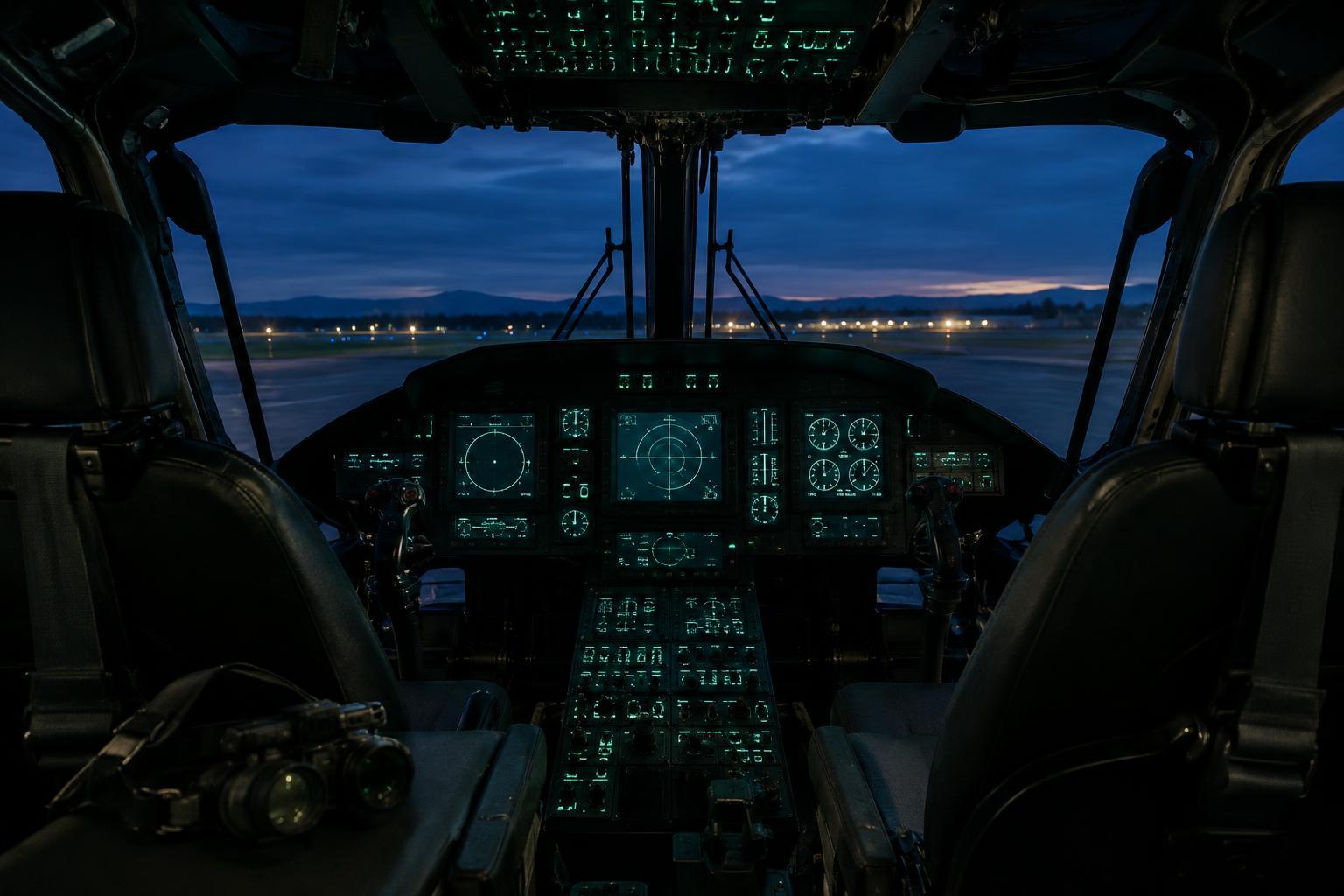
A typical aircraft radio installation includes controls for selecting a channel, a transceiver that sends and receives signals, and an antenna mounted where it can function effectively. Some installations combine the controls and transceiver in one unit; others place the main electronics elsewhere in the aircraft. Displays and control layouts vary, but their basic purpose is to let an authorized crew member select, monitor and transmit on a suitable radio.
The antenna and its connecting cable are easy to overlook because they are less visible than the cockpit display. Yet the radio depends on that path to move signals between the electronics and the outside world. Aircraft structure, antenna placement and installation condition can affect performance. A clear sound in the headset confirms that audio is reaching the listener; it does not, by itself, prove that every part of the transmitting path is working as intended.
How the intercom brings voices together
The intercom takes audio from microphones and distributes it to selected headset positions. It may provide separate settings for pilots and cabin occupants, along with controls for volume or microphone sensitivity. Some systems quiet music or other nonessential audio when someone speaks. These features aim to make conversation intelligible without forcing every person to listen to every sound all the time.
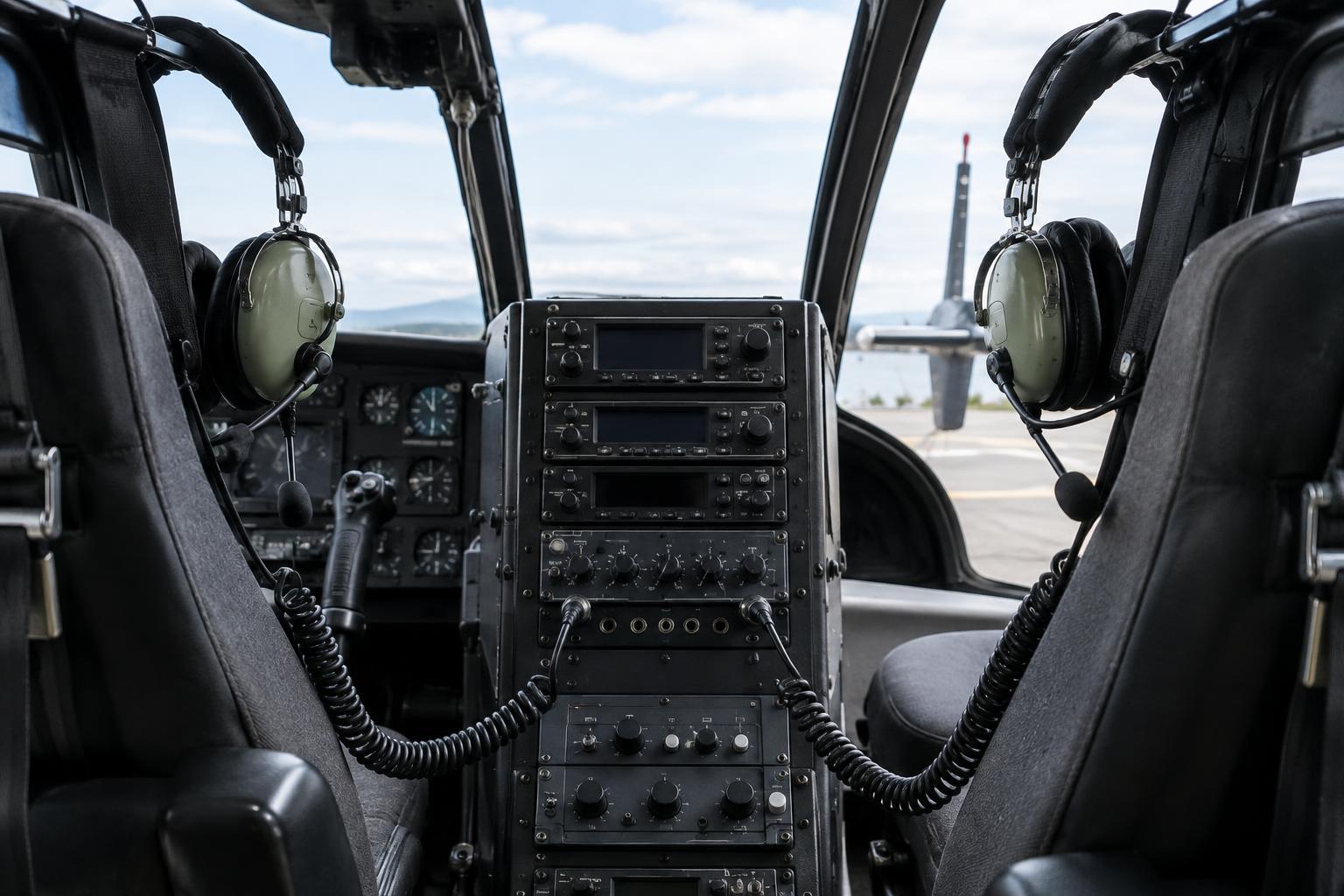
An audio panel often acts as the meeting point for radios and intercom audio. It lets a crew member choose which sources to hear and which radio a microphone will use when transmitting. A push-to-talk switch, commonly mounted on a control or connected to a headset, allows speech to be sent over the selected radio. Its exact behavior depends on the installation. This is one reason crews benefit from understanding their own aircraft’s audio controls rather than assuming all panels work alike.
Headsets, microphones and cabin connections
A headset pairs earphones with a microphone positioned close to the speaker’s mouth. That placement helps speech stand out against cabin noise. Some headsets use electronic noise reduction to make listening more comfortable, while others rely mainly on the physical seal of the earcups. Neither approach removes the need for a good fit, sensible volume and a microphone that stays in position as its wearer moves.
Cabin positions may use headset jacks, connectors or equipment designed for a particular aircraft. Compatibility matters: plugs that look similar are not always interchangeable, and a loose connection can create intermittent audio. In a working cabin, cables also need to be routed so they do not snag, obstruct movement or interfere with other equipment. These are practical design concerns as well as communication concerns.
Why clear audio supports coordination
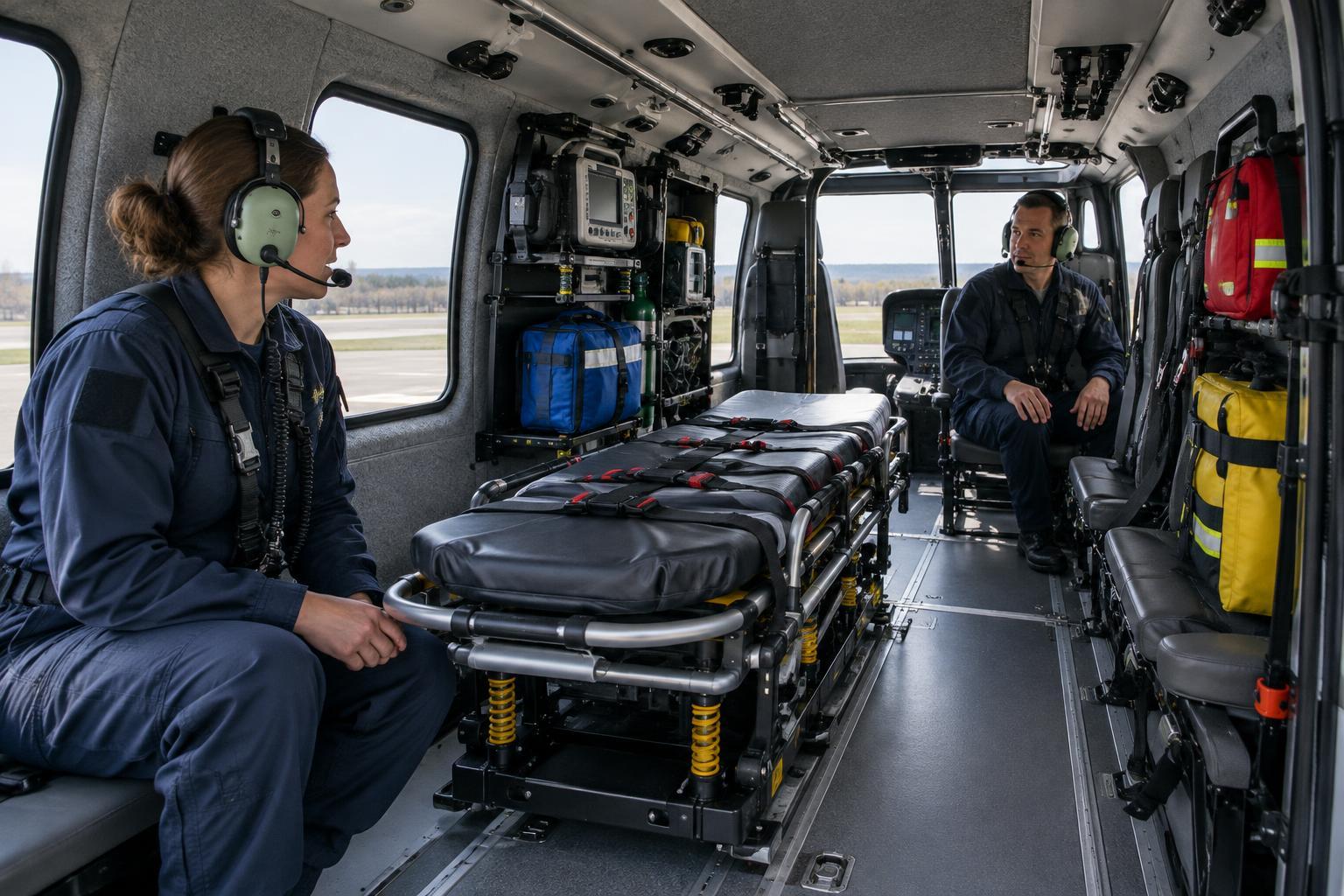
Rescue aviation often involves people with different tasks sharing a noisy, confined space. Pilots need to manage the aircraft and external radio traffic; cabin crew need a dependable way to pass relevant information within the aircraft. An intercom can reduce the need to shout, but it can also become crowded if too many voices or audio sources compete for attention. Clear, brief speech and an agreed understanding of who needs to hear what remain important alongside the hardware.
No single component guarantees reliable communication. Power supply, switches, wiring, connectors, microphones, antennas and user settings all form part of the chain. If audio becomes unclear, the cause may be as simple as a poorly positioned microphone or as complex as an equipment fault. For an educational reader, the central lesson is that radios and intercoms are connected systems with distinct roles—and that their value comes from helping a crew hear, understand and respond to the right information.