Where cabin power comes from
An aircraft electrical system serves many users at once. Depending on the aircraft, these may include flight instruments, navigation and communication equipment, exterior lights, ventilation and cabin devices. Generators or alternators normally produce power while the engines are running. Batteries can supply power when generation is unavailable, but their stored energy is limited.
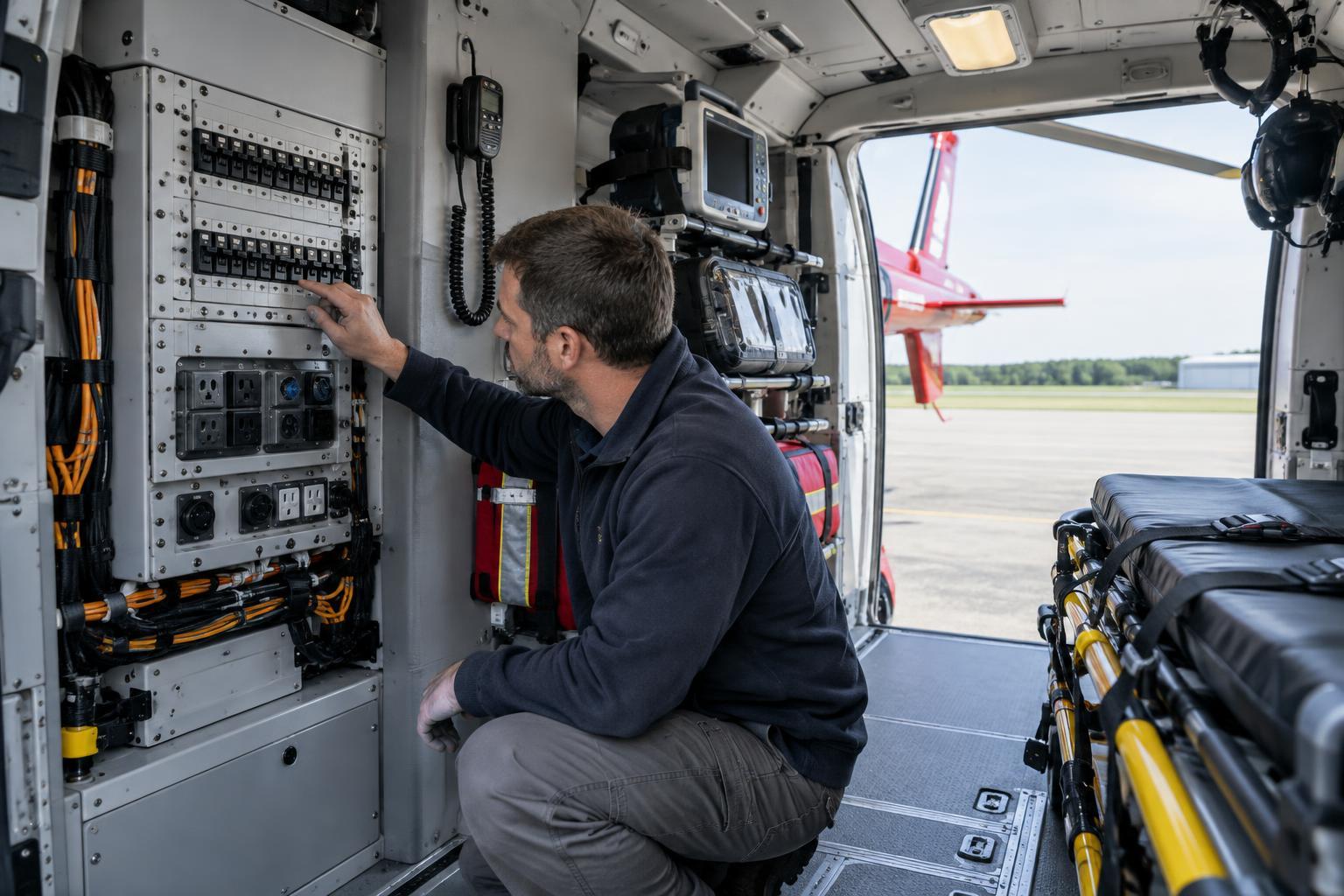
Power does not simply flow from one large socket to every device. Aircraft use buses, wiring, circuit protection and controls to distribute it. Some buses support functions considered essential for continued flight; others serve equipment that can be switched off if power becomes scarce. The exact arrangement varies by aircraft, so a useful general principle is that cabin equipment must fit within the aircraft’s approved electrical design.
Why an equipment label is only the starting point
A device’s stated power draw helps planners estimate demand, but the total load is more than a sum of labels. Equipment may draw extra current when it starts, charges a battery or changes operating modes. Several devices that seem modest on their own can create a significant combined demand when used at the same time.
The connection also matters. A device may need a particular voltage or type of current, and an inverter or converter used to provide it consumes power too. Wiring and outlets have limits independent of the generator’s overall capacity. For that reason, an available outlet does not by itself establish that any device can be plugged into it safely.
Electrical planning must leave room for ordinary aircraft needs and for changes in conditions. A system that appears comfortable under one combination of lights, ventilation and cabin equipment may have less margin under another. Rather than relying on an informal estimate, operators use aircraft-specific documentation and approved installation information to establish what can be connected and used.
Integration is more than providing electricity
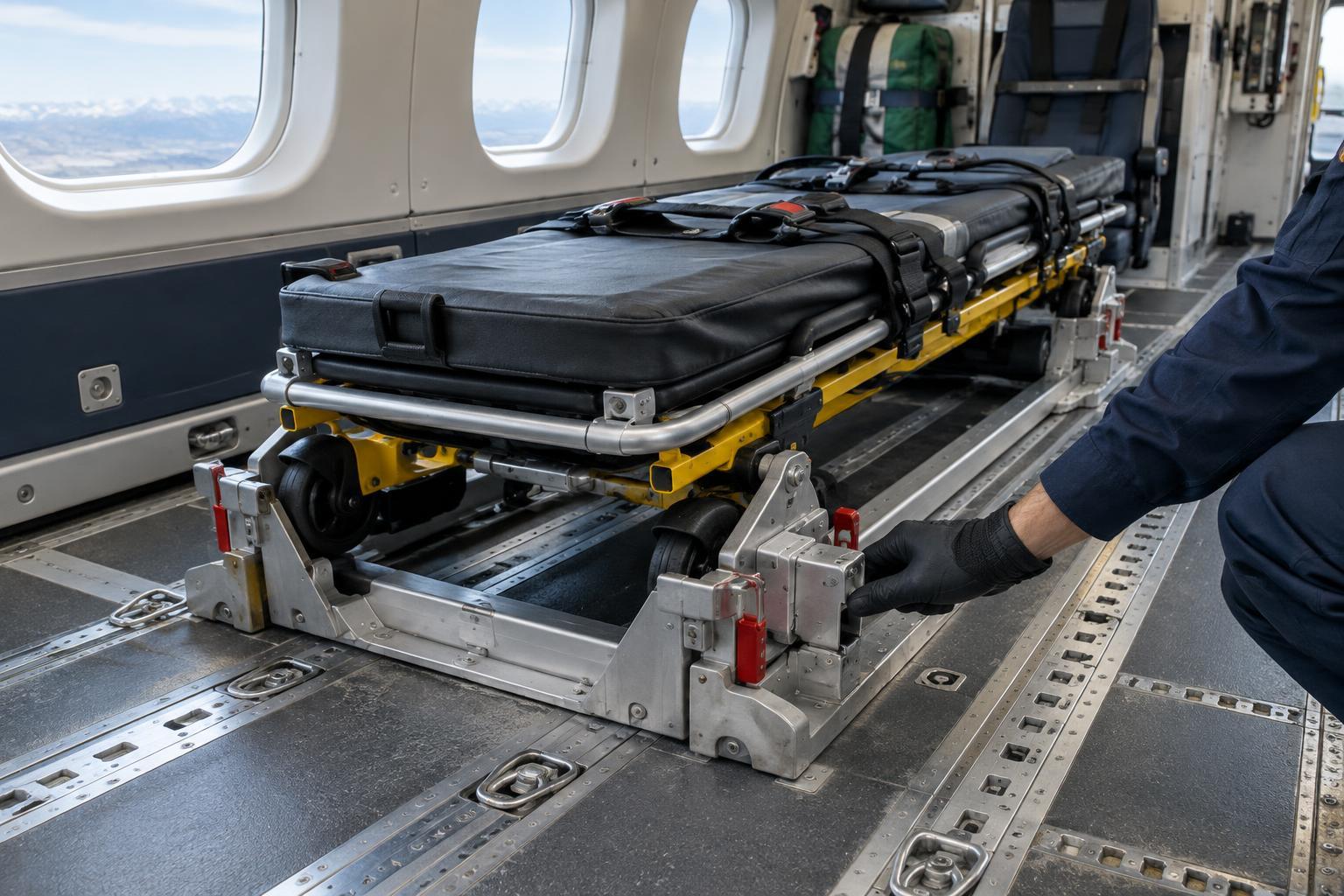
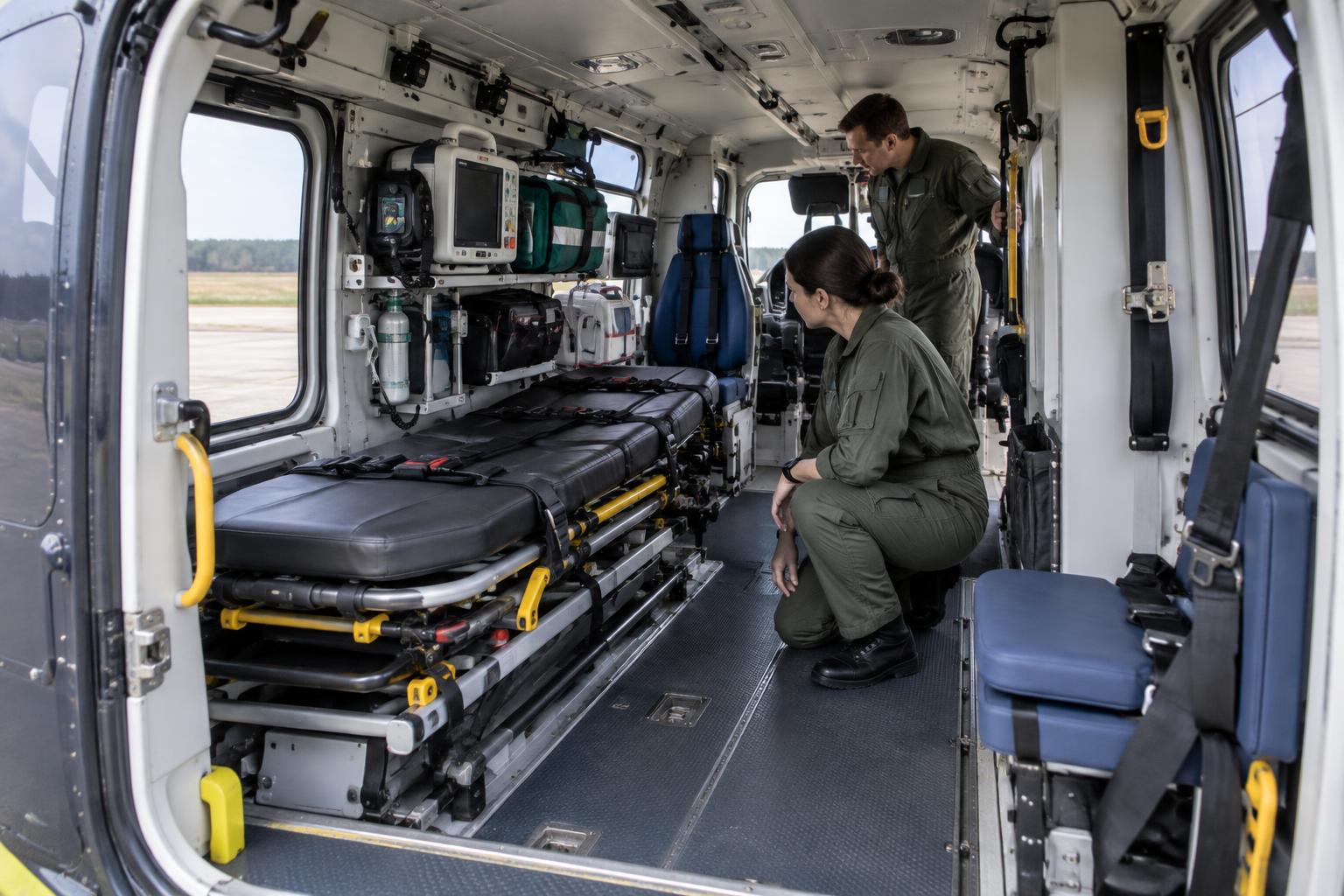
Cabin equipment in a rescue aircraft must be considered as part of the aircraft environment. A secure mount and a suitable power connection help prevent movement and damage. Routing cables so they do not obstruct crew movement, exits or other controls is also important. These physical details can matter as much as the number of watts a device consumes.
Electrical compatibility includes the possibility of interference. Poorly integrated equipment could affect radio reception or other systems, even if its power demand is low. Installation and testing therefore address how a device behaves in the aircraft, not merely whether it turns on. Portable equipment and permanently installed equipment may be handled differently, but neither should be assumed compatible without the appropriate checks.
Circuit breakers and fuses protect wiring against certain electrical faults. They are not a way to expand capacity or a substitute for proper load planning. If protection trips, the event is a sign that the underlying condition needs to be handled under the aircraft’s procedures, not that the circuit should be asked to carry more.
Managing power when capacity is limited
Power priorities become especially clear when a generator or alternator is unavailable. Battery endurance depends on its condition, the connected loads and the aircraft’s electrical design. Because that endurance is finite, crews may need to reduce nonessential demand while preserving systems needed to manage the flight. Which items take priority is an aircraft-specific procedural question, not a universal list.
Good coordination helps turn those priorities into practical action. Before flight, relevant crew members can identify which cabin devices are needed, how they receive power and whether any have internal batteries. If electrical conditions change, clear communication helps everyone understand which equipment remains available. Such planning supports orderly decisions without requiring cabin crew to diagnose or reconfigure aircraft wiring.
A system-level view of cabin equipment
The safest way to think about cabin power is as a shared, limited resource. Capacity depends on generation, storage, distribution and the demands already placed on the system. Physical installation, interference checks and crew procedures all contribute to whether a piece of equipment belongs in that system.
Aircraft types and missions differ, so there is no single power allowance that applies to every rescue cabin. The lasting lesson is to treat each added device as part of an integrated aircraft, with its electrical needs reviewed against the specific aircraft’s approved limits and procedures.